Nurturing Little Linguists: Effective Activities for Kindergarteners to Enhance Language Development
Introduction
Language development in kindergarten is a dynamic and critical phase. At ages five to six, children move from simple phrases to constructing complex sentences, expanding their vocabulary, and understanding the nuances of communication. This period lays the foundation for literacy, social interaction, and academic success. However, language growth does not happen in a vacuum—it thrives through purposeful, playful, and engaging activities. For educators and parents, knowing which activities yield the highest gains in vocabulary, grammar, narrative skills, and phonological awareness is essential. This article presents a comprehensive guide to practical, research-backed activities designed specifically for kindergarteners. Each activity is explained with clear steps, developmental benefits, and variations to suit different learning styles. By integrating these strategies into daily routines, adults can turn every moment into an opportunity for linguistic enrichment.
1. Interactive Storytelling and Oral Narrative Building
Narrative skills—the ability to tell a story with a beginning, middle, and end—are hallmarks of advanced language development. Kindergarteners who master storytelling demonstrate stronger reading comprehension and writing fluency later. Interactive storytelling goes beyond passive listening; it invites children to become co-creators of tales.
Activity 1.1: Story Stones
Collect a set of smooth stones or wooden circles. On each stone, glue or draw a simple image: a cat, a tree, a river, a rainbow, a castle, a child, etc. Place the stones in a bag. Have the child pull out three stones and use them to invent a story. For example, if a child picks “a cat,” “a box,” and “a moon,” they might say: “A little cat found a magic box under the moonlight. When he opened the box, stars flew out.” This activity encourages vocabulary retrieval, sequencing, and creative thinking. To extend the language benefit, ask questions like “What color was the cat?” or “How did the cat feel?” This prompts the child to add adjectives and emotional language.
Activity 1.2: Storytelling Circle with Props
Gather a small group of 3–5 children. Each child selects a simple prop (a toy animal, a hat, a scarf). Start a story with one sentence: “One sunny morning, a bear decided to visit his friend the rabbit.” Then pass a “talking stick” to the next child, who adds the next sentence. Continue until the story reaches a conclusion. This cooperative narrative building teaches turn-taking, listening comprehension, and the logical flow of events. Teachers can model complex connectives like “meanwhile,” “because,” and “finally” to enrich syntax.
2. Phonological Awareness and Word Play
Phonological awareness—the ability to recognize and manipulate sounds in words—is the strongest predictor of early reading success. Kindergarteners need explicit, playful exposure to rhymes, syllables, and initial sounds.
Activity 2.1: Rhyming I Spy
Play a variation of “I Spy” that focuses on rhyming. Say, “I spy with my little eye something that rhymes with ‘boat’.” Children look around and guess items like “coat,” “note,” or “goat” (if a toy goat is present). This forces children to compare sound patterns, strengthening phonemic segmentation. For a more active version, scatter picture cards on the floor and call out a word; children jump on any card that rhymes with it.
Activity 2.2: Syllable Clapping Pond
Draw or place tape on the floor to represent a pond with “lily pads” (circles). Write simple words on cards: “butterfly,” “elephant,” “dog,” “computer.” Show a card, say the word, and have the child clap each syllable. For every syllable, the child hops onto the next lily pad. For “butterfly” (3 syllables), they take three hops. This kinesthetic activity connects body movement to auditory processing, reinforcing the concept that words are built from smaller sound units.
Activity 2.3: Initial Sound Treasure Hunt
Hide objects around the room that all start with the same letter sound (e.g., /s/ – sock, spoon, star, sandwich). Announce, “We’re looking for things that start with /ssss/.” Children find and bring each object, naming it aloud. This boosts phoneme isolation and vocabulary recognition. To differentiate, use two contrasting sounds (e.g., /s/ vs. /m/) and have children sort objects into piles.
3. Social Language through Dramatic Play and Role-Playing
Social interaction is the natural laboratory for language development. When kindergarteners engage in pretend play, they practice negotiating roles, explaining ideas, and using situation-specific vocabulary. Structured dramatic play activities can target specific language goals.
Activity 3.1: Restaurant Role-Play
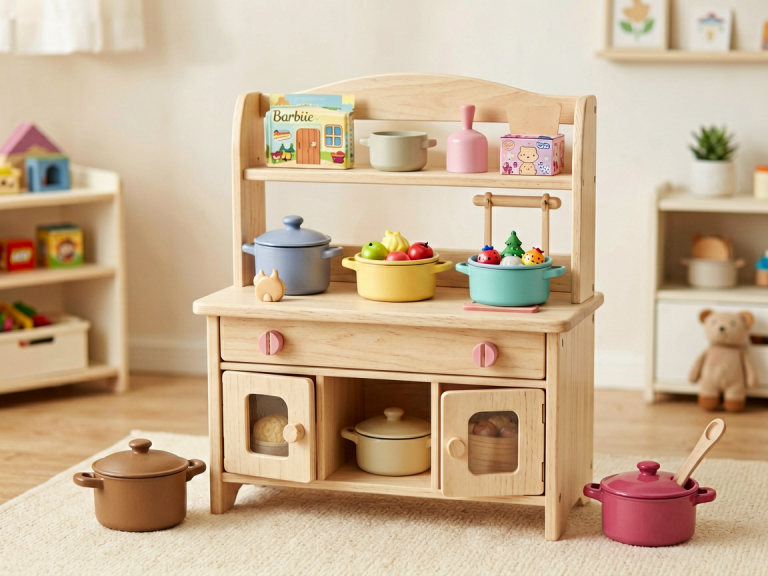
Set up a pretend restaurant with menus, notepads, plastic food, and a cash register. Assign roles: chef, waiter, customer, cashier. The waiter must take orders using full sentences: “Good afternoon, would you like a hamburger or a salad?” The customer responds: “I would like a cheeseburger with ketchup, please.” This requires polite language, question formation, and descriptive vocabulary. The chef might ask “How do you want your steak cooked?”—introducing adverbs and adjectives.
Activity 3.2: Supermarket Scenario
Create a mini-market with empty cartons, toy fruits, and price tags. Give each child a shopping list with pictures and words. One child acts as the shopkeeper, who must greet customers, ask “What do you need?”, and respond to requests like “I need two apples and one milk carton.” The customer must use complete sentences, ask for location (“Where are the eggs?”), and express thanks. This activity naturally elicits verbs like “need,” “want,” “buy,” “pay,” and prepositions like “near,” “behind.”
Activity 3.3: Emotion Charades with Language
Use emotion cards (happy, sad, angry, surprised, scared). One child picks a card and acts out the emotion without speaking. The others guess the emotion and then must describe a situation that might cause it: “She looks sad because her ice cream fell.” This promotes emotional vocabulary, cause-effect language, and perspective-taking.
4. Music, Songs, and Chants
Melody and rhythm are powerful memory aids for language. Songs expose children to new vocabulary, grammatical patterns, and cultural expressions in a low-pressure, joyful way.
Activity 4.1: Action Songs with Variable Lyrics
Traditional songs like “If You’re Happy and You Know It” can be adapted. Instead of “clap your hands,” substitute various verbs and actions: “If you’re happy and you know it, jump up high / spin around / blink your eyes / stomp your feet.” Each new action introduces a verb phrase and reinforces bodily awareness. For more advanced learners, change the emotion: “If you’re sleepy and you know it, yawn real wide.”
Activity 4.2: Fill-in-the-Blank Songs
Sing a familiar song but pause before key words, prompting children to complete the line. For “Old MacDonald Had a Farm,” pause before the animal sound: “And on that farm he had a cow, E-I-E-I-___” (children shout “O!”). Then for the animal name: “With a moo moo here and a ___ moo here” (children say “moo”). This reinforces auditory closure, vocabulary recall, and phoneme completion.
Activity 4.3: Call-and-Response Chants
Create simple rhythmic chants with a leader and group. Leader: “I see a cat.” Group: “Cat, cat, cat.” Leader: “It is fat.” Group: “Fat, fat, fat.” This playful repetition builds syllable awareness, rhyming, and sentence structure. Over time, increase complexity: leader says a two-sentence mini-story, group echoes key phrases.
5. Creative Arts and Descriptive Language
Art activities naturally invite children to talk about their work, describe colors, shapes, and processes, and answer open-ended questions.
Activity 5.1: Clay Creations with Guided Description
Give each child a lump of modeling clay. Ask them to create an animal, then describe it to a partner without naming the animal. The partner guesses. For example, “My animal has four legs, a long neck, and spots. It can reach leaves on tall trees.” This forces the child to use descriptive adjectives, comparative structures (“longer than”), and spatial language.
Activity 5.2: Story-Inspired Drawing and Dictation
Read a short picture book, then ask children to draw a new scene that could happen next. After drawing, the teacher writes down the child’s verbal description of the picture. The child dictates: “The dinosaur finds a treasure chest under the rainbow. He opens it and sees golden coins.” This process links oral language to written text, builds narrative cohesion, and expands vocabulary as teachers can prompt for richer words (“Instead of ‘big,’ can you say ‘enormous’?”).
Activity 5.3: Texture Collage Conversations
Provide materials with varied textures (cotton balls, sandpaper, felt, bubble wrap, ribbons). Children glue them onto paper to create a “feeling picture.” Then they share: “I used scratchy sandpaper for the mountain and soft cotton for the snow.” This activity elicits tactile adjectives (rough, smooth, fuzzy, bumpy) and comparative language (“the ribbon is smoother than the sandpaper”).
Conclusion
Language development in kindergarten is not a solitary skill to be drilled but a holistic journey woven through play, storytelling, music, art, and social interaction. The activities described above—from narrative stone stories to emotion charades, from rhyming treasure hunts to restaurant role-play—provide a rich tapestry of experiences that target vocabulary acquisition, syntactic complexity, phonological awareness, and pragmatic language use. Each activity respects the child’s natural curiosity and desire to make meaning through active engagement.
Crucially, these activities are flexible. They can be adapted for individual children, small groups, or whole classrooms. They integrate seamlessly into existing routines: circle time, transition periods, center rotations, or free play. Adults should remember that the goal is not perfect grammar but confident communication. Praise effort, prompt with open-ended questions (“What happened next? How did it feel?”), and model expanded language. With consistent, joyful practice, kindergarteners will not only improve their language skills but also develop a lifelong love for words and stories. By nurturing little linguists today, we equip them with the tools to express their ideas, connect with others, and succeed in all future learning.