The Cognitive Power of Pretend Play: How Imaginative Activities Shape Lifelong Learning
Introduction
In the bustling world of early childhood education, few topics have generated as much debate—and as much research—as the role of pretend play. For decades, parents and educators have watched children transform cardboard boxes into spaceships, blankets into royal robes, and sticks into magic wands. Yet beneath these seemingly frivolous acts lies a profound educational mechanism. Pretend play learning activities are not mere entertainment; they are sophisticated cognitive, social, and emotional exercises that lay the foundation for critical thinking, language development, problem-solving, and even academic success. This article explores the science behind pretend play, its measurable learning outcomes, and practical ways to integrate these activities into classrooms and homes. By understanding the power of make-believe, we can unlock a child’s full potential as an active, creative learner.
The Neuroscience of Make-Believe: Why the Brain Thrives on Fantasy
To appreciate why pretend play learning activities are so effective, we must first look inside the developing brain. When a child pretends to be a doctor, a shopkeeper, or a superhero, multiple neural networks fire simultaneously. The prefrontal cortex—responsible for executive functions such as planning, inhibition, and flexible thinking—is heavily engaged as the child holds a scenario in mind, follows a storyline, and adapts to unexpected twists. Meanwhile, the limbic system processes the emotional undertones of the role, helping the child understand empathy and perspective-taking. Neuroimaging studies have shown that children who engage in frequent, high-quality pretend play exhibit stronger connectivity between the prefrontal cortex and other regions associated with language and social cognition.
This neurological activity is not random. Pretend play forces the brain to construct alternative realities, which is essentially the same cognitive process used in abstract reasoning and hypothetical thinking. For example, a child pretending that a block is a phone must inhibit the real identity of the block (a wooden cube) and activate a symbolic representation (a communication device). This ability to hold two mental representations simultaneously—the real and the imagined—is a cornerstone of advanced learning. It is the same skill required for understanding metaphors in literature, for grasping algebraic variables, and for engaging in scientific modeling. In short, pretend play is a natural gymnasium for the executive functions that predict academic achievement better than IQ scores.
Key Learning Outcomes of Pretend Play Activities
Pretend play learning activities yield a rich harvest of developmental gains across multiple domains. Understanding these outcomes helps educators design purposeful play experiences.
*1. Language and Literacy Development*
When children engage in role-play, they naturally expand their vocabulary and practice complex sentence structures. A child playing “restaurant” might say, “Welcome to our café. Would you like a menu, madam?” This spontaneous use of social protocols, polite phrases, and descriptive language far exceeds the linguistic demands of direct instruction. Research indicates that children who participate in regular pretend play demonstrate stronger narrative skills—they can sequence events, describe characters, and use cause-effect language. These narrative competencies are directly linked to reading comprehension and writing proficiency in later grades.
*2. Social and Emotional Intelligence*
One of the most celebrated benefits of pretend play is its role in developing theory of mind—the ability to understand that others have different thoughts, feelings, and intentions. When children negotiate roles (“You be the mommy, and I’ll be the baby”), they must consider the perspectives of their playmates. Conflicts over props or plots force them to practice compromise, turn-taking, and emotional regulation. A study from the University of Cambridge found that preschoolers who engaged in complex pretend play were significantly better at recognizing emotions in others and at managing their own frustration during challenging tasks. These social skills are increasingly recognized as essential for success in collaborative work environments.
*3. Problem-Solving and Creativity*
Pretend play is inherently open-ended. Unlike a worksheet with predetermined answers, a pretend scenario demands that children generate solutions on the fly. “We need a bridge to cross this crocodile river—what can we use?” A child might grab a fallen branch, a piece of string, or even transform a jacket into a bridge. This improvisational thinking strengthens divergent cognitive processes—the ability to generate multiple solutions to a single problem. Moreover, pretend play encourages what psychologists call “epistemic curiosity”: the desire to explore how things work. A child pretending to be an astronaut might suddenly ask, “How do rockets fly?”—a question that opens the door to early STEM exploration.
*4. Executive Function Skills*
Self-regulation is perhaps the most overlooked yet critical product of pretend play. In a make-believe scenario, children must remember the rules of the imaginary world (e.g., “You have to wait until the doctor says ‘next’”), inhibit impulses (e.g., not grabbing a toy from a fellow player), and shift attention flexibly (e.g., switching from the role of “patient” to “nurse” mid-scene). Longitudinal studies have shown that the quality of pretend play at age 4 predicts self-control and attention span at age 6—skills that correlate strongly with kindergarten readiness and long-term academic performance.
Practical Examples of Pretend Play Learning Activities
To translate theory into practice, educators and parents can design structured yet flexible pretend play learning activities. The following examples illustrate how common scenarios can target specific learning goals.
*1. The Miniature World of “Community Helpers”*
Set up a play area with costumes and props for doctors, firefighters, postal workers, and teachers. Instead of letting children play freely without guidance, introduce a problem: “The fire station needs a new map of the neighborhood. Can you design it and then show the firefighters how to reach the house on Maple Street?” This activity teaches map-reading (spatial awareness), collaborative decision-making (social skills), and narrative sequencing (literacy). Children learn that community helpers solve real problems, which fosters civic understanding.
*2. The “Pretend Grocery Store” with Budgeting*
Create a small store with empty food boxes, a toy cash register, and play money. Give each child a “budget” of 10 coins. Ask them to buy a balanced meal for their family. This activity seamlessly integrates math (counting, addition, subtraction), nutritional awareness (science and health), and social interaction (taking turns as cashier and customer). Older children can be challenged with discounts (“Everything is 20% off”) to introduce basic percentages.
*3. “Time Travel Agency” for History and Geography*
Transform a classroom corner into a time travel agency. Children become travel agents who must research a historical period (e.g., Ancient Egypt) and then persuade clients to visit by describing the culture, landmarks, and daily life. They can build a miniature pyramid from blocks, write a travel brochure, and even reenact a pharaoh’s coronation. This activity integrates research skills, expository writing, creativity, and collaboration—all while making history tangible.
*4. “Medical Clinic” for Emotional Literacy*
In a play hospital, children can role-play doctors, nurses, patients, and worried family members. Introduce a scenario where a patient is scared of a shot. The children must brainstorm ways to comfort the patient: distraction, deep breathing, a funny joke. This activity explicitly teaches emotional regulation and empathy. It also introduces basic health concepts—why vaccines are important—in a non-threatening way.
Implementing Pretend Play in Educational Settings: Best Practices
Despite its proven benefits, pretend play has been marginalized in many classrooms due to pressure for academic rigor and standardized testing. To reintegrate it effectively, educators should follow several evidence-based guidelines.
*1. Provide Open-Ended Materials*
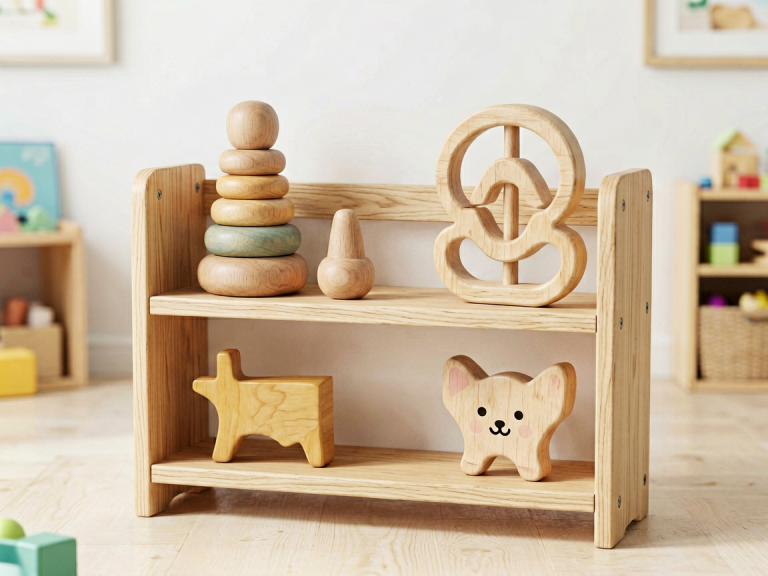
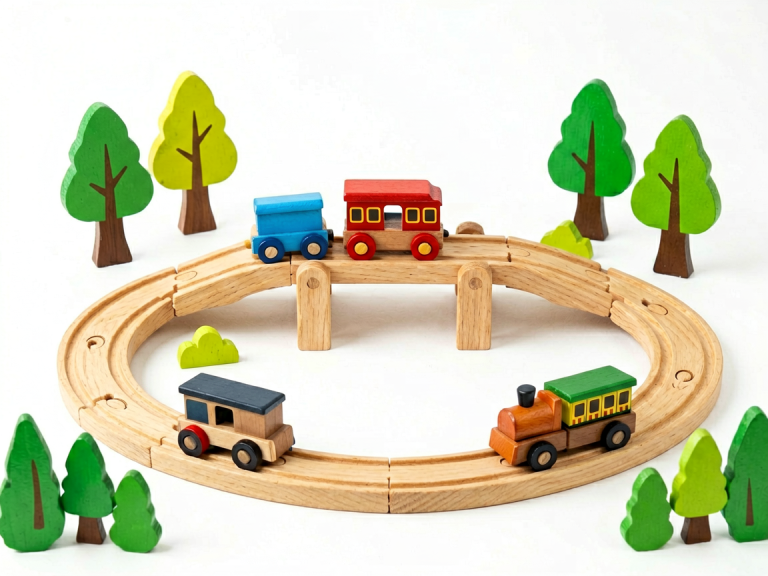
The best props are not commercial toys with pre-assigned functions, but loose parts such as fabric scraps, cardboard tubes, wooden blocks, and empty containers. These materials invite infinite possibilities. A wooden block can be a phone, a sandwich, or a building brick—depending on the child’s imagination. Open-ended materials also foster divergent thinking because they lack a single correct use.
*2. Scaffold Without Taking Over*
Some teachers mistakenly either leave children completely alone or direct the play too rigidly. The “sweet spot” is what psychologist Lev Vygotsky called the zone of proximal development. An adult can introduce a new vocabulary word (“Your character seems exasperated—what does that mean?”), suggest a slight complication (“Oh no, the spaceship’s fuel is low! How will you solve that?”), or model a new skill (e.g., writing a “prescription” on a notepad). The goal is to extend learning without hijacking the child’s agency.
*3. Incorporate Reflection and Discussion*
After a pretend play session, gather children to talk about what happened. Ask open-ended questions: “What was the hardest part of being a vet today?” “Can you think of another way to build that rocket?” This reflection solidifies the learning and helps children metacognitively analyze their own problem-solving strategies. It also builds oral language skills as children recount their narratives.
*4. Link Play to Real-World Content*
Pretend play becomes even more powerful when it is connected to curricular themes. If a class is studying ecosystems, set up a “wildlife rescue center” where children care for stuffed animals from different habitats. They can research what each animal eats, simulate a food web, and discuss conservation. This approach makes abstract concepts concrete and memorable.
Conclusion: The Unfinished Symphony of Play
In an era of digital distractions and academic pressure, it is tempting to view pretend play as a luxury rather than a necessity. Yet the evidence is overwhelming: pretend play learning activities are not just fun—they are fundamental. They build the cognitive muscles that allow children to navigate a complex world, to empathize with others, to persist through challenges, and to dream beyond the confines of the present.
As educators and parents, we must resist the urge to over-schedule or over-structure children’s time. Instead, we should carve out spaces for rich, uninterrupted make-believe. Whether it is a kitchen corner transformed into a restaurant, a backyard turned into a jungle, or a living room refashioned as a spaceship, every pretend scenario is a classroom without walls. In these playful worlds, children are not merely playing—they are practicing the most profound learning of all: how to shape reality with imagination, one story at a time.
The next time you see a child putting a teddy bear to bed or piloting a cardboard spaceship, remember: you are witnessing a mind at work, building the neural architecture for a lifetime of learning. Encourage it, cherish it, and join in. For in the end, the most serious thing we can do for our children is to let them play.