Unlocking Words Through Play: Creative Language-Building Activities for Elementary School Kids
Play is the natural language of childhood. When elementary school children run, pretend, build, and invent, they are not simply “passing time”—they are constructing the neural pathways that underpin literacy, vocabulary, and expressive confidence. For parents and educators who wish to nurture language development without turning the living room or classroom into a drill station, the key is to embed linguistic growth inside experiences children already love. This article explores a range of research-backed, low-prep play ideas that simultaneously spark joy and strengthen a child’s ability to understand, use, and manipulate language. Each activity is designed for children aged six to ten, adaptable for different skill levels, and easy to implement with minimal materials.
Storytelling and Puppetry: Bringing Narratives to Life
One of the most powerful ways to develop oral language is through storytelling, and when children are given the tools to become storytellers themselves, their vocabulary and syntax expand organically. A simple puppet made from a sock, a paper bag, or even a wooden spoon can transform a shy child into a confident speaker. Set up a small “stage” (the back of a couch or a cardboard box works perfectly) and invite your child to create a short story featuring two or three characters. As they manipulate the puppets, they naturally adopt different voices, practice dialogue, and sequence events—all fundamental components of narrative language.
To scaffold this activity, you can offer a “story starter” such as, “One day, a tiny turtle found a mysterious key in the sand…” and then let the child finish the tale. For group play, have children take turns adding one sentence to a collaborative story, which not only builds listening skills but also requires them to connect their ideas logically. For older elementary students, introduce the concept of “story elements” (character, setting, problem, solution) by drawing simple cards and having them pick one from each category. This structured yet playful approach teaches children that stories have architecture, which later translates into stronger reading comprehension and written expression.
Puppetry also encourages emotional vocabulary. When a puppet is “angry” or “nervous,” the child must find words to express that feeling, and you can gently prompt: “What does the puppet say when it’s scared? Does its voice go high or low?” These moments build both linguistic and emotional intelligence.
Word Games and Puzzles: Building Vocabulary Playfully
While traditional flashcards can feel tedious, word games disguised as challenges or races tap into a child’s natural love of competition and discovery. One enduring favorite is “I Spy” with a twist: instead of just colors or shapes, play “I Spy an object that begins with the sound /sh/” or “I Spy something that has two syllables.” This phonological awareness practice is crucial for decoding and spelling, yet feels like a hunt. For a more active version, write letters on sticky notes, place them around the room, and send your child on a “letter hunt” to build a specific word.
Another excellent game is “Word Ladder” (or “Word Chains”), where you start with a word, and the child changes one letter at a time to make a new word (e.g., cat → cot → dot → dog). This reinforces letter-sound relationships and works well as a whiteboard game during snack time. For vocabulary expansion, try “Synonym Slam”: say a common word like “big,” and the children race to shout out synonyms (“huge!” “enormous!” “gigantic!”). You can make it physical by having them jump each time they say a new word.
For groups, “Story Scramble” is ideal: write several vocabulary words on index cards, toss them in a hat, and have children draw three words that they must incorporate into a single silly sentence. The more absurd the combination, the better—for example, “The astronaut ate a purple sandwich on the moon while reading a book about dinosaurs.” This activity not only cements word meanings but also forces children to think flexibly about grammar and syntax.
Role-Playing and Pretend Play: Developing Conversational Skills
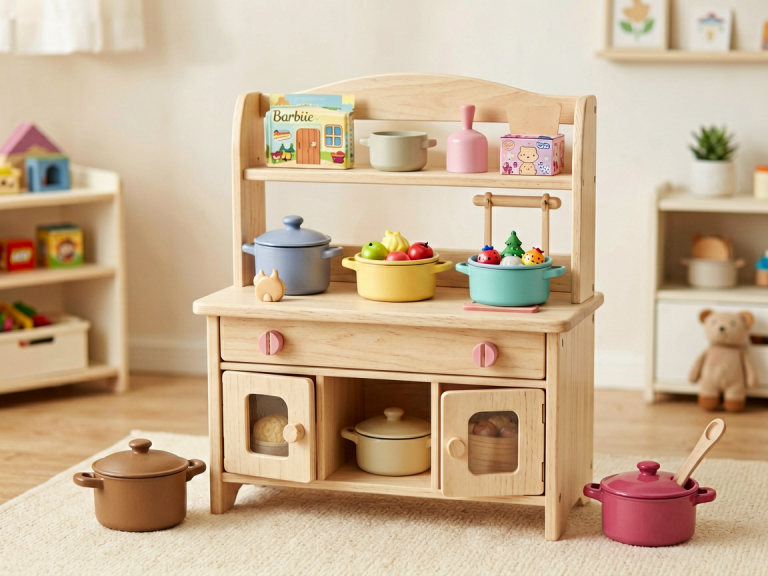
The dramatic play center is not merely a place for fun—it is a laboratory for language. When children pretend to be a doctor, a shopkeeper, a chef, or a dinosaur, they must adopt the register and vocabulary of that role. A “restaurant” setup with a simple menu, a notepad, and a play cash register invites children to practice polite requests, take orders, ask clarifying questions, and handle transactions. These interactions mirror real-world conversations and teach turn-taking, topic maintenance, and the social nuances of speech.
To deepen the language benefits, introduce “problem scenarios.” For instance: “The restaurant has run out of pizza. What do you tell the customer?” or “The patient is afraid of getting a shot. How does the doctor explain it?” Such prompts push children beyond scripted phrases into creative problem-solving with language. For English language learners or children who need extra support, provide sentence frames on a small board (“May I please have…?” “I recommend that you…”), which are gradually removed as confidence grows.
Another powerful role-play activity is “TV News Reporter.” Have your child report on a “breaking event” in the living room—a stuffed animal’s birthday, a Lego tower collapse, or a pretend weather storm. They can use a rolled-up paper as a microphone. This activity encourages them to organize information in a logical sequence, use past and present tense appropriately, and vary their tone for effect. Filming their “news segment” and watching it together adds metacognitive discussion: “Did you notice how you used the word ‘unfortunately’ to make it dramatic? That’s excellent word choice!”
Outdoor and Movement Games: Learning Language in Action
Language development does not have to happen seated at a table. Kinesthetic learners—and indeed all children—benefit when words are paired with movement. A classic is “Simon Says” with a linguistic twist: instead of simple commands, use prepositional phrases (“Simon says put your hand behind your head”) or multi-step instructions (“Simon says hop three times and then spin around”). This builds listening comprehension and the ability to process complex verbal information quickly.
“Mother May I?” can be adapted to include descriptive language. The child asks, “Mother, may I take four giant steps forward?” and the adult responds with conditions that require modifiers: “You may take three tiny steps and one jumping step.” The negotiation of adverbs and adjectives becomes natural and fun. For vocabulary retrieval, try “Vocabulary Tag”: when a child is tagged, they must say a word from a given category (e.g., animals, emotions, things that are cold) before they can be free again. The pressure of the game sharpens recall and keeps energy high.
Nature walks are also rich with language potential. Play “I Hear Something…” where children listen and describe sounds using precise verbs and adjectives: “I hear the crunch of dry leaves,” “I hear the distant bark of a dog.” Alternatively, collect natural objects (a smooth pebble, a rough pinecone, a crinkly leaf) and have children generate descriptive words or short poems about each texture. This multisensory approach ties physical experience directly to verbal expression.
Creative Writing and Drawing: Expressing Ideas with Words
Many children find writing daunting, but when it is framed as a playful extension of drawing or crafting, the barriers dissolve. Encourage your child to create a “comic strip” with three to four panels. First, they draw simple pictures, then write dialogue bubbles and a short caption. This format demands concise language and an understanding of sequence—skills that transfer directly to story writing. For a group, produce a “class newspaper” where each child writes one article about a pretend event (e.g., “Pencil Sharpener Crisis in Classroom 3B”), complete with a headline and byline.
Another engaging idea is “The Story Jar.” Fill a jar with slips of paper, each containing a character, a setting, and a problem. Your child pulls three slips and must write or tell a story combining them. For example: “A magical librarian, a chocolate river, and a missing book.” This sparks infinite creativity and ensures that no two stories are alike. For reluctant writers, allow them to dictate the story to you while you type or write it down—they are still practicing syntax and narrative structure, just without the physical effort of handwriting.
Finally, wordless picture books (like *Journey* by Aaron Becker or *Flotsam* by David Wiesner) are excellent prompts for oral and written language. Ask your child to “read” the book to you, telling the story based solely on the illustrations. This exercise develops inference, sequencing, and the use of cohesive devices (“Because…,” “Next…,” “Suddenly…”). Older children can then write their own text to accompany the pictures, creating a personalized version of the book.
Conclusion: The Power of Play in the Language Journey
Language development is not a race to be won or a checklist to be completed. It is a gradual, organic process nourished by meaningful interaction, curiosity, and joy. The play ideas outlined here are not mere “educational activities”; they are invitations for children to take ownership of words, to experiment with sounds and meanings, and to discover that language is a tool for connection, imagination, and self-expression. Whether through a puppet’s voice, a game of tag with synonyms, or a comic strip drawn after school, each moment of play plants a seed of linguistic competence that will grow for a lifetime.
As you incorporate these ideas into your daily routine, remember to follow your child’s lead. If they want to spend an hour perfecting a puppet show, let them. If they invent a word game you never considered, celebrate it. The most effective language learning happens when children are so absorbed in play that they forget they are learning at all. In that state of flow, vocabulary expands, sentences become more complex, and confidence blossoms—all through the simple, timeless magic of play.