Building the Foundation of Numeracy: Play Activities for Babies to Develop Counting Skills
Introduction: The Quiet Beginnings of Mathematical Thinking
When we think of counting, we often imagine a preschooler proudly reciting “one, two, three” while pointing at objects. But the seeds of numeracy are planted much earlier—in the first year of life. Babies are born with an innate sensitivity to quantity and patterns. Long before they can articulate numbers, they are absorbing the rhythms of counting through everyday interactions. As caregivers, we have a remarkable opportunity to nurture this budding mathematical sense through play. The key is to understand that counting for babies is not about rote memorization; it is about creating rich, multisensory experiences that link number concepts with movement, sound, touch, and joy.
This article explores why counting matters for infant development, outlines the cognitive milestones that support early numeracy, and provides a comprehensive repertoire of play activities tailored to different stages of babyhood. Each activity is designed to be simple, safe, and deeply engaging—transforming ordinary moments into extraordinary opportunities for learning.
Why Counting Matters: More Than Just Numbers
Counting is often viewed as a purely academic skill, but its roots are deeply embedded in broader cognitive and social-emotional development. When babies engage in counting activities, they are not merely learning a sequence of words. They are developing:
- Pattern Recognition: The ability to notice repetitions, sequences, and rhythms—a foundational skill for all mathematical thinking.
- One-to-One Correspondence: The understanding that each object corresponds to a single number name. This concept is complex and develops gradually.
- Order and Sequencing: Grasping that events happen in a predictable order (first, second, third) helps babies understand routines and cause-and-effect relationships.
- Symbolic Thinking: The eventual realization that a spoken word like “two” represents a specific quantity of items.
- Language Development: Number words are part of a rich vocabulary. Exposure to counting language strengthens neural pathways for both math and literacy.
- Attention and Memory: Counting games require focus and recall, building executive function skills.
Research in developmental psychology, such as the work of Karen Wynn and other scholars, has shown that even infants as young as five months can detect changes in small quantities (e.g., they stare longer when a puppet show unexpectedly shows two objects instead of one). This “number sense” is the raw material that caring adults can shape into formal counting skills.
Developmental Milestones: What to Expect and When
Before diving into specific activities, it is helpful to understand what babies are capable of at different ages. Keep in mind that every baby develops at their own pace; these milestones serve as general guidelines.
- 0–6 Months: Sensory Awareness of Quantity. Newborns respond to rhythmic sounds (e.g., counting chants) and can differentiate between patterns of one versus two objects in simple visual displays. They are also beginning to notice the difference between “more” and “less” during feeding or play with multiple toys.
- 6–12 Months: Emerging One-to-One Correspondence. Babies start to show interest in repeatedly picking up and dropping objects, stacking rings, and filling containers. They may imitate counting sounds, even if the words are garbled. They can often place objects into slots one at a time (e.g., shape sorters) and enjoy routines that involve a sequence of actions.
- 12–18 Months: Purposeful Counting Gestures. Toddlers (though still babies in many ways) may hold up fingers, point at objects while babbling number-like sounds, and attempt to mimic the rhythm of counting books. They begin to understand that counting happens in a specific order and may correct an adult who skips a number.
Play Activities for Building Counting: A Stage-by-Stage Guide
The following activities are divided by developmental stage. Choose those that match your baby’s current abilities and interests, and remember that repetition is the mother of learning. The goal is not to “teach” counting in a formal sense, but to weave number experiences into the fabric of everyday play.
Stage One: 0–6 Months – Sensory and Rhythmic Foundations
1. Counting Cuddles and Gentle Rocking
Hold your baby close and rock gently while chanting a simple counting rhyme. For example: “One little baby, two little knees, three little fingers, four little peas.” Use slow, exaggerated speech and a melodic tone. The physical rhythm of rocking paired with the auditory rhythm of numbers creates a multisensory anchor. This activity builds the brain’s awareness of sequences and pattern repetition without any demand on the baby.
2. Finger Counting with Touch
Lay your baby on his back and gently touch each of his fingers while saying the numbers. “One thumb, two pointer, three middle, four ring, five pinky.” Then do the same for toes. This not only introduces one-to-one correspondence through touch but also supports body awareness and fine motor development. Repeat the same sequence during diaper changes or before naps to create a calming ritual.
3. Contrast Cards with One or Two Dots
Create simple black-and-white or high-contrast cards with large dots (one dot on one card, two dots on another, three dots on a third). Show these to your baby a few inches from their face, moving slowly from one card to the next. Narrate: “Look, one dot. And now two dots. Can you see the difference?” Even though the baby cannot respond verbally, their visual system is processing the distinction between quantities. This activity stimulates the parietal lobe, which is involved in number processing.
4. Counting Songs with Movement
Sing songs like “Five Little Ducks” or “Ten in the Bed” while moving your baby’s arms or legs in time with the lyrics. The physical action reinforces the concept that numbers decrease or increase. For instance, when singing “But the little one said, roll over!” gently roll your baby to the side. The combination of auditory, vestibular, and proprioceptive input creates a rich learning environment.
Stage Two: 6–12 Months – Active Exploration and Imitation
1. Stacking Cups and Counting Down
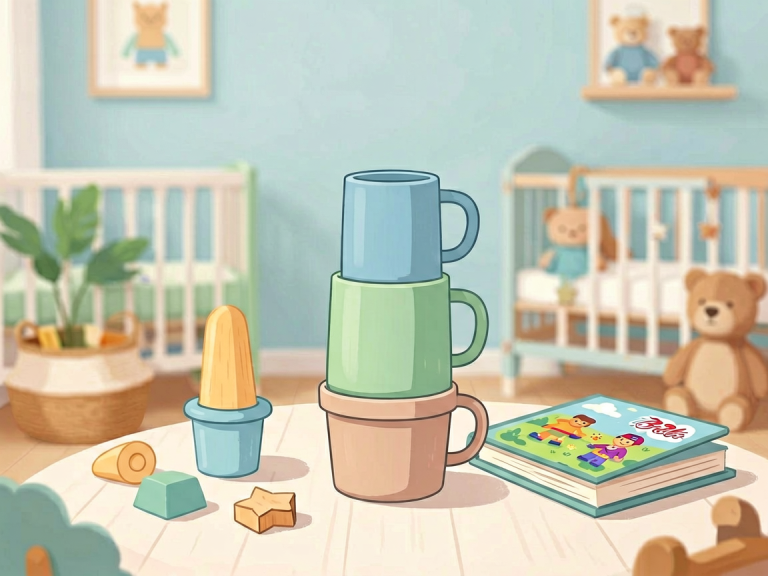
Provide a set of nesting cups or stacking rings. As your baby picks up each cup, say its number in sequence: “One cup, two cups, three cups.” When they stack them, count together as each cup goes on top. When they knock the tower down, say “All fall down!” and then start again. The repetitive cycle of building and destroying offers endless opportunities to reinforce counting sequences. Babies at this stage love cause-and-effect, and the dramatic “boom” at the end makes the counting feel like a game.
2. Fill-and-Dump Treasure Baskets
Fill a small basket with safe objects like large wooden blocks, soft balls, or fabric squares. Sit with your baby and encourage them to take one item out at a time. As they do, count aloud: “One… two… three…” When the basket is empty, model putting items back in while counting. This activity directly teaches one-to-one correspondence because each removal or addition corresponds to a single number word. Babies will begin to anticipate the number after they hear “one” and may even pause before the next item.
3. Counting During Diaper Changes
Turn routine care into a counting opportunity. As you put on each sock, say “One sock, two socks!” When you fasten each snap, count them. When you wipe fingers, count “One finger, two fingers, three, four, five.” Babies learn best in context, and high-frequency routines provide repetition without extra effort. The key is to make the counting incidental and playful, not a drill.
4. Musical Instruments and Sound Counting
Give your baby a rattle, a small drum, or a set of bells. Shake the instrument once and say “One!” Shake it twice and say “One, two!” Let your baby imitate. You can also sing a counting song while shaking: “Shake one time, shake two times, shake three times for you!” This activity links the auditory count with the physical action of producing a sound, reinforcing the idea that each shake corresponds to a number.
Stage Three: 12–18 Months – Purposeful Counting and Vocabulary Expansion
1. Counting Steps While Walking
If your baby is pulling to stand or taking first steps, count each step they take: “One step, two steps, three steps!” You can also count the number of steps from the couch to the door. This turns gross motor movement into a counting experience. Babies at this age begin to understand that counting applies to actions, not just objects.
2. Puzzle Pieces and Counting
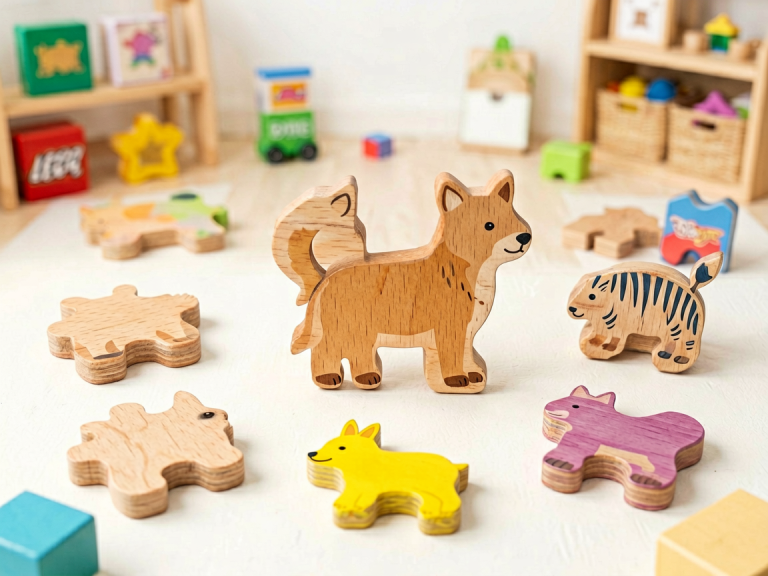
Choose simple puzzles with large, chunky pieces (e.g., animal puzzles with three or four pieces). As you help your baby place each piece, count them: “One piece in, two pieces, three pieces.” After the puzzle is complete, point to each piece and count again. This reinforces the link between the physical object and the number spoken.
3. Counting Books with Flaps and Textures
Board books that feature numbers, such as *Ten Tiny Toes* or *Counting Kisses*, are perfect for this stage. Read slowly, point to each object, and encourage your baby to touch the texture or lift a flap. Let your baby turn the pages (even if they skip some) because the act of turning reinforces sequential order. Use exaggerated intonation for each number.
4. Finger Play: “Five Little Monkeys” and “This Little Piggy”
These classic rhymes are incredibly powerful for building counting because they combine gesture, rhythm, and narrative. For “This Little Piggy,” wiggle each toe in turn and say the corresponding line. For “Five Little Monkeys,” use your fingers to represent monkeys and jump them on your baby’s tummy. The dramatic fall (where the monkeys bump their head) creates a memorable counting sequence that babies will want to repeat over and over.
5. Snack Time Counting
When offering small, safe finger foods like puffs or banana pieces, place three pieces on the high chair tray and count them aloud: “One, two, three. Three puffs for you!” Let your baby pick them up one by one. As they eat, narrate: “You ate one puff. Now one is left. Now zero!” This introduces the concept of subtraction in a very concrete, tangible way.
Supporting Activities for Caregivers: Creating a Counting-Rich Environment
Beyond specific games, the environment itself can foster counting skills. Here are simple strategies to integrate number talk throughout the day.
- Use “Number Language” Naturally. Instead of saying “Look at all those blocks,” say “Look, you have three blocks.” Point out numbers in the world: “There is one bird on the fence. Oh, now there are two!”
- Create a Counting Wall. Place a series of index cards with one dot, two dots, three dots, etc., at baby’s eye level. Change them weekly. Point to them during play.
- Sing Counting Songs Throughout the Day. The more exposure, the stronger the neural connections. Songs that count down (e.g., “Five Little Speckled Frogs”) are especially valuable because they introduce the concept of decreasing quantity.
- Model Counting Mistakes Playfully. Sometimes, intentionally skip a number or count something twice. Say “Oops! I forgot number two!” Your baby will likely notice the error if they are paying attention, and correcting you is a wonderful learning moment.
Overcoming Common Concerns: What If My Baby Doesn’t Seem Interested?
It is entirely normal for a baby to ignore a counting activity or to turn away. This is not a sign of failure. Babies are constantly regulating their sensory input, and sometimes they need a break. The goal is not to force attention but to offer opportunities. If your baby loses interest, switch to a different activity or simply stop. The learning is happening in the background even during short exposures.
Another common worry is that counting too early might cause pressure or boredom. In reality, counting play should feel like any other form of joyful interaction—laughing, cuddling, exploring. If you are having fun, your baby will feed off that positive energy. When counting becomes a chore, step back and simplify. One number at a time is enough.
Conclusion: The Lifelong Gift of Numeracy
Building counting skills in babyhood is not about creating early academic prodigies. It is about laying a foundation of curiosity, pattern recognition, and joyful discovery. Every chant, every stacked block, every playful “one, two, three” is a tiny brick in a child’s mathematical house. These early experiences shape how babies perceive the world—as a place of order, rhythm, and infinite possibilities.
As you engage in these play activities, remember that you are not just teaching numbers. You are teaching your baby that learning is a shared, warm, and delightful adventure. The counting words will come later; the love of counting begins now. So pick up a rattle, wiggle a toe, and start the count. One, two, three… the journey is just beginning.
*Word count: approximately 1,580 words.*