Unlocking Potential: A Comprehensive Guide to Using Toys for Hands-On Learning
—
The Power of Play: Why Hands-On Learning Matters
In an era dominated by screens and passive information consumption, the value of tactile, experiential learning has never been more critical. Hands-on learning—the process of acquiring knowledge through physical activity and direct manipulation—activates multiple regions of the brain simultaneously, leading to deeper understanding and longer retention. Toys, far from being mere distractions, serve as powerful pedagogical tools that bridge abstract concepts with concrete experience. When children (and even adults) build, sort, role-play, or experiment with toys, they engage in problem-solving, critical thinking, and creativity. This form of learning respects individual pacing, encourages trial and error, and transforms mistakes into stepping stones rather than failures. By deliberately integrating toys into educational routines, parents, educators, and caregivers can cultivate a love for learning that feels like play, yet delivers serious cognitive and emotional benefits.
—
Selecting the Right Toys for Different Ages and Skills
Not all toys are created equal when it comes to hands-on learning. The key lies in choosing tools that match the developmental stage and the specific skills you aim to develop.
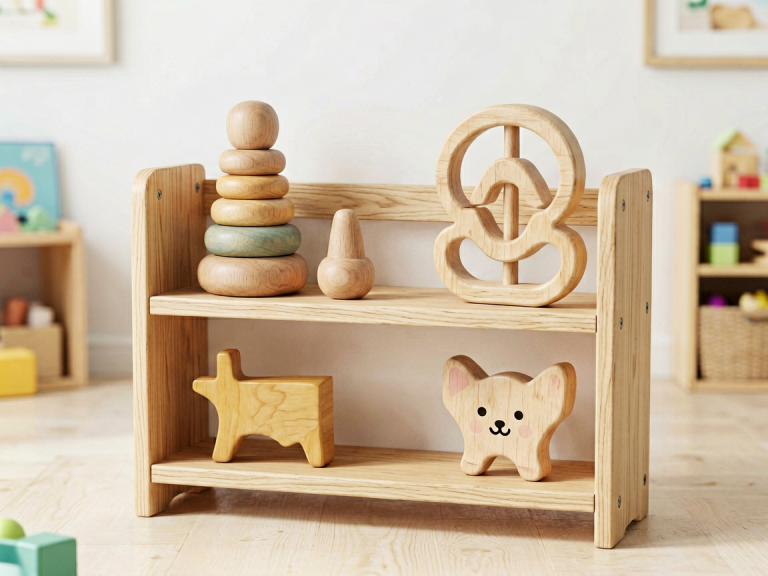
For Toddlers (Ages 1–3): Sensory exploration is paramount. Stacking blocks, nesting cups, and simple shape sorters introduce cause-and-effect relationships, fine motor control, and spatial awareness. Soft building bricks or large interlocking puzzles allow little hands to experiment with gravity and balance. At this stage, toys should be safe, colorful, and open-ended to encourage curiosity.
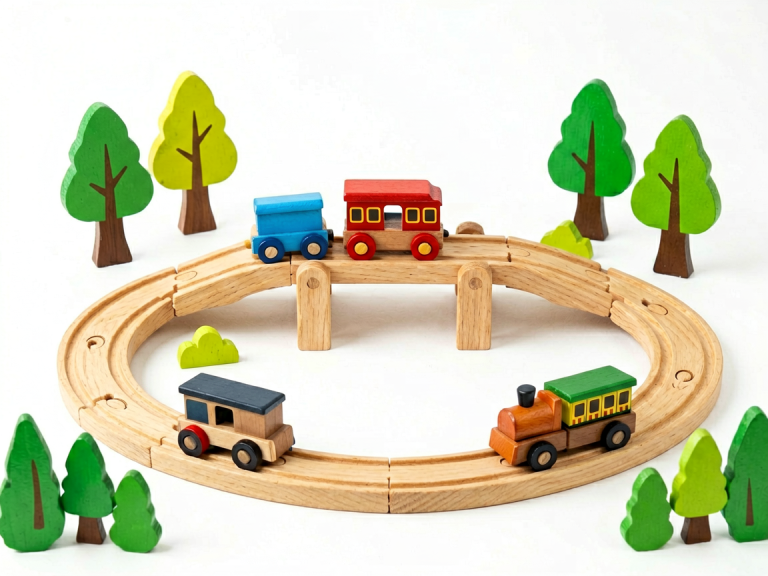
For Preschoolers (Ages 3–5): This is the golden age of imaginative play. Dollhouses, train sets, and dress-up costumes foster narrative thinking and social-emotional understanding. More structured construction sets, like magnetic tiles or wooden unit blocks, introduce early engineering concepts such as symmetry, stability, and geometry. Simple board games with dice and counting spaces also build number sense and turn-taking.
For School-Aged Children (Ages 6–12): Complex kits and scientific toys become appropriate. Chemistry sets, robotics kits, and circuit-building boards let children experiment with real-world principles in a controlled, safe environment. Strategy games like chess or Settlers of Catan develop logical reasoning and planning. Art supplies, including modeling clay and weaving looms, refine dexterity and aesthetic judgment.
For Teenagers and Adults: Hands-on learning doesn’t stop in childhood. Advanced model-building (e.g., wooden ship kits or 3D puzzles), coding-enabled robotic toys, and even simulation toys like flight or farming boards encourage systems thinking and patience. Role-playing tools for language learning or historical reenactments also deepen understanding through embodied experience.
When selecting a toy, consider its “open-endedness”—how many different ways can it be used? A set of plain wooden blocks offers far more learning opportunities than a single-purpose electronic toy because it demands imagination and adaptation. Also prioritize durability and safety, as hands-on learning often involves dropping, throwing, or reassembling parts many times.
—
Practical Strategies for Integrating Toys into Learning
Having the right toys is only half the battle; the other half is using them intentionally. Below are actionable strategies that transform playtime into structured learning without sacrificing fun.
1. Set a Clear Learning Objective (But Stay Flexible)
Before introducing a toy, define one or two skills you want to target. For example, if you’re using pattern blocks, the goal might be recognizing geometric shapes or creating repeating patterns. However, allow the child to explore freely before imposing rules. A brief free-play period builds comfort, then you can gently guide the session toward the objective.
2. Use the “I Do, We Do, You Do” Model
This classic teaching framework works beautifully with toys. First, demonstrate how to use the toy to solve a problem (e.g., show how connecting gears makes a car move). Next, work together on a similar challenge, offering verbal prompts and support. Finally, step back and let the learner take the lead, only intervening when frustration mounts. This scaffolds independence while preventing discouragement.
3. Integrate Cross-Curricular Connections
A single toy can teach multiple subjects. Building blocks, for instance, can be used for math (counting, fractions), science (balance, leverage), language arts (describing the structure or writing a story about it), and art (design and symmetry). Challenge learners to use the same toy in different subject areas over the course of a week.
4. Incorporate Journaling or Documentation
After a hands-on session, ask learners to sketch what they built, write a short description, or record a video explaining their process. This meta-cognitive step solidifies learning and provides a record of progress. For older students, use a simple lab report format: hypothesis, procedure, observation, conclusion.
5. Create Themed Learning Stations
Set up multiple toy-based stations around the room, each focusing on a different skill. For example, one station might have counting bears for arithmetic, another could have wooden puzzles for spatial reasoning, and a third might have modeling clay for sculpting letters. Rotate stations every 10–15 minutes to maintain engagement and expose learners to diverse challenges.
—
Examples of Toy-Based Learning Activities
To make the theory tangible, here are three detailed activity plans you can implement immediately.
Activity 1: Fraction Pizza with Play Dough
*Toys needed:* Play dough (multiple colors), plastic knife, rolling pin.
*Goal:* Understand fractions (halves, thirds, quarters).
*Process:* Roll out a “pizza” and cut it into equal parts. Count the pieces, label them, and assemble them back together. Extend by adding “toppings” that must be evenly distributed—e.g., place four pepperoni pieces on a pizza cut into fourths, so each slice gets one. This concrete experience builds an intuitive sense of part-whole relationships before moving to symbolic fractions.
Activity 2: Marble Run Engineering Challenge
*Toys needed:* Marble run track set (or household items like cardboard tubes and tape).
*Goal:* Explore gravity, momentum, and problem-solving.
*Process:* Present a challenge: “Build a track that makes the marble land in this cup at least three seconds after release.” Learners must adjust slopes, add obstacles, and test repeatedly. Encourage them to draw a blueprint first, then modify based on trial results. Discuss why steep ramps make marbles go faster and how friction slows them down.
Activity 3: Storytelling with Puppets and Props
*Toys needed:* Hand puppets, felt board, small figurines.
*Goal:* Develop narrative structure, vocabulary, and empathy.
*Process:* Provide a simple story starter (e.g., “A rabbit finds a mysterious key in the forest”). Ask learners to use the puppets to act out what happens next. After the performance, discuss character motivations, plot twists, and alternative endings. This activity strengthens oral language skills and emotional intelligence as children step into different roles.
—
Overcoming Common Challenges
Even the best-planned hands-on learning can hit roadblocks. Here’s how to navigate them.
Challenge: The child loses interest quickly.
*Solution:* Match the toy to the child’s current passion. If they love dinosaurs, use dinosaur figurines for counting or sorting. Also, break longer activities into short, varied segments. Introduce a timer: “Let’s see how many ways we can sort these blocks in three minutes.”
Challenge: Mess and clutter.
*Solution:* Set clear boundaries. Designate a “play-learning zone” with a mat or tray to contain small parts. Involve the child in cleanup by making it a game—e.g., “Can you put all the red blocks away before I count to ten?”
Challenge: Feeling unsure about how to guide.
*Solution:* Embrace the role of a co-learner rather than an instructor. Say, “I wonder what happens if we put this piece here?” or “Can you show me what you discovered?” This removes pressure and models a growth mindset.
Challenge: Overemphasis on competition.
*Solution:* Focus on process over outcome. Praise effort, creativity, and persistence instead of speed or a perfect result. Use cooperative games where everyone works toward a common goal (e.g., building the tallest tower together) rather than competing.
—
Conclusion: Building a Lifelong Love for Learning
Toys are not substitutes for formal education; they are catalysts for it. By intentionally using toys for hands-on learning, we tap into the natural human drive to explore, manipulate, and create. This approach respects individual learning styles, fosters resilience, and makes abstract concepts tangible. Whether you are a parent setting up a weekend activity, a teacher designing a classroom station, or an adult looking to learn a new skill through a hobby kit, the principles remain the same: choose wisely, guide gently, and let curiosity lead. The next time you see a pile of blocks or a set of colorful gears, remember—you are not just looking at a toy. You are looking at a doorway to discovery.