Building Vocabulary Through Play: The Best Toys for Toddler Boys’ Language Development
—
Introduction: Why the Right Toys Matter
Language development during the toddler years (ages 1–3) is a fascinating and rapid process. For boys in particular, this stage often comes with a burst of physical energy and a growing curiosity about the world around them. While every child develops at their own pace, research consistently shows that play is the most natural and effective vehicle for language acquisition. Toys are not just sources of entertainment; they are tools that shape neural connections, introduce new vocabulary, and encourage meaningful communication.
For parents and caregivers of toddler boys, choosing the right toys can feel overwhelming. The market is flooded with flashing lights, loud sounds, and endless plastic gadgets. Yet the most powerful language-building toys are often the simplest—those that invite imitation, storytelling, turn-taking, and problem-solving. This article explores specific types of toys that support language development in toddler boys, explains *why* they work, and offers practical tips for maximizing the learning potential of playtime.
—
The Role of Imitation and Repetition in Language Learning
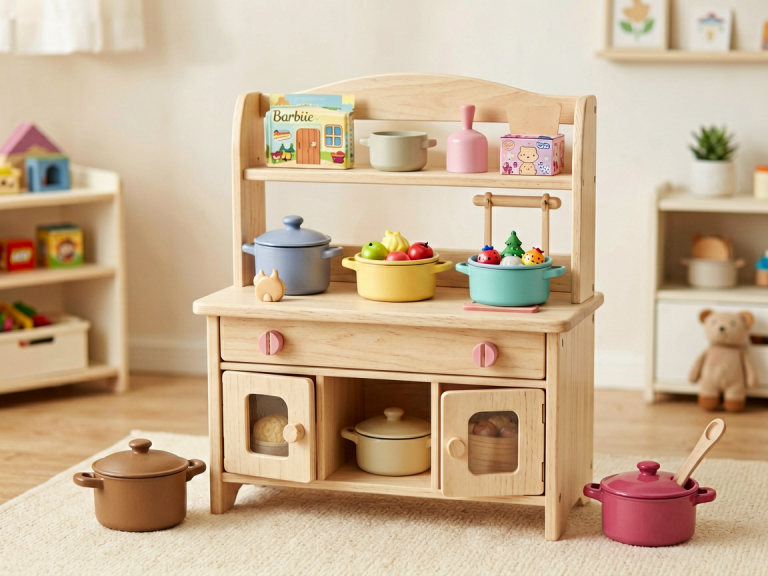
Toddlers learn language by observing and mimicking the sounds, words, and sentence patterns they hear around them. Toys that encourage imitation—such as toy telephones, play kitchens, or animal figures—give boys a safe space to practice speaking. When a toddler picks up a plastic phone and says “hello” in the same tone his father uses, he is not just playing; he is rehearsing the rhythms and sounds of conversation.
Repetition is equally crucial. Board books with simple, repetitive phrases (“Brown bear, brown bear, what do you see?”) allow a toddler to anticipate the next word and eventually “read” along. Similarly, toys that produce a consistent sound when manipulated—like a pop-up toy or a simple xylophone—reinforce cause-and-effect language: “Push the button! Hear the music!” By hearing the same words over and over in a predictable context, a toddler boy builds a mental library of vocabulary and sentence structures.
—
Top Toy Categories for Language Development in Toddler Boys
1. Vehicles and Transportation Toys
Toddler boys are often drawn to anything that moves—cars, trucks, trains, planes, and tractors. This natural fascination can be harnessed for language learning. A simple set of wooden cars allows for endless descriptive conversations: “The red car is fast. The blue truck is big. It’s carrying blocks.”
Parents can model location words (“the car goes *under* the bridge”), action verbs (“the train *chugs* through the tunnel”), and sound words (“vroom vroom!”). As the child grows, you can introduce comparison: “Your dump truck is larger than my car.” These interactions build a rich vocabulary of nouns, verbs, prepositions, and adjectives—all while the child is deeply engaged.
Tip: Instead of just pushing the car back and forth, create a simple story. “The fire truck is going to rescue the cat. Oh no! The cat is stuck in the tree. Can you help?” This narrative play invites the toddler to respond, use new words, and eventually ask his own questions.
2. Building Blocks and Construction Sets
Blocks are arguably the most versatile language-building toys. Whether they are classic wooden cubes, magnetic tiles, or large interlocking plastic bricks, they encourage problem-solving and communication. A toddler boy building a tower with his caregiver naturally experiences language rich in directions: “Put the blue block on top. Now add a red one. Wow, it’s tall!”
Blocks also support spatial vocabulary (above, below, next to, inside, outside) and action words (stack, knock, balance, fall). Collaborative building fosters back-and-forth conversation. When a parent says, “I’ll help you find the square block,” and the child responds with “Square!”, the opportunity for vocabulary reinforcement is immediate.
Moreover, block play often leads to symbolic thinking—toddlers may pretend a block is a phone, a car, or a piece of cake. This pretense lays the groundwork for narrative language and later storytelling skills.
Tip: Use block play to practice following directions. “Please hand me the green block. Now put the yellow block on the red one.” This helps develop receptive language (understanding) and expressive language (speaking) in a low-pressure setting.
3. Animal Figurines and Farm Sets
Animal toys are a classic favorite for toddler boys. A set of plastic or wooden animals—farm animals, jungle creatures, dinosaurs—provides a rich context for learning animal names, sounds, and characteristics. “The cow says ‘moo.’ The cow is eating grass.”
These toys naturally invite dramatic play. A toddler can line up animals, feed them, put them to sleep, or take them on a pretend walk. During such play, caregivers can introduce new vocabulary: “The tiger has stripes. The elephant has a long trunk. The lion is roaring.” Questions like “Which animal lives in the water?” or “What does the sheep eat?” encourage the toddler to think and respond.
For boys who are less verbal, animal sounds are a wonderful entry point. Imitating a dog’s “woof” or a cat’s “meow” is often easier than forming full words, and it builds the motor planning needed for speech. As language develops, the animal play can expand into short stories: “The duck is swimming in the pond. Oh! Here comes a fish!”
Tip: Create a small “farm” or “jungle” using a cardboard box or blanket. This spatial setting gives the toddler a concrete scene to talk about, improving his ability to describe what he sees and does.
4. Musical Instruments and Sound Toys
Music and language share deep neural connections. Simple instruments like drums, shakers, bells, and xylophones help toddler boys understand rhythm, pitch, and volume—all foundational for the prosody of speech. When a child shakes a maraca, a parent can say, “That’s loud! Now let’s shake it softly.”
Singing songs with actions (“Wheels on the Bus,” “Old MacDonald,” “If You’re Happy and You Know It”) is one of the most effective ways to boost language. Songs naturally repeat words and phrases, involve gestures (which aid vocabulary retention), and create a joyful social bond. Toddler boys who might resist sitting still for a book often love the physical engagement of a song.
Sound-matching toys (like a simple lotto game where the child matches a sound to a picture) also strengthen auditory discrimination and memory—both vital for understanding spoken language.
Tip: Make your own “instrument” from a plastic container filled with rice. Show your child how to shake it fast or slow, and describe the differences. This activity builds listening skills and introduces opposites (fast/slow, loud/quiet).
5. Picture Books with Realistic Images
While not a “toy” in the traditional sense, sturdy board books are essential tools for language development. Toddler boys are often kinetic learners, so choose books with thick pages that they can hold, turn, and even chew. Look for books that feature photographs or realistic illustrations of everyday objects, animals, and actions.
Pointing and naming is a classic interaction. “Where is the ball? Yes, there’s the ball! Can you point to the dog?” This simple pattern helps children map spoken words to visual objects. As the child becomes more verbal, you can ask open-ended questions: “What is the boy doing? Why is the baby crying?” This promotes narrative thinking.
Books with flaps, textures, or sounds add a sensory dimension that holds a toddler’s attention. The excitement of lifting a flap to discover a hidden animal often triggers an exclamation—and that excitement is a perfect moment for new words.
Tip: Read the same book repeatedly. Repetition builds confidence; soon your toddler will “read” along, filling in the last word of each page. This is a powerful precursor to independent reading and expressive language.
—
How to Maximize Language Learning During Play
Toys alone do not guarantee language development—the *interaction* around the toy is what counts. Here are evidence-based strategies for parents and caregivers:
- Narrate the play. Describe what you and the child are doing, as if you were a sports commentator. “You are putting the red car on the ramp. It’s rolling down! Oh, it fell off. Let’s try again.” This constant stream of language models correct grammar and sentence structure.
- Use the “Self-Talk” and “Parallel Talk” techniques. Self-talk means describing your own actions: “I am opening the box. I see a blue block. I will stack it.” Parallel talk means describing the toddler’s actions: “You are pushing the train. The train is going fast. You are making a choo-choo sound.”
- Wait for a response. Even if your toddler only babbles or points, give him time to “reply.” Treat every sound and gesture as an intentional communication. This encourages turn-taking, the foundation of conversation.
- Ask open-ended questions. Instead of “Is this a dog?” (which only requires a yes/no), ask “What do you think the dog wants to do?” or “Where should the dog go next?” Open-ended questions stimulate more complex language.
- Limit passive entertainment. While some electronic toys have educational value, many simply talk *at* the child rather than inviting interaction. Toys that require the child to act, respond, and create are far more beneficial.
—
The Power of Parental Involvement
No toy can replace the human voice. The tone, warmth, and responsiveness of a parent or caregiver are irreplaceable in language development. Toddler boys, in particular, may show more interest in toys when an adult is actively engaged. Sitting alongside your child, following his lead, and celebrating his attempts to communicate—even when the words are unclear—builds both language skills and a sense of security.
It is also important to remember that boys may be slightly later talkers than girls on average, but this is a normal variation and not a cause for alarm unless there are other red flags. The goal is not to “drill” vocabulary but to create a rich, low-pressure environment where language feels like a natural part of play.
—
Conclusion: Play Is the Foundation of Language
Building language in toddler boys does not require expensive gadgets or screen time. It requires simple, open-ended toys that spark imagination, invite conversation, and allow for repetition. Vehicles, blocks, animal figures, musical instruments, and picture books are all powerful allies. But the real magic happens when a caring adult sits on the floor, joins the play, and talks with the child—not at him.
Every “vroom,” every stacked block, every animal sound, and every turned page is a step toward a larger vocabulary and stronger communication skills. By choosing toys intentionally and engaging with warmth and patience, parents can turn everyday play into a rich language-learning adventure. The result is a toddler boy who not only knows more words but also loves to use them—because he learned them through joy.