Playtime with Purpose: Nurturing Language Development in Toddler Girls Through Creative Play
—
Introduction: Why Play Matters for Language
The toddler years—roughly ages one to three—are a period of explosive cognitive and linguistic growth. For little girls, who often show early interest in social interaction, storytelling, and imitation, play is not merely a pastime; it is the primary vehicle through which they learn to understand and use language. Research in developmental psychology consistently shows that high-quality, interactive play can significantly boost vocabulary, sentence complexity, and conversational skills. Yet many parents and caregivers wonder: *What specific types of play best support language development in toddler girls?* This article offers a collection of practical, research-backed play ideas designed to enrich your toddler girl’s verbal abilities while honoring her natural curiosity, creativity, and love for connection.
—
1. Pretend Play: The Foundation of Narrative Language
Pretend play—also called symbolic or imaginative play—is one of the most powerful tools for language development. When a toddler girl pretends to feed a doll, “cook” a meal, or talk on a toy phone, she is practicing the language of social roles, sequencing, and cause-and-effect. For girls especially, pretend play often involves nurturing scenarios that invite rich vocabulary.
Activity: Doll Tea Party or Picnic
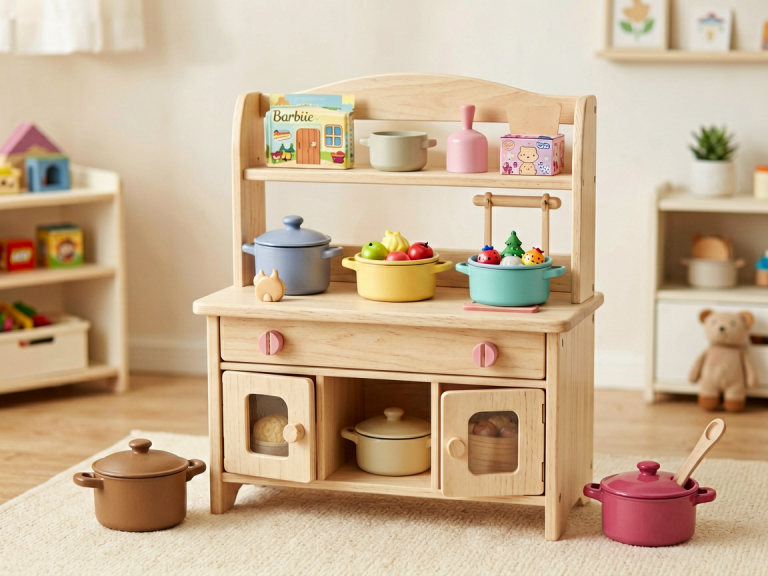
Set up a small table with toy teacups, plates, and a few stuffed animals or dolls. Sit with your toddler and model language: “Would you like some tea? Let’s pour the juice very carefully. Oh, Mr. Bear is hungry—what should we feed him?” Encourage her to take turns being the host and the guest. This back-and-forth exchange builds conversational turn-taking and introduces polite language (“please,” “thank you,” “more please”). As she grows, you can expand the narrative: “Let’s make a menu. What do we have for dessert?” The more she hears and repeats, the more her vocabulary expands.
Activity: Doctor’s Office Play
Toddler girls often love caring for others. Use a toy doctor kit (or improvise with a cardboard tube as a stethoscope). Pretend her teddy bear has a sore throat. Ask questions: “Where does it hurt? How can we help? Should we take his temperature?” This scenario teaches body-part vocabulary (“ear,” “arm,” “tummy”) and action words (“check,” “cure,” “bandage”). It also encourages problem-solving language: “What do we need next?”
—
2. Sensory Play: Building Words Through Touch, Smell, and Sound
Sensory play—engaging with materials like sand, water, rice, or play dough—is deeply appealing to toddlers and creates natural opportunities for descriptive language. When a toddler girl scoops, pours, squishes, and pats, she learns adjectives (wet, dry, sticky, smooth) and verbs (pour, fill, squeeze). Pairing sensory experiences with verbal narration is key.
Activity: Rainbow Rice or Cloud Dough
Fill a shallow bin with colored rice (dyed with food coloring) or homemade cloud dough (8 parts flour to 1 part oil). Add small scoops, cups, and plastic animals. Sit beside her and comment on what she is doing: “You are scooping the blue rice! It feels so soft. Look—the elephant is hiding under the rice!” Use exaggerated intonation to highlight new words. Over time, ask open-ended questions: “What sound does the rice make when you pour it?” This encourages her to generate her own descriptive phrases.
Activity: Bubble Play with Language Prompts
Blowing bubbles is a favorite of nearly all toddlers. But you can turn this simple activity into a language lesson. As bubbles float, name their attributes: “Look at the big one! That one is tiny. Oh, it’s wobbling. Can you pop it?” After popping, ask: “Where did the bubble go? It disappeared! Is it on your nose?” This introduces spatial words (“up,” “down,” “under”), size words, and action verbs. For a language boost, sing a simple bubble song together: “Bubbles, bubbles, up so high, floating, floating in the sky.”
—
3. Music and Rhyme: The Rhythm of Language
Music and rhyme are especially effective for toddler language development because they engage both hemispheres of the brain. The repetitive, rhythmic patterns of songs help toddlers memorize words and sentence structures, while the melody makes learning feel joyful. Little girls often respond strongly to songs that involve movement and naming.
Activity: Action Songs with Props
Sing classics like “The Wheels on the Bus,” “If You’re Happy and You Know It,” or “Five Little Ducks.” But add props! For “Five Little Ducks,” use five plastic ducks and a blue blanket as a pond. As you sing, pause before the last word of each line: “Five little ducks went out to ___ (play). Over the hills and far ___ (away).” This pause gives her a chance to fill in the word, building prediction skills and memory. Similarly, for “Head, Shoulders, Knees, and Toes,” touch each body part and say the word slowly. Then speed up. This reinforces body vocabulary and auditory processing.
Activity: Rhyming Basket Game
Fill a basket with pairs of objects that rhyme: a hat and a bat, a sock and a clock (toy), a bell and a shell. Sit with your toddler and pick up two items, saying their names clearly. Then ask: “Do these sound the same? Hat… bat. Yes! They rhyme!” Even if she doesn’t produce rhymes yet, hearing them builds phonemic awareness—a critical pre-reading skill. For older toddlers (around 2.5 years), invite her to find a rhyme: “I have a cup. Can you find something that rhymes? Puppy? No… cup rhymes with pup! Close!”
—
4. Book-Based Play: From Listening to Telling
Reading aloud is the gold standard for language development, but you can supercharge storytime by extending the book into hands-on play. Toddler girls often love stories about animals, families, and everyday routines—so choose books that match these interests.
Activity: Story Retelling with Puppets
After reading a simple book like *Brown Bear, Brown Bear, What Do You See?* or *Goodnight Moon*, use finger puppets or stuffed animals to retell the story. Let your toddler take the lead: “What does the brown bear say? That’s right—‘I see a red bird looking at me.’” Encourage her to “read” the book to her toy. This develops narrative skills—understanding that stories have a beginning, middle, and end. For very young toddlers, simply pointing at pictures and naming objects builds receptive vocabulary.
Activity: Scene Creation
For books with strong settings (e.g., *The Very Hungry Caterpillar*), create a simple felt board or a sensory bin that mirrors the story. Fill a bin with green felt leaves, small plastic fruits, and a toy caterpillar. As your toddler moves the caterpillar from leaf to leaf, narrate the plot: “The caterpillar ate one apple. Now he’s hungry again! Let’s give him two pears.” This bridges the story world with her physical play, reinforcing the language of the book and introducing sequence words (“first,” “then,” “finally”).
—
5. Outdoor and Active Play: Language on the Move
Toddler girls need physical movement, and the outdoors offers a rich linguistic environment. Nature provides countless new words—names of trees, flowers, insects, weather phenomena—as well as opportunities for prepositions and action verbs.
Activity: Scavenger Hunt with a Picture List
Before heading outside, create a simple picture card of items to find: a leaf, a stick, a flower, a pebble, a feather. As you walk, hold her hand and say, “Let’s look for something green. Can you find a leaf? Oh, there it is! You found a big, green leaf.” Use descriptive language: “The leaf feels bumpy. The feather is so light.” When you return home, talk about what you collected: “We saw a bird. The bird was singing.” This activity expands both concrete nouns and observational language.
Activity: Obstacle Course with Verbal Commands
Set up a simple obstacle course using pillows, tunnels (a cardboard box), and low stools. Give two-step commands: “First, crawl through the tunnel. Then, jump on the pillow!” Encourage her to give you commands, too: “Mommy, now you crawl!” This builds listening comprehension and the ability to follow multi-step directions, which is directly linked to later academic success.
—
Conclusion: The Power of Your Words
Language development in toddler girls flourishes when play is rich, responsive, and full of loving interaction. You don’t need expensive toys or structured lessons. What you need is your voice—your willingness to narrate, ask questions, and listen. Each tea party, each bubble chase, each rhyming song is a tiny lesson in how to communicate. And because every girl is unique, observe her interests: if she loves animals, lean into animal play; if she loves building, incorporate block-based language. The ultimate goal is not just to increase vocabulary but to show her that language is a joyful bridge to connection, imagination, and understanding. So go ahead—pour a pretend cup of tea, sing a silly song, and watch her words bloom.