Building the Foundation: How Educational Toys Foster Phonics Development in Babies
Introduction
In the first years of life, a baby’s brain is a sponge, absorbing sounds, patterns, and rhythms at an astonishing rate. While traditional literacy instruction begins in preschool, the seeds of reading are planted much earlier—during infancy. Phonics, the method of teaching reading by correlating sounds with letters or groups of letters, is often thought of as a skill for toddlers and school-age children. However, emerging research in early childhood development reveals that even babies as young as six months can benefit from exposure to phonemic awareness through carefully designed educational toys. These toys are not merely about entertainment; they are powerful tools that lay the neural groundwork for later decoding, spelling, and reading comprehension. This article explores how educational toys specifically engineered to build phonics skills can turn playtime into a rich, multisensory learning experience for babies, providing parents with actionable insights into selecting and using these resources effectively.
The Science of Early Phonemic Awareness: Why Babies Need Phonics Toys
Phonemic awareness—the ability to hear, identify, and manipulate individual sounds (phonemes) in spoken words—is a critical precursor to phonics. For babies, this begins with listening: they differentiate between the cooing of a parent and the buzz of a rattle, and they start recognizing the rhythmic patterns of their native language. Educational toys that incorporate phonics target the auditory cortex and the brain’s language networks long before a child can speak. For instance, toys that repeat simple consonant-vowel combinations like “ba-ba” or “ma-ma” help babies segment and blend sounds subconsciously. Neuroscientific studies show that repeated exposure to phoneme-rich auditory stimuli strengthens synaptic connections in the left hemisphere, which is dominant for language processing. Without this early foundation, children may later struggle with letter-sound correspondence. Therefore, choosing toys that systematically introduce sound patterns—rather than random noise—is essential. These toys do not “teach” phonics in a formal sense; they prime the brain to recognize that speech is composed of discrete, repeatable units, making later formal instruction far more intuitive.
Key Features of Effective Phonics Toys for Babies
Not all toys labeled “educational” are equally beneficial for phonics development. To build genuine phonemic awareness in babies, a toy must possess several critical characteristics. First, clear and exaggerated articulation is paramount. Babies rely on exaggerated mouth movements and elongated vowel sounds to map sounds to meaning. Toys that produce high-quality, slow, and slightly emphasized pronunciations (e.g., “ssssnake”) outperform those with muffled or robotic voices. Second, repetition with variation is crucial. A toy that repeats the same sound in different contexts—such as a singing plush that says “/b/… ball, /b/… boat, /b/… baby”—helps babies generalize the sound across words. Third, multisensory engagement enhances memory. Toys that combine auditory phonics with tactile elements (like textured letters or vibrating surfaces when a sound is made) activate multiple brain areas simultaneously, reinforcing the sound-letter association. Fourth, interactivity is key. Babies learn best through cause and effect. A toy that responds to a baby’s touch or gaze by producing a specific phoneme encourages active exploration rather than passive listening. Finally, safety and simplicity cannot be overlooked for this age group: no small parts, non-toxic materials, and gentle volume levels protect a baby’s developing hearing.
Types of Educational Toys That Promote Phonics in Infants
1. Sound Books and Nursery Rhyme Boards
Soft cloth books with embedded sound buttons are a staple for building phonics. High-quality versions pair a simple illustration (e.g., a cat) with a clear pronunciation of the word, often broken into phonemes: “c-a-t.” Some advanced books even highlight the initial sound, repeating “/k/” multiple times. Nursery rhyme boards that play classic songs with strong rhyming patterns (like “Humpty Dumpty” or “Twinkle, Twinkle Little Star”) also train the ear to recognize end sounds and syllable rhythms. For babies, the combination of visual cues (bright colors, simple pictures) and auditory phonics creates a foundational link between print and sound.
2. Sensory Phonics Mats and Floor Puzzles
Foam or fabric mats that feature large, soft letters with textured surfaces allow babies to explore letter shapes through touch while a built-in speaker announces the letter sound when pressed. For example, a mat with a giant “S” that hisses like a snake when a baby crawls over it engages proprioception and hearing simultaneously. Floor puzzles with interlocking pieces that make a phoneme sound when correctly placed encourage problem-solving and sound discrimination. These toys are particularly effective for babies who are mobile (around 9–12 months) because they turn gross motor movement into a phonics experience.
3. Interactive Plush Toys with Phonics Modes
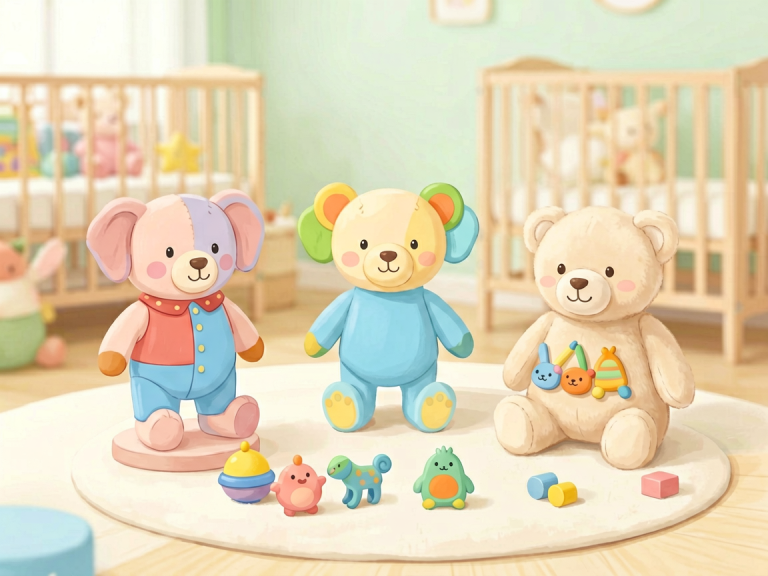
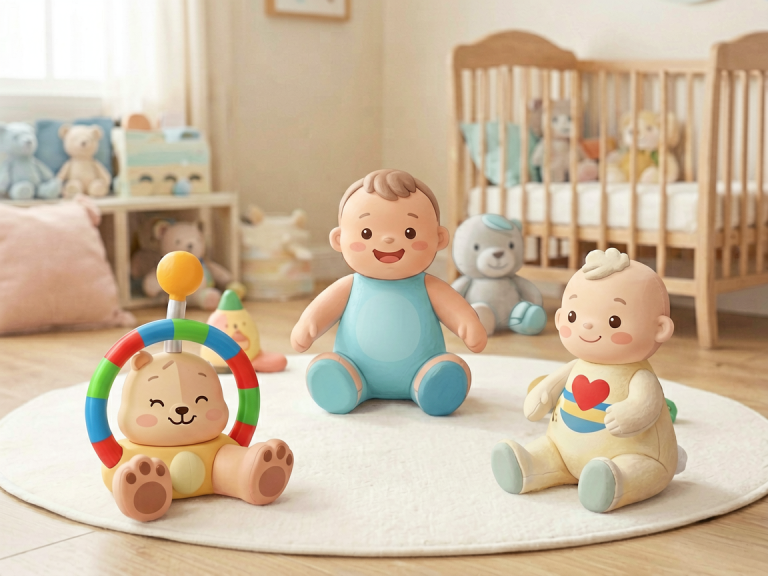
Many modern plush toys are equipped with technology that allows them to say letter sounds or simple word families when a baby hugs or squeezes them. The best ones rotate through a bank of single phonemes (e.g., /m/, /n/, /p/) and then combine them into easy syllables. For instance, a teddy bear that whispers “moo” and then says “/m/ /oo/” helps babies hear the blend. Some plush toys also mimic the sound of a parent’s voice, which is more comforting and engaging than synthetic speech. The key is to choose a toy that has a dedicated “phonics mode” rather than one that only plays songs or random sounds.
4. Music and Rhythm Instruments with Phoneme Labels
Shakers, drums, and xylophones might not seem phonics-related at first glance, but when they are paired with spoken sound prompts, they become powerful tools. For example, a baby shaking a rattle that simultaneously makes a clicking noise and the caregiver says “/k/ /k/ /k/” reinforces the connection between rhythm and phoneme production. More sophisticated toys have built-in speakers that play a phoneme in sync with the instrument’s beat. This type of multimodal input helps babies internalize the tempo of spoken language, which is a hidden but essential component of phonics.
Age-Appropriate Recommendations: From Newborn to Toddler
It is important to match the toy to the baby’s developmental stage to ensure both safety and effectiveness.
- 0–6 Months: At this stage, high-contrast visual stimuli and simple, repetitive auditory input are best. Look for black-and-white sensory cards that have large letters on one side and a corresponding object on the other, paired with a parent’s voice saying the sound. Musical mobiles that play single phoneme sounds (e.g., “oh,” “ah,” “ee”) on a loop can also be hung above the crib. Avoid any toys with small batteries accessible to the baby.
- 6–12 Months: As babies begin to sit up and grasp, introduce soft phonics blocks with embedded rattles that produce a different sound for each block. Choose ones that have raised letter shapes so the baby can feel the contours. Interactive books with a single sound button per page—where pressing the button says a clear phoneme, such as “/d/” for dog—are excellent. Plush toys that respond to a baby’s touch with a calm, clear voice are also safe and engaging.
- 12–18 Months: Now that babies are more mobile and beginning to vocalize, encourage exploratory play with phonics puzzles that require putting a letter-shaped piece into a matching slot, triggering a sound. Look for toys that introduce simple word families (e.g., “-at” words like “cat,” “bat,” “hat”) with a verbal prompt. Simple phonics apps on a parent’s phone (used under supervision) that feature a big, colorful letter and a clear sound can also supplement physical toys, but screen time should be limited for babies.
Integrating Phonics Toys into Daily Routines
The most effective use of educational toys is not in long, structured sessions but in short, playful interactions woven into everyday activities. For example, during diaper changes, a parent can hold a phonics plush toy nearby and squeeze it to produce the /b/ sound while saying “bum, bum, bum” playfully. During bath time, foam letters that stick to the tub can be used to make a “sound soup”: the parent scoops up a letter, says its sound, and drops it into the water. After meals, a sensory phonics mat can be placed on the floor for tummy time, allowing the baby to press letters with their hands or feet. The key is to keep the atmosphere joyful and pressure-free. Babies should never be forced to “perform” or repeat sounds; rather, the toys should be part of the environment, offering spontaneous learning moments. Consistency matters more than duration—even five minutes of focused, interactive play per day can accumulate significant neural benefits over months.
The Role of Parental Interaction: The Human Element
No toy, no matter how sophisticated, can replace the value of a responsive caregiver. Educational toys are at their best when they serve as a bridge between the baby and the parent’s voice. When a toy makes a sound, the parent should immediately echo it, exaggerating their own mouth movements and smiling. This social reinforcement lights up the baby’s mirror neuron system, helping them connect the toy’s sound with a real human mouth. For instance, if a phonics block says “/m/,” the parent can say “Mmm… like Mommy! Mmm…” and then touch the baby’s lips gently. This turns a passive listening experience into a dynamic, relational one. Moreover, parents should vary their tone, pitch, and speed to keep the baby’s attention, and they should follow the baby’s cues—if the baby turns away, it’s time to stop. The goal is to make phonics a shared, loving activity, not a drill.
Conclusion
Educational toys designed to build phonics in babies are far more than commercial novelties; they are scientifically grounded tools that capitalize on the brain’s early plasticity. By offering clear, repeated, and multisensory exposure to phonemes, these toys establish the neural architecture necessary for later reading success. However, their effectiveness hinges on thoughtful selection—choosing toys with exaggerated articulation, repetition, interactivity, and safety—and on the quality of adult involvement. When a parent pairs a well-designed phonics toy with warm, responsive interaction, a baby’s playtime becomes a powerful foundation for literacy. In an age when screens often dominate early learning, it is heartening to know that simple, tactile, and auditory toys can give babies a head start in cracking the code of written language—one sound at a time.