Unlocking Creativity and Curiosity: The Power of Hands-On Learning Activities at Home
Introduction
In an age where screens dominate our children’s attention, the value of hands-on learning has never been more critical. While formal education provides essential theoretical frameworks, it is often the tactile, experiential activities at home that ignite a lifelong love for discovery. Hands-on learning—whether through cooking, building, gardening, or simple science experiments—transforms abstract concepts into tangible realities. It encourages children to ask questions, make mistakes, and develop problem-solving skills in a safe, nurturing environment. This article explores why hands-on activities are indispensable, offers practical ideas for different age groups, and provides tips for parents to create a rich learning ecosystem within their own four walls.
Why Hands-On Learning Matters More Than Ever
Hands-on learning, also known as experiential learning, engages multiple senses simultaneously. When a child kneads dough, measures ingredients, or assembles a model, they are not just memorizing facts—they are constructing meaning. Research in educational psychology consistently shows that active participation improves retention, critical thinking, and motivation. For instance, a child who builds a simple circuit with a battery, wires, and a bulb understands electricity far more deeply than one who merely reads about it in a textbook. At home, parents have the unique opportunity to tailor activities to their child’s interests, pace, and learning style. Moreover, these shared moments strengthen family bonds and build confidence. In a world that often emphasizes standardized test scores, hands-on learning reminds us that true education is messy, playful, and deeply personal.
Designing a Home Learning Environment: Key Principles
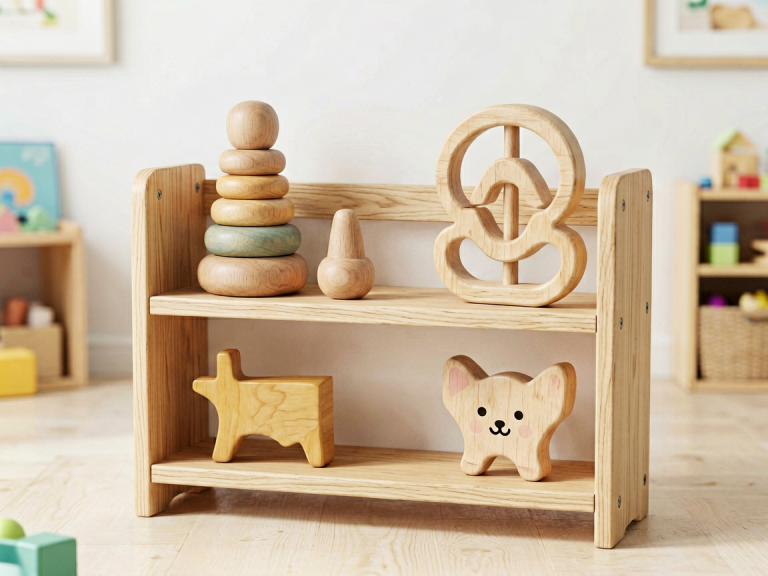
Before diving into specific activities, it is useful to establish a few guiding principles. First, embrace the mess. Flour on the counter, soil on the floor, and paint on fingers are not signs of failure but of engagement. Second, follow the child’s lead. If your child is fascinated by dinosaurs, create fossil casts with plaster or dig for “bones” in a sandbox. Third, integrate learning into daily routines. Cooking is chemistry; sorting laundry is mathematics; gardening is biology. Finally, keep materials accessible. A low shelf with jars of beans, measuring cups, magnets, magnifying glasses, and art supplies invites spontaneous exploration. The goal is not to replace school but to complement it with experiences that make learning irresistible.
Hands-On Activities for Preschoolers (Ages 3–5)
At this stage, children are naturally curious and learn best through sensory play. Simple activities build foundational skills in fine motor coordination, language, and early math.
*Sensory Bins and Discovery Jars*: Fill a plastic bin with rice, dried beans, or sand. Add scoops, funnels, small toys, and spoons. Let your child dig, pour, and sort. For a themed approach, create a “dinosaur excavation” bin with toy bones buried in kinetic sand. Alternatively, make a discovery jar by filling a clear plastic bottle with water, glitter, and small objects like beads or buttons. Seal it tightly and let your child shake and observe—this teaches cause and effect and provides calming sensory input.
*Kitchen Science: Baking Soda and Vinegar Volcano*: This classic experiment never fails to delight. Place a small plastic cup on a tray, fill it with baking soda, add a drop of dish soap, and then pour in vinegar mixed with red food coloring. The fizzy eruption is a vivid lesson in chemical reactions. While the child watches, use simple words: “The acid in the vinegar reacts with the base in the baking soda to create carbon dioxide gas. That’s what makes the bubbles!” Even if the science is not fully understood, the wonder plants a seed.
*Nature Collages and Leaf Rubbings*: Take a walk in the backyard or park and collect leaves, twigs, flowers, and pebbles. Back home, arrange them on sticky contact paper or glue them onto cardboard. For leaf rubbings, place a leaf under a piece of paper and rub the side of a crayon over it. This activity develops observation skills and fine motor control while connecting children to the natural world.
Hands-On Activities for Elementary School Children (Ages 6–10)
As children enter elementary school, their cognitive abilities expand, and they can handle more complex projects that integrate literacy, math, and science.
*Build a Simple Machine: The Lever and the Pulley*: Use a ruler, a pencil, and a small object to demonstrate a lever. Show how placing the fulcrum (pencil) closer to the load makes it easier to lift. Then, construct a simple pulley with a spool of thread, a string, and a cup. Hang the spool on a doorknob, thread the string through, tie the cup to one end, and watch your child discover how pulleys reduce effort. This hands-on exploration of physics concepts like force and mechanical advantage is far more memorable than a diagram.
*Create a Homemade Compass*: Magnetism becomes magical when a child makes their own compass. Rub a sewing needle with a magnet about 50 times in one direction. Then, float the needle on a small piece of cork or a leaf in a bowl of water. The needle will align with the Earth’s magnetic field, pointing north. This activity blends hands-on science with geography. Follow up by mapping the layout of your home and marking directions, turning your house into a navigational adventure.
*Math in the Kitchen: Fraction Pizza*: Cooking is a perfect vehicle for math. Make or buy pizza dough, sauce, and cheese. Have your child roll out the dough into a circle, then ask them to divide it into halves, quarters, and eighths using a plastic knife (or just by sight). Count the pieces and discuss equivalent fractions: “Two eighths make one quarter!” Let them add toppings and bake. The reward is a delicious, edible lesson in fractions, measurement, and following sequential instructions.
Hands-On Activities for Middle and High School Students (Ages 11–18)
Older students crave autonomy and real-world relevance. Hands-on projects at this level should challenge their analytical thinking, creativity, and technical skills.
*Design and Build a Rube Goldberg Machine*: This is the ultimate engineering challenge. Using household items—dominoes, marbles, ramps made from cardboard tubes, string, cups, and pulleys—students design a machine that performs a simple task (like popping a balloon or turning off a light) through a chain reaction. Planning, prototyping, testing, and iterating teaches physics, problem-solving, and perseverance. Encourage them to document the process with video or sketches, and discuss concepts like energy transfer, gravity, and friction.
*Conduct a Real Chemistry Experiment: Polymer Slime and Ink Chromatography*: For chemistry, go beyond the baking soda volcano. Make slime using glue, borax solution, and food coloring—students can vary the ratios to observe changes in viscosity and elasticity. Then, try ink chromatography: draw a dot with a black marker on a coffee filter, dip the edge in water, and watch the colors separate as the water rises. Discuss solubility, polarity, and the scientific method. For safety, ensure proper supervision and use non-toxic materials.
*Financial Literacy Project: Create a Family Budget Simulation*: Hands-on learning isn’t limited to science. Teach practical life skills by simulating a family budget. Give your teenager a fictional monthly income and a list of expenses: rent, utilities, groceries, transportation, entertainment, and savings. Have them research real costs online or from your own bills. Then, challenge them to allocate funds, make trade-offs, and even plan for an unexpected expense like a car repair. This project builds numeracy, critical thinking, and an understanding of real-world economics.
Tips for Making Hands-On Learning Sustainable and Joyful
The best intentions can fizzle out without a few strategies. First, set up a dedicated “maker space” or “tinker table” in a corner of the living room or garage. Store basic supplies—tape, glue, scissors, cardboard, paper, recycled containers, string, and markers—so that inspiration can strike at any moment. Second, embrace the concept of “process over product.” The aim is not a Pinterest-perfect outcome but the journey of exploration. Celebrate failures as learning opportunities: “What happened when you added too much water? How can we adjust?” Third, connect activities to your child’s current interests. If they love video games, explore coding with simple platforms like Scratch, or build a cardboard controller. If they adore animals, build a bird feeder from a milk carton and observe the visitors. Finally, model curiosity yourself. When you cook, ask aloud: “I wonder why the yeast makes the bread rise?” Let your child see you researching, experimenting, and learning alongside them.
Conclusion
Hands-on learning activities at home are not an optional luxury; they are a vital complement to formal education. They transform passive reception of information into active construction of knowledge. From the toddler who learns physics by dropping a spoon repeatedly to the teenager who builds a business plan from a lemonade stand, these experiences shape how children understand the world and their place in it. In the cozy chaos of a kitchen, the quiet focus of a workbench, or the muddy joy of a garden, learning becomes something to touch, to taste, to build, and to remember. As parents and caregivers, we have the privilege—and the responsibility—to create these opportunities. So clear the table, gather the supplies, and let the hands-on adventure begin. The lessons learned today will ripple outward for a lifetime.