Unlocking Imagination: Engaging Pretend Play Activities for Two-Year-Olds
Introduction
Pretend play, also known as imaginative or symbolic play, is a cornerstone of early childhood development. For a two-year-old, the world is a vast, mysterious place, and the ability to “pretend” marks a thrilling cognitive leap. At this age, children begin to move beyond simple sensory exploration and start representing objects, actions, and even feelings through make-believe. Engaging a two-year-old in pretend play activities is not only delightful but also profoundly beneficial for their language, social, emotional, and problem-solving skills. This article explores a variety of simple, safe, and developmentally appropriate pretend play activities tailored specifically for two-year-olds, along with practical tips for parents and caregivers to foster these magical moments of imagination.
—
Why Pretend Play Matters for Two-Year-Olds
Before diving into specific activities, it is essential to understand why pretend play is so critical at the age of two. At this developmental stage, toddlers are rapidly acquiring language, learning to regulate emotions, and beginning to understand the perspectives of others. Pretend play offers a unique sandbox for practicing all of these skills.
First, it boosts language development. When a two-year-old pretends to talk on a toy phone or “feed” a stuffed bear, they are experimenting with vocabulary, sentence structure, and conversational turn-taking. They may mimic phrases they have heard from you, such as “Hello, how are you?” or “Time to eat!” This repetition solidifies new words and concepts.
Second, pretend play nurtures social and emotional intelligence. Through role-playing, a toddler learns to navigate relationships and express feelings. For instance, pretending to be a doctor checking a doll’s temperature helps the child process a recent visit to the pediatrician, thereby reducing anxiety. It also encourages empathy—caring for a “sick” toy teaches nurturing behaviors.
Third, it fosters cognitive flexibility and problem-solving. A simple cardboard box becomes a car, a boat, or a house. This symbolic thinking—using one object to represent another—is the foundation of abstract reasoning. Toddlers also begin to plan simple sequences: “First I need to put on the hat, then I will stir the soup.” Such planning strengthens working memory and executive function.
Finally, pretend play provides a safe outlet for emotional release. A two-year-old might act out a tantrum with a toy or pretend to scold a doll, thereby processing their own experiences in a controlled environment.
—
Simple Pretend Play Activities for Two-Year-Olds
The beauty of pretend play at this age lies in its simplicity. Elaborate toys are unnecessary; children’s imaginations thrive with everyday objects and a little encouragement. Below are several activity categories, each with concrete examples and variations.
1. Kitchen and Cooking Scenarios
The kitchen is a natural stage for a two-year-old. Little ones love to imitate parents preparing meals. Set up a “play kitchen” area with a few small pots, pans, plastic plates, and empty food containers (such as cereal boxes, yogurt cups, or plastic fruit). You can also use real, safe kitchen tools—a wooden spoon, a silicone spatula, and a stainless steel bowl. Encourage your child to “cook” for you: “Can you make me some soup? Stir, stir, stir!” They may pretend to pour water, mix imaginary ingredients, and then serve you a plate. This activity enhances fine motor skills, sequencing, and social interaction through serving and sharing.
Variation: Use play dough or homemade salt dough to create pretend food like cookies or carrots. Let your child roll, flatten, and “bake” them in the play oven. This adds a tactile element that two-year-olds love.
2. Dress-Up and Role-Play
Around age two, children become fascinated with putting on clothes—or draping them over their heads. A simple dress-up box can contain a few items: a floppy hat, a pair of oversized sunglasses, a scarf, a plastic stethoscope (from a toy doctor kit), and a small cloth bag. You do not need full costumes; a single prop can spark a role. For example, hand your child a toy telephone and say, “Hello, who is calling? Is it Grandma?” Watch as they babble into the phone, mimicking your side of a conversation.
Role-Specific Ideas:
- Doctor Play: Use a toy thermometer, a bandage, and a stuffed animal. Say, “Oh no, Teddy has a boo-boo. Can you make him feel better?” The child might wrap the bandage around the bear’s paw or “listen” to its heart.
- Firefighter or Police: A cardboard tube can be a hose or a walkie-talkie. A flashlight (with supervision) becomes a searchlight. Let your child run around “rescuing” toy animals from a pretend fire using a blanket.
- Pet Owner: Use a toy dog or cat on a string leash. Take the pet for a walk around the living room, stopping to “pet” it and give it water.
3. Transportation Imaginings
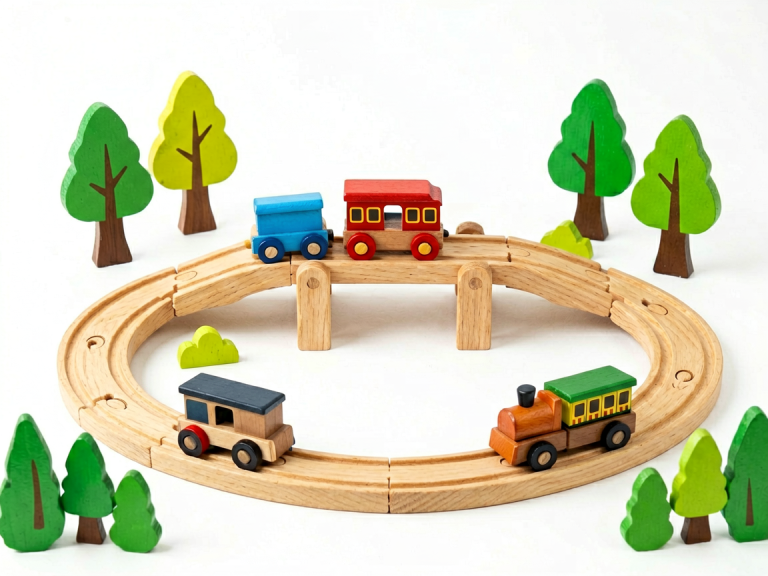
Two-year-olds are often mesmerized by vehicles. A large cardboard box can become a car, a train, or a spaceship. Draw wheels on the sides with markers, cut out a windshield (or let the child pretend the open top is the window), and give them a paper plate steering wheel. Then, go on a pretend trip: “Where should we drive? To the park? To the beach? Beep beep!” You can also use a small riding toy as a bus, collecting stuffed animals as passengers. This builds coordination, spatial awareness, and narrative thinking.
Alternative: Lay a long piece of blue fabric on the floor to represent a river. Give your child a small cardboard boat and a plastic duck. They can push the boat along the “water,” making splashing sounds. This simple sensory pretend play encourages story creation.
4. Grocery Shopping and Store Play
Toddlers absorb the routines of daily errands. Create a “store” using a low table or a mat. Place a few items—plastic fruit, empty milk cartons, toy cans, a purse, and a basket. Give your child a play wallet with pretend money or a card. Take turns being the shopper and the cashier. “I would like an apple, please. How much does it cost?” Your child may hand you a leaf (representing money) or simply hand you the item. You can practice manners (“Thank you!”) and counting. This activity also supports categorization as children sort items by type or color.
Tip: Involve real objects from your pantry (empty and clean) to connect pretend play to everyday life. A two-year-old will feel a sense of mastery when they “buy” the same cereal you have in the kitchen.
5. Animal Adventures
Two-year-olds adore animals. Set up a little “zoo” or “farm” using stuffed animals, plastic animal figurines, or even socks turned into puppets. Arrange them on the floor and describe each one: “This is a lion. It roars! Do you want to feed the lion some grass?” You can also use a blanket as a “forest” and have the animals hide. Play hide-and-seek with a toy elephant: “Where did the elephant go? Is it under the blanket?” This encourages vocabulary expansion (animal names, sounds, habitats) and imaginative thinking about where animals live and what they eat.
Extension: Make a simple “pond” with a blue towel and place plastic fish or ducks on it. Give your child a small net or a spoon to “catch” the fish. This adds a physical component that refines hand-eye coordination.
—
Tips for Encouraging Pretend Play in Two-Year-Olds
While children naturally gravitate toward pretend play, adults can nurture this inclination in several ways.
1. Follow Their Lead. The best pretend play is child-directed. If your child picks up a block and starts making it “eat” a toy, go with that. Join their world rather than imposing your script. Ask open-ended questions like, “What happens next?” or “Is the block hungry?” This encourages them to elaborate.
2. Keep Props Simple and Safe. At age two, small parts pose a choking hazard. Avoid tiny objects like beads or buttons. Use large, sturdy items: scarves, cardboard boxes, plastic bowls, soft balls, and dolls. Rotate props every few weeks to maintain novelty.
3. Model Pretend Play Without Over-Directing. Demonstrate simple actions: pretend to sip from an empty cup, brush a doll’s hair, or put a toy to bed. Then step back and observe. Your modeling gives the child vocabulary and ideas, but the magic happens when they take control.
4. Provide a Rich Language Environment. Narrate your own pretend play aloud. “I am pouring tea for you. It’s hot, so I will blow on it.” This exposes your child to descriptive language, and they will soon imitate your phrases. Also, respond to their babbling as if it were full sentences—this validates their attempts and encourages more communication.
5. Value the Process, Not the Product. A two-year-old’s pretending might look chaotic or repetitive. They may feed the same doll twenty times or insist on wearing the same hat for a week. That is perfectly normal—they are consolidating the schema. Praise their effort: “You are working so hard to take care of that baby!” Avoid correcting them (e.g., “No, that’s not a real phone”). Instead, join in with enthusiasm.
—
Safety and Supervision Considerations
Although pretend play is low-risk, a few precautions are vital for a two-year-old. Always supervise to prevent mouthing of small objects or accidental swallowing. Avoid costumes with long strings or loose pieces that could cause entanglement. If using furniture for “cars” or “houses,” ensure stability—a wobbly table could topple if the child leans on it. Keep play areas clear of sharp edges. When using real household items like pots or wooden spoons, check for splinters, cracks, or heavy lids that could pinch fingers.
Also, be mindful of sensory overload. A two-year-old may become overstimulated by too many props or noise. Keep sessions short (10–20 minutes) and end when the child loses interest. Pretend play should feel like joyful exploration, not a chore.
—
Conclusion
Pretend play activities for two-year-olds are more than just delightful pastimes—they are vital learning opportunities that shape the developing brain. By engaging in simple kitchen play, dressing up, driving cardboard cars, shopping in a make-believe store, and embarking on animal adventures, toddlers build language, social skills, emotional regulation, and creative problem-solving. The best part is that these activities require little more than a willing adult and a few everyday objects. As you watch your two-year-old transform a spoon into a magic wand or a blanket into a castle, remember that you are witnessing the birth of imagination. Embrace the mess, the repetition, and the laughter—because each moment of pretend play is a brick in the foundation of a curious, confident, and empathetic child.
*(Word count: approximately 1,450 words)*