Unlocking Imagination: Essential Pretend Play Activities for 3-Year-Olds
Pretend play is far more than a charming pastime for toddlers—it is the engine of early cognitive, social, and emotional development. At age three, children are brimming with curiosity and a burgeoning ability to represent their world through symbols and actions. A cardboard box becomes a spaceship, a wooden spoon transforms into a magic wand, and a blanket draped over a chair becomes a secret fortress. This kind of imaginative play is not merely entertainment; it is how three-year-olds learn to understand relationships, practice language, negotiate roles, and experiment with emotions. In this article, we will explore a variety of engaging pretend play activities specifically suited for three-year-olds, explain why each matters, and offer practical tips for parents and caregivers to nurture this critical form of play.
<h2>Why Pretend Play Matters at Age Three</h2>
Before diving into specific activities, it is helpful to understand the developmental milestones that make pretend play so valuable at this age. By their third birthday, most children have developed a vocabulary of several hundred words and are beginning to form short sentences. They can follow simple instructions, imitate adult behaviors, and engage in symbolic thinking—meaning they can use one object to stand for another. Pretend play becomes more structured and purposeful: a child might announce, “I am the daddy, you be the baby,” and then act out a familiar routine like feeding or bathing.
Socially, three-year-olds are starting to play alongside peers (parallel play) and sometimes together (cooperative play). Pretend scenarios allow them to practice turn-taking, sharing, and empathy. Emotionally, role-playing helps children process experiences that may be confusing or frightening, such as a visit to the doctor or the arrival of a new sibling. Research shows that children who engage in rich pretend play tend to develop stronger problem-solving skills, greater creativity, and better self-regulation. For all these reasons, intentionally incorporating pretend play activities into a three-year-old’s daily routine is one of the most beneficial investments a parent can make.
<h2>Top Pretend Play Activities for 3-Year-Olds</h2>
The following activities are designed to be simple, low-cost, and adaptable to whatever materials you have at home. Each activity encourages different aspects of development while keeping safety and engagement in mind.
<h3>Kitchen and Cooking Play</h3>
The kitchen is a natural stage for three-year-olds because they see adults spending so much time there. A pretend kitchen setup—whether a store-bought play stove or a cardboard box drawn with markers—allows children to imitate cooking, serving, and cleaning. Provide play food, empty containers, pots, wooden spoons, and plastic bowls. Encourage your child to “cook” a meal for a stuffed animal or for you. You might say, “I see you are making soup. What ingredients are you adding?” This activity builds language skills as children name foods and actions, practices sequencing (first stir, then pour), and introduces early math concepts like counting cups or measuring spoons.
To extend the play, add a cash register or pretend money to transform the kitchen into a restaurant. Your three-year-old can take your order or serve you a plate of plastic vegetables. This variation promotes turn-taking and simple social scripts, such as “What would you like to eat?” and “Thank you, come again!”
<h3>Doctor and Patient Play</h3>
A doctor’s kit is a classic prop for good reason: it gives children a safe way to explore fear and curiosity about medical visits. A three-year-old can use a toy stethoscope to listen to a doll’s heartbeat, give a pretend injection, or wrap a bandage around a teddy bear’s leg. You can add a small notebook for writing prescriptions, a toy syringe, and a white coat or apron. As the parent or caregiver, your role is to become the patient. Let your child lead the examination. Ask questions like, “Doctor, why does my arm hurt?” and watch how your child responds. This builds empathy (the child learns to care for someone else) and narrative skills as they explain what is happening.
If your child is nervous about a real doctor visit, rehearsing the experience through play can reduce anxiety. You can narrate each step: “First the doctor checks my ears, then looks in my mouth…” This predictability helps a three-year-old feel more in control.
<h3>Dress-Up and Role-Playing</h3>
At three, children love to transform into other characters. Keep a basket of simple costumes: a firefighter hat, a princess crown, a super cape, a construction worker vest, or an animal mask. But you don’t need store-bought items—a scarf can be a superhero cape, a paper crown from a birthday party works perfectly, and an old shirt worn backward becomes a doctor’s coat. Encourage your child to choose a role and act out scenarios. Maybe they are a firefighter rescuing a cat from a tree (the couch), or a mail carrier delivering letters to family members.
Role-playing helps three-year-olds practice different social roles and language registers. A child pretending to be a teacher might speak more slowly and use words like “sit down” or “good job.” A child playing a chef might use cooking terminology. This variety expands vocabulary and teaches flexibility in communication. It also builds confidence, as the child becomes the expert in their imagined world.
<h3>Construction and Building Play</h3>
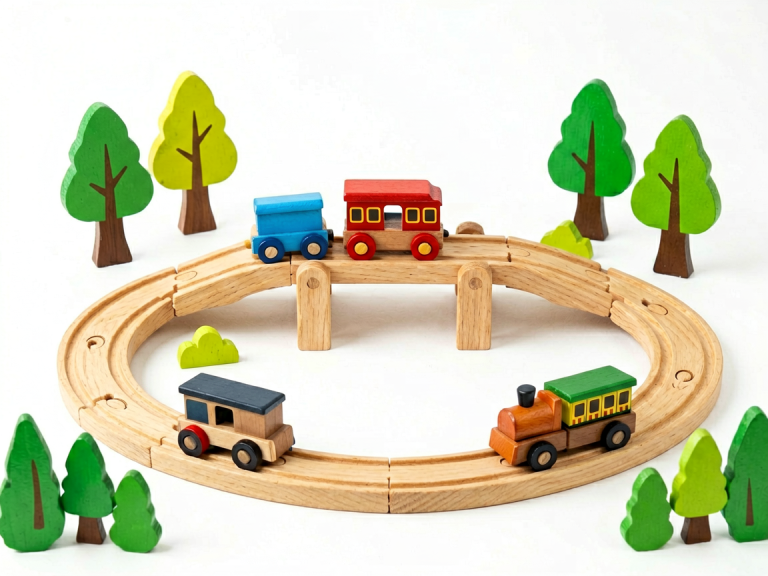
Building blocks, train tracks, and plastic animals can combine into elaborate pretend worlds. A three-year-old might build a house for the stuffed animals and then pretend the family is going to sleep or eating dinner. Or they might construct a road for toy cars and act out a traffic jam. To encourage this, provide open-ended materials: wooden blocks, Duplo bricks, cardboard tubes, small boxes, and toy figures. Let your child decide what to build and why. You can join in by asking questions: “Who lives in this house? What do they do in the kitchen?” This type of play develops spatial reasoning, problem-solving (how to keep the tower from falling), and cooperative storytelling.
Construction play also pairs well with other themes. For example, if your child is into dinosaurs, build a jungle habitat and act out a dinosaur adventure. The combination of building and narrative creates a rich learning experience.
<h3>Animal and Nature Pretend Play</h3>
Many three-year-olds are fascinated by animals. Encourage them to pretend to be a dog, cat, elephant, or bird. This physical pretend play involves crawling, jumping, flapping arms, and making animal sounds—excellent for gross motor development. You can set up a “veterinary clinic” for stuffed animals or a “zoo” with toy animals in different rooms. Ask your child to feed the animals, give them names, and tell you stories about what each animal likes to do.
For nature-themed play, create a simple camping scene indoors: a blanket fort becomes a tent, a flashlight is a campfire, and stuffed animals are campers. Pretend to toast marshmallows, sing campfire songs, or look at “stars” (dots on the ceiling). This activity encourages sequencing, collaboration, and a sense of adventure.
<h2>How Parents Can Encourage Pretend Play</h2>
While children often initiate pretend play on their own, adults play a crucial role in enriching and extending it. Here are practical strategies for fostering imaginative play in three-year-olds.
First, create a safe, accessible play environment. Keep a basket of props (hats, scarves, empty containers, toy tools) within easy reach. Rotate items periodically to keep interest fresh. A play space does not need to be elaborate: a corner of the living room with a small table and a few bins works perfectly.
Second, follow your child’s lead. Resist the urge to direct the play or correct “mistakes.” If your child wants to use a banana as a telephone, that is a sign of healthy symbolic thinking. Instead, ask open-ended questions such as, “What happens next?” or “How does that work?” These prompts encourage your child to elaborate on the story and solve problems independently.
Third, model pretend play yourself. Sit down and pick up a toy, or ask your child if you can be the customer at their shop. When adults engage in play, children feel validated and are more likely to dive deeper into their narratives. Use exaggerated voices and silly actions—fun is the core ingredient.
Fourth, limit screen time and provide uninterrupted play blocks. Three-year-olds need long stretches (at least 30–45 minutes) to fully immerse themselves in imaginative worlds. When screens are off, creativity flourishes. Also, avoid interrupting play for unnecessary errands or scheduled activities.
Finally, value the process over the product. The goal of pretend play is not to produce a neat craft or a perfect story. It is the exploration, negotiation, and emotional expression that matter. Celebrate the mess, the chaos, and the wild ideas. A cardboard box that becomes a time machine is more valuable than any expensive toy.
<h2>Conclusion</h2>
Pretend play is the heartbeat of early childhood. For three-year-olds, these activities are not just games—they are the building blocks of language, social skills, empathy, and cognitive flexibility. Whether your child is cooking an imaginary feast, bandaging a stuffed bear, or roaring like a dinosaur, they are actively constructing their understanding of the world. By offering simple props, following their lead, and allowing ample time for unstructured play, you are giving your three-year-old the richest possible learning environment. So next time you see a blanket fort rising in the living room or hear the announcement, “I’m the mommy now,” smile and join in. You are witnessing the incredible power of imagination in action.