Unlocking Creativity and Curiosity: The Ultimate Guide to STEM Play Gift Ideas
—
Introduction: Why STEM Play Matters More Than Ever
In an era defined by rapid technological advancement and global challenges, the ability to think critically, solve problems creatively, and adapt to new information has never been more valuable. STEM—an acronym for Science, Technology, Engineering, and Mathematics—has moved beyond the classroom and into the living room, the backyard, and the playroom. Parents, educators, and gift-givers increasingly recognize that the best presents are not just entertaining but also educational, sparking a lifelong love for discovery. STEM play gifts bridge the gap between fun and learning, turning playtime into a laboratory of innovation. Whether it’s a toddler exploring cause and effect with building blocks or a teenager coding their first robot, these gifts cultivate essential skills like logical reasoning, spatial awareness, collaboration, and resilience. This article explores a curated collection of STEM play gift ideas, organized by age group and interest, ensuring that every young mind finds a doorway into the wonders of science and engineering. From unplugged hands-on kits to high-tech coding companions, these suggestions are designed to inspire curiosity, foster confidence, and—most importantly—make learning feel like an adventure.
—
Why STEM Play Is More Than Just “Educational”
Before diving into specific gift ideas, it’s worth understanding what makes STEM play uniquely powerful. Traditional toys often focus on a single skill—memory, fine motor control, or imaginative storytelling. STEM toys, by contrast, integrate multiple disciplines and encourage open-ended exploration. For example, a simple marble run teaches physics (gravity, trajectory), engineering (structural stability), and even art (aesthetic design) simultaneously. Moreover, STEM play nurtures a growth mindset: children learn that failure is not a dead end but a step toward a better solution. When a bridge collapses or a code doesn’t compile, the process of debugging and redesigning builds perseverance and critical thinking—traits far more valuable than any single piece of knowledge. Research shows that early exposure to STEM activities can reduce gender and socioeconomic gaps in science and math achievement, making these gifts not just enjoyable but also equity-building. In short, a well-chosen STEM gift gives children the tools to ask better questions, not just to memorize answers.
—
Gift Ideas for Ages 3–6: Building Blocks of Wonder
At this foundational stage, the focus should be on sensory exploration, cause and effect, and gross motor skills. The best STEM toys for preschoolers are durable, safe, and intuitively engaging—they invite curiosity without overwhelming instructions.
1. Magnetic Tiles and Building Sets
Magnetic tiles (such as Magna-Tiles or Picasso Tiles) are a staple in early STEM education. These translucent, colorful shapes snap together with magnets, allowing toddlers to construct towers, bridges, and simple geometric forms. Beyond spatial reasoning, children learn about magnetic polarity, balance, and symmetry. Because the pieces are large and easy to handle, they build fine motor skills and hand-eye coordination. As an open-ended toy, magnetic tiles grow with the child: a two-year-old might simply stack them, while a five-year-old might design a castle with arches and ramparts.
2. Simple Coding Games Without Screens
Screen-free coding toys introduce logical sequencing without digital addiction. Products like *Code & Go Robot Mouse* (by Learning Resources) or *Cubetto* (a wooden robot that uses colored blocks to create sequences) teach children to plan steps, recognize patterns, and correct errors. For example, a child programs a robot mouse to reach a cheese piece by placing directional tiles in a grid. This hands-on activity develops computational thinking and problem-solving in a tangible, cooperative way. Parents can also create new mazes with household items, extending the play value.
3. Water and Sand Exploration Tables
Science begins with observation. A simple water table or kinetic sand kit lets preschoolers experiment with volume, density, and texture. Adding cups, funnels, and sieves turns bath time into a physics lab. Why does water flow faster through a narrow funnel? Why does wet sand hold its shape while dry sand crumbles? These are the first scientific questions children ask themselves. Pair the table with a set of plastic pipettes and measuring spoons to introduce early math concepts like “more” and “less.”
4. Nature Investigation Kits
A magnifying glass, a bug catcher, and a simple field guide transform a backyard into a biology classroom. Encourage children to collect leaves, observe ant trails, or examine the veins in a flower petal. Many kits include a notebook for drawing observations, fostering early documentation skills. This kind of unstructured exploration builds a foundation for the scientific method—asking questions, gathering data, and drawing conclusions.
—
Gift Ideas for Ages 7–12: Hands-On Experiments and Real-World Challenges
Elementary and middle school children are ready for more complex projects that require patience, systematic thinking, and collaboration. At this stage, STEM gifts should offer a clear “hook” (like a working robot or a crystal-growing experiment) while also allowing room for personalization.
1. Build-Your-Own Robot Kits
Robotics kits are the crown jewels of STEM play for this age group. Options range from simple snap-together robots (like *LEGO Boost* or *Makeblock mBot*) to more advanced programmable units (*Sphero BOLT* or *VEX IQ*). These kits teach mechanical assembly, basic electronics (sensors, motors), and block-based or text-based coding. For example, a child can program a robot to follow a black line, avoid obstacles, or play music. The sense of accomplishment when the robot finally moves on its own is unmatched. Many kits come with app-based tutorials that gamify learning, making repetitive debugging feel like leveling up in a video game.
2. Science Experiment Kits with Real Outcomes
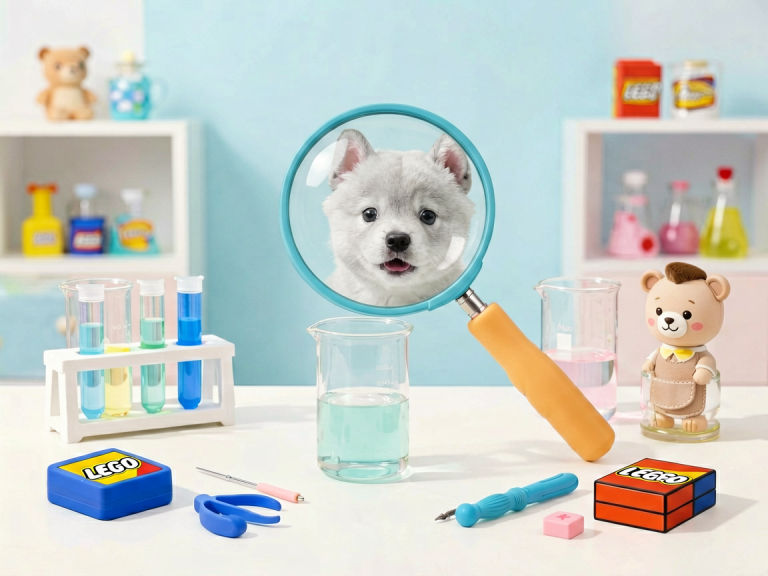
Not all STEM gifts need a screen. Classic chemistry sets, crystal growing labs, or volcano kits remain popular because they produce visible, dramatic results. Look for kits that align with school curricula but go deeper—for instance, *Thames & Kosmos* offers a “Chemistry C500” kit with over 28 experiments, including making fizzy reactions, testing pH, and growing a “chemical garden.” Similarly, snap circuits (like *Snap Circuits Jr.*) let children build working radios, doorbells, and light sensors without soldering. These kits demystify everyday technology and build confidence in handling tools and following procedures.
3. Engineering and Architecture Sets
Engineering toys for this age group should challenge spatial reasoning and structural thinking. *Keva Planks* (simple wooden blocks) allow endless cantilever and bridge designs. *K’NEX* or *LEGO Technic* sets with gears and pulleys teach mechanics—how a bike chain works, or how a crane lifts heavy loads. More advanced options like *Engino* or *Meccano* include motors and solar panels, introducing renewable energy concepts. Children can follow blueprints or invent their own contraptions, learning that failure is often the first step toward a stable design.
4. Math Games That Don’t Feel Like Math
Mathematics is often the least favorite STEM subject, but clever games can change that. Card games like *Prime Climb* or *Math Dice* teach arithmetic and probability through competition. Board games like *Gravity Maze* (a marble run puzzle) or *Rush Hour* (a sliding car logic puzzle) develop strategic thinking and pattern recognition. For children who love storytelling, *Math for Love’s “Tiny Polka Dot”* uses bright cards to teach counting, addition, and multiplication in playful contexts. These gifts prove that math is not about drilling but about discovering elegant solutions.
—
Gift Ideas for Ages 13+: Coding, Engineering, and Creativity Unleashed
Teenagers crave autonomy, relevance, and real-world impact. STEM gifts for this group should feel less like “toys” and more like tools for creation. They should also connect to career paths or personal passions, whether that’s gaming, environmental science, or music production.
1. Single-Board Computers and Electronics Kits
A *Raspberry Pi* or *Arduino starter kit* is the ultimate gift for a budding programmer or electrical engineer. These devices let teens build everything from a weather station to a retro gaming console, a smart mirror, or a robot car. The learning curve is steep but rewarding, and countless online communities (YouTube, forums, GitHub) provide free tutorials and project ideas. A *Raspberry Pi 5* with a camera module can teach machine learning basics—for example, training a model to recognize faces or hand gestures. Such a gift encourages independent research, project management, and troubleshooting—skills that colleges and employers value enormously.
2. 3D Printing Pens and Scanners
A 3D printing pen (like *3Doodler Create+*) allows teens to “draw” three-dimensional objects in plastic. Unlike a printer, a pen requires manual dexterity and spatial planning—users can create jewelry, architectural models, or custom parts for a broken toy. Combined with online design tools like *Tinkercad* (free), a teenager can move from sketching to prototyping in hours. For a more advanced gift, consider a desktop 3D printer like *Creality Ender 3*; this opens up possibilities for product design, engineering projects, and even small business ventures (selling phone stands or cosplay props).
3. Hydroponics and Environmental Science Kits
For teens passionate about sustainability, a *hydroponic grow kit* (like *AeroGarden* or *Click & Grow*) lets them grow herbs, lettuce, or flowers indoors using water and LED lights. They learn about biology (root systems, photosynthesis), chemistry (nutrient solutions), and environmentalism (reduced water usage). More advanced kits include pH meters, grow timers, and data logging—turning a windowsill into a living laboratory. Alternatively, a *weather station kit* (like *Wattson*) that connects to a smartphone app teaches meteorology and data analysis.
4. Advanced Coding and Game Development Tools
Teens who already enjoy video games can channel that passion into game design. A subscription to *Roblox Studio* or *Unity Learn* (with coding in C#) gives them the tools to create their own 3D worlds and characters. For a more structured approach, *Pico-8* (a fantasy console) teaches Lua programming through retro game development. Even a *mechanical keyboard kit* can be a STEM gift: building a keyboard from scratch teaches soldering, circuit design, and firmware configuration. The key is to offer a creative outlet that feels like a hobby, not homework.
—
Final Thoughts: The Gift That Keeps on Growing
The best STEM play gift is not the one with the most features or the highest price tag—it’s the one that sparks a conversation, invites repetition, and adapts to the child’s evolving interests. A magnetic tile set can inspire an architect; a simple coding robot can launch a software engineer; a hydroponic kit can cultivate an environmental activist. As you choose a gift, consider the recipient’s natural curiosity: Do they love building things? Tinkering with gadgets? Asking “why” about the world around them? Pair the gift with a parent or mentor’s involvement, because guided play amplifies learning exponentially. And remember, failure is part of the process—let children struggle, experiment, and even break things safely. In a world full of passive entertainment, STEM play gifts empower young minds to become creators, thinkers, and problem-solvers. That is perhaps the most valuable present of all.