Unlocking Young Minds: The Transformative Power of Educational Toys for Preschoolers
Introduction
The preschool years—roughly ages three to five—are a whirlwind of cognitive, social, and emotional development. During this critical window, children are like sponges, absorbing language, numbers, patterns, and social cues at an astonishing rate. While free play is essential, the right educational toys can turn everyday fun into powerful learning experiences. Educational toys for preschoolers are not merely playthings; they are carefully designed tools that nurture curiosity, problem-solving skills, fine motor coordination, and early academic foundations. In a world increasingly dominated by screens, thoughtfully chosen physical toys offer tangible, hands-on engagement that digital devices cannot replicate. This article explores why these toys matter, the key categories parents and educators should consider, how to select age-appropriate options, and the vital role adults play in maximizing their educational value.
The Importance of Educational Toys in Early Childhood Development
Educational toys serve a dual purpose: they entertain while simultaneously building essential skills. Unlike passive entertainment such as watching a video, high-quality educational toys require active participation. A preschooler stacking colorful blocks isn’t just building a tower; she is experimenting with balance, gravity, spatial relationships, and cause-and-effect. When she fails and the tower topples, she learns resilience and the motivation to try again. Similarly, a simple jigsaw puzzle teaches pattern recognition, patience, and the satisfaction of completing a task.
Research in developmental psychology consistently shows that play-based learning is the most effective method for young children. The brain’s neural connections are forming rapidly, and experiences that involve multiple senses—touch, sight, sound, and sometimes smell or movement—strengthen those pathways. Educational toys often incorporate bright colors, varied textures, sounds, and even scents to engage different senses simultaneously, which enhances memory retention and understanding. Furthermore, these toys encourage independent exploration. A child who figures out how to fit a shape into the correct hole gains a sense of accomplishment that builds self-confidence—a trait that will serve her well throughout school and life.
Key Categories of Educational Toys for Preschoolers
To navigate the vast marketplace, it helps to understand the main types of educational toys and their specific benefits. While many toys overlap categories, the following groupings highlight the primary developmental domains they target.
*Cognitive and Problem-Solving Toys*
Puzzles, memory matching games, and simple board games like “Candy Land” or “Chutes and Ladders” fall into this category. These toys strengthen logical thinking, sequencing, and the ability to follow rules. For preschoolers, puzzles with 12 to 24 large pieces are ideal. They teach visual discrimination and the concept of parts making a whole. Memory games improve concentration and short-term recall. Even a classic set of stacking rings challenges a child to order by size—a precursor to mathematical understanding.
*Language and Literacy Toys*
Alphabet puzzles, magnetic letters, picture books with touch-and-feel elements, and storytelling puppets all support early literacy. A child who plays with letter-shaped cookie cutters while helping bake is not only having fun but also internalizing letter shapes. Electronic speaking toys that pronounce words when pressed can reinforce phonics, but experts recommend balancing them with non-electronic alternatives to avoid overstimulation. Flashcards with vivid images and words can be used in games like “I Spy,” turning vocabulary building into a lively interaction.
*Fine Motor and Manipulative Toys*
Building blocks (wooden or plastic), Lego Duplo, lacing beads, play dough, and threading toys are fantastic for developing the small muscles in hands and fingers. These skills are crucial for later writing, buttoning clothes, and using scissors. For example, squeezing play dough strengthens hand muscles, while connecting Duplo bricks requires precise finger movements. Many of these toys also incorporate counting and sorting, blending motor and cognitive development.
*Creative and Imaginative Play Toys*
Dress-up costumes, play kitchens, tool sets, art supplies (crayons, washable markers, clay), and empty cardboard boxes (yes, they count as toys!) stimulate imagination and emotional intelligence. When a child pretends to be a chef cooking dinner, she practices sequencing (first chop, then cook), social roles, and language as she narrates her actions. Art supplies allow for open-ended creation, which fosters originality and emotional expression. These toys are often undervalued in “educational” discussions, yet they are among the most powerful for developing creativity and executive function.
*STEM (Science, Technology, Engineering, Math) Toys for Young Learners*
Even preschoolers can benefit from basic STEM concepts. Simple magnetic building sets, balance scales, water tables, and nature exploration kits (magnifying glasses, bug catchers) introduce scientific thinking. A water table teaches volume, displacement, and cause-and-effect (pouring water from a big cup to a small one overflows). Color-mixing experiments with droppers and food coloring teach prediction and observation. These toys spark a lifelong love of inquiry.
How to Choose the Right Educational Toys: Guidelines for Parents and Educators
With thousands of products claiming to be “educational,” selection can be overwhelming. The most important criterion is the child’s developmental stage and individual interests. A toy that is too advanced causes frustration; one that is too simple leads to boredom. Look for toys that offer “just right” challenge—tasks that a child can succeed at with some effort, often called the zone of proximal development.
Additionally, prioritize toys that are open-ended rather than single-purpose. Open-ended toys, such as blocks, play dough, or a set of wooden figures, can be used in countless ways and grow with the child. A closed toy, like a battery-operated talking robot that only says predetermined phrases, limits creativity. Also consider the toy’s durability and safety. Preschoolers are rough on toys; well-made products from natural materials (wood, fabric) often last longer and avoid harmful plastics. Check for small parts that could be choking hazards, especially for children under three.
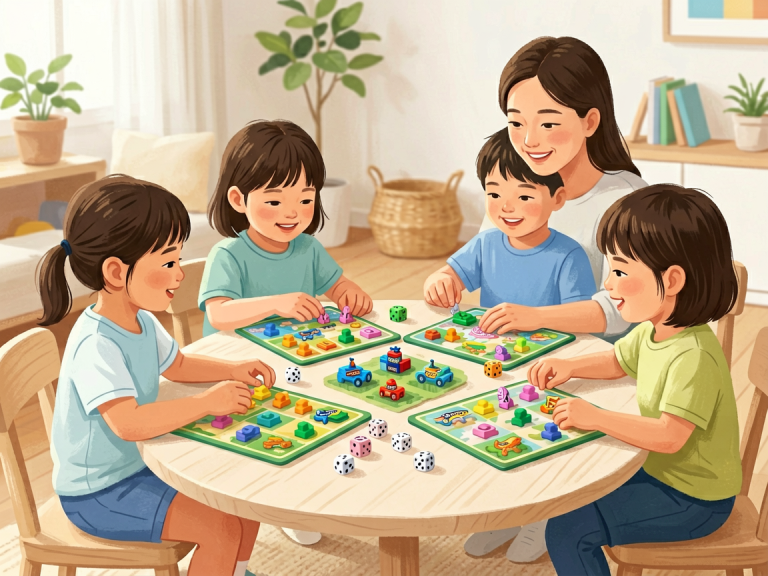
Another key factor is the toy’s ability to encourage social interaction. While independent play is valuable, many of the best learning moments happen when a child plays alongside a parent, sibling, or friend. Toys like board games, building sets that require collaboration, or pretend-play sets with multiple roles teach sharing, turn-taking, and negotiation. Avoid toys that isolate the child in front of a screen; instead, choose those that invite conversation and cooperative problem-solving.
The Role of Adults in Maximizing Learning Through Play
Even the most brilliant educational toy is just a piece of plastic or wood without a caring adult to guide the experience. Parents and educators are the true catalysts of learning. When an adult sits down with a preschooler and asks open-ended questions—“What do you think will happen if we add one more block?” or “How many red beads do you have?”—they scaffold the child’s thinking. They can extend the play by introducing vocabulary: “That blue shape is a hexagon. Can you find another hexagon in the room?” The adult’s enthusiasm is contagious; if you show genuine excitement about a puzzle or a science experiment, the child will mirror that attitude.
Moreover, adults should resist the temptation to correct too quickly. Part of the educational value lies in trial and error. If a child puts a square peg into a round hole, let him try to force it, then observe his own realization that it doesn’t fit. That “aha” moment is far more powerful than an adult simply saying “that’s wrong.” Likewise, during pretend play, adults can follow the child’s lead and join the narrative, which validates the child’s creativity and builds language skills through dialogue.
Finally, limit the number of toys available at once. An overabundance overwhelms young children and leads to shallow play. Rotating a selection of 10–15 high-quality educational toys every few weeks keeps interest fresh and encourages deeper engagement with each item. A well-chosen collection of educational toys, used thoughtfully, can transform a child’s playroom into a laboratory of discovery.
Conclusion
Educational toys for preschoolers are far more than distractions or pacifiers. They are the building blocks of a child’s intellectual, physical, and emotional foundation. From puzzles that sharpen logic to art supplies that unleash imagination, from blocks that teach engineering to costumes that foster empathy, every well-chosen toy offers a lesson waiting to be discovered. The key lies not in the toy itself, but in how it is integrated into a child’s life—with intentionality, love, and a spirit of curiosity. By understanding the categories, selecting wisely, and participating actively, parents and educators can unlock the immense potential hidden inside each simple plaything, giving every preschooler the best possible start on their lifelong learning journey.