Speaking Through Play: The Best Toys for 5-Year-Old Boys to Build Language Development
—
Introduction: Why Toys Matter for a Five-Year-Old’s Language Journey
By the time a boy turns five, his brain is a sponge for language. He is no longer just repeating words—he is forming sentences, asking “why” relentlessly, and beginning to understand abstract concepts like time, emotion, and cause-and-effect. This is a critical window for vocabulary expansion, narrative skills, and social communication. For many boys, however, sitting down with a flashcard or a worksheet feels like punishment. They learn best when their hands are busy, their imagination is engaged, and their play has purpose. That is where carefully chosen toys come in. Toys are not merely distractions; they are the tools through which a five-year-old boy experiments with words, practices turn-taking, and builds the confidence to express himself. The right toys can transform a quiet boy into a storyteller, a hesitant speaker into an animated conversationalist. In this article, we will explore specific categories of toys that actively support language development in five-year-old boys, offering practical examples and explaining the linguistic benefits behind each type of play.
—
The Power of Pretend Play: Role-Playing and Imaginative Sets
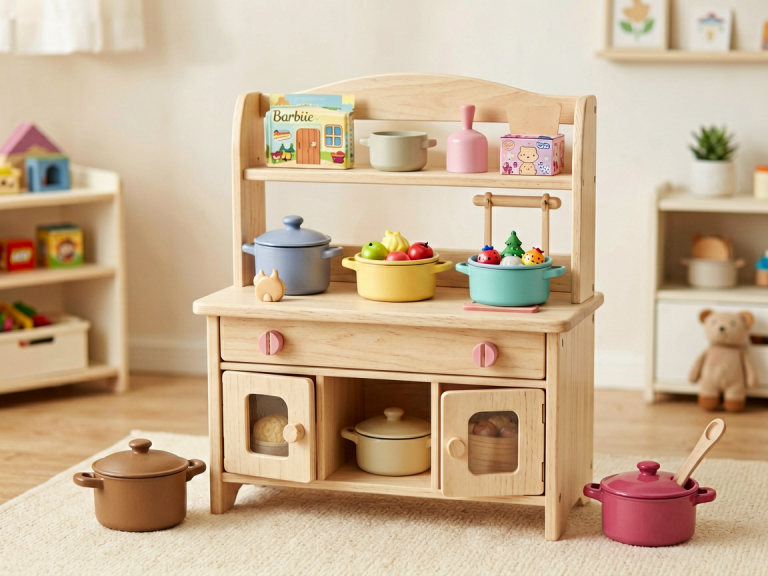
Pretend play is arguably the richest environment for language growth at this age. When a five-year-old boy puts on a firefighter helmet or picks up a toy cash register, he is not just playing—he is constructing a narrative. He must decide who he is, what he is doing, and how to communicate that to his playmates or adult caregivers. Role-playing toys such as doctor kits, kitchen sets, tool benches, and astronaut helmets encourage children to adopt different personalities and use context-specific vocabulary. For example, a boy playing “doctor” will naturally use words like “stethoscope,” “bandage,” “check-up,” and “patient.” He might ask his stuffed animal, “Does it hurt here?” or tell his dad, “You need to take this medicine.” These simulated conversations are low-stakes practice for real-world dialogue.
Furthermore, role-playing toys often require two or more participants, which forces turn-taking, negotiation, and problem-solving. A boy and his friend playing “restaurant” must decide who is the chef and who is the customer, how to order food, and what to do if the “kitchen” runs out of pretend pizza. This type of cooperative play builds pragmatic language skills—knowing how to adjust tone, ask polite questions, and clarify misunderstandings. For parents, the key is to sit back and let the child lead, but occasionally ask open-ended questions such as, “What happens next?” or “Why is the patient sick?” These prompts push the child to expand his story and use more complex sentence structures. Toys like dress-up costumes, play food sets, and toy vehicles with drivers also serve the same purpose—they give the child a concrete scenario in which language becomes essential.
—
Building Blocks of Vocabulary: Construction and Manipulative Toys
Construction toys—such as wooden blocks, interlocking plastic bricks (like LEGO Duplo or basic LEGO sets), magnetic tiles, and wooden train tracks—are deceptively powerful for language development. While a five-year-old boy is busy stacking, balancing, and connecting, his brain is simultaneously processing spatial relationships, cause-and-effect, and descriptive language. When he builds a tall tower, he might announce, “Look! It’s taller than me!” That spontaneous comment involves a comparative adjective (“taller”) and a self-referential comparison. When he builds a garage for his toy car, he might narrate his actions: “I need a big block here. The car goes inside. Now it’s dark.” This running commentary is a form of private speech that helps children regulate their thinking and eventually becomes internalized as inner monologue.
Parents can amplify the language benefits by engaging in parallel or collaborative building. For instance, you can say, “I’m building a bridge. Can you help me make a road that leads to it?” This invites the child to use directional words (“over here,” “next to,” “under”), color names, and numbers. When the construction collapses, it becomes a teachable moment: “Why did it fall? Because the bottom block was too small.” Such conversations build causal language. Additionally, construction toys often come with instruction booklets or picture cards. Reading them together—even if the child cannot decode every word—exposes him to sequencing vocabulary (“first,” “then,” “finally”) and technical terms (“axle,” “slope,” “corner”). The tactile nature of these toys also benefits boys who are kinesthetic learners; they internalize words better when they physically manipulate objects that match the vocabulary.
—
Storytelling Through Play: Books, Puppets, and Storytelling Kits
Books remain a cornerstone of language development, but for a five-year-old boy, the interaction should be dynamic rather than passive. Choose picture books with rich vocabulary, repetitive phrases, and engaging plots—think of classics like *Where the Wild Things Are* or *The Very Hungry Caterpillar*. Reading aloud together builds listening comprehension, but the real magic happens when you go beyond the pages. Pair books with related toys. For example, after reading a book about a pirate adventure, give the boy a small pirate ship, a treasure chest, and a few plastic figures. Then encourage him to retell the story in his own words or invent a new adventure. This kind of narrative play strengthens sequencing (beginning, middle, end) and allows the child to experiment with dialogue.
Puppets and finger puppets are another excellent language tool. A five-year-old boy can use a puppet to speak for a shy character, which lowers the pressure of speaking directly. Puppets can “interview” each other, ask questions, or tell jokes. This playful disguise often unlocks vocabulary that the child might not use in everyday conversation. Storytelling kits—sets that include themed cards, dice, or tiles with characters, settings, and objects—also promote oral language. For instance, a kit might have a card showing a “spaceship,” another with a “robot,” and another with a “storm.” The child must string these elements into a coherent narrative, which requires planning, imagination, and grammatical correctness. Even simple felt boards with cutout shapes allow children to arrange scenes and describe them. The key is to treat these toys not as silent activities but as prompts for talking. Ask questions like, “Where does the story start? What happens after the storm?” The more the boy speaks, the more his neural pathways for language strengthen.
—
Games That Get Them Talking: Board Games and Cooperative Play
Board games are often associated with math and logic, but they are also superb for language development—especially for five-year-old boys who crave structure and competition. Games like “Candy Land,” “Chutes and Ladders,” and “Hi-Ho! Cherry-O” require players to understand and follow verbal instructions, take turns, and express emotions (disappointment, excitement) in words. More importantly, they create natural opportunities for conversation. When a boy lands on a blue space, he must say, “I move to the blue lollipop.” When someone wins, the group cheers and discusses the outcome. These exchanges build syntactic skills and social language.
Cooperative games, where players work together toward a common goal (such as “The Sneaky, Snacky Squirrel Game” or “Count Your Chickens”), are even better because they require negotiation and joint decision-making. A boy might say, “We need to save the bird before the storm comes. What should we do first?” Such questions demand that he use conditional language (“if…then”) and perspective-taking. Parents can further enhance the language component by narrating the game in progress: “You rolled a four. That means you can move four spaces. What do you see on that space?” This builds vocabulary for colors, numbers, and actions. Memory games also boost vocabulary—turn over a card with a picture of a bicycle and name it, then later recall the word. Even simple dice games where players describe the object on the dice work wonders. The repetitive, structured nature of board games makes them safe spaces for boys to practice language without fear of embarrassment.
—
Tech Time with a Purpose: Interactive Talking Toys and Educational Apps
We cannot ignore that many five-year-old boys are drawn to screens and buttons. Rather than banning technology, we can leverage it deliberately. Interactive talking toys—such as the LeapFrog LeapPad, VTech educational tablets, or story-reading robots like the Lunii story player—offer controlled vocabulary exposure and pronunciation models. These toys often have games that ask the child to repeat words, identify objects, or answer questions. For example, a talking pen that “reads” books out loud allows the boy to follow along, learning new words in context. Some toys even record the child’s voice and play it back, which is exciting for a five-year-old and encourages him to speak clearly.
However, passive screen time (watching videos alone) does little for language. The best tech toys require active participation—pressing buttons to answer, speaking into a microphone, or tapping on images that then prompt a verbal response. Parental involvement remains crucial. Sit with your son and use the toy together. Ask him, “What did that game ask you to find? Can you tell me what the robot said?” This turns a solo tech activity into a shared conversation. Apps like “Endless Reader” or “Moose Math” (which incorporates language) also provide repetition and immediate feedback. But remember: technology should complement, not replace, real-world interaction. Use talking toys for 15–20 minutes a day as part of a balanced play diet that includes physical, creative, and social toys.
—
Conclusion: The Real Key Is Adult Interaction
No toy, no matter how cleverly designed, can replace the human voice. A five-year-old boy learns language best when an adult or older sibling engages with him during play—labeling objects, asking open-ended questions, and responding to his attempts to communicate. The toys listed here are catalysts, not teachers. Whether he is building a castle, pretending to be an astronaut, or moving a game piece, every moment is an opportunity to speak and be heard. Choose toys that spark conversation, not silence. Fill his playroom with tools for storytelling, negotiation, and description. And most importantly, sit on the floor with him, listen to his stories, and ask, “What happens next?” That simple question, repeated day after day, will build the foundation for a lifetime of confident language.