Building Emotional Foundations: Play Activities That Nurture Emotional Learning in Babies
Introduction: The Invisible Curriculum of Babyhood
When we think of a baby’s development, we often focus on motor skills—first roll, first crawl, first step—or on cognitive milestones like recognizing faces or babbling. Yet beneath these visible achievements lies a far more subtle, powerful process: emotional learning. Emotional learning is the foundation upon which a child’s ability to form relationships, regulate feelings, and develop empathy is built. And for babies, who cannot yet use words to express what they feel, play is the primary language through which they learn to understand themselves and others.
From birth to around 18 months, a baby’s brain is wiring itself at an astonishing pace. Every interaction, every gentle touch, every game of peek-a-boo shapes the neural pathways that will later govern emotional resilience, trust, and social understanding. The good news is that parents and caregivers do not need expensive toys or special training to support this growth. Simple, intentional play activities—woven into daily routines—are the most powerful tools available. Below, I explore several categories of play that actively foster emotional learning, each designed to meet a baby’s developmental stage while building a secure emotional base.
1. Face-to-Face Mirroring: The First Lesson in Emotional Recognition
Long before a baby can say “happy” or “sad,” they learn to read emotions from the faces around them. Face-to-face mirroring is a simple yet profound activity that begins in the earliest weeks. Hold your baby at a comfortable distance, about 20–30 cm away, where they can clearly see your face. Slowly and deliberately exaggerate an expression—a big smile, a surprised “O” mouth, a gentle frown. Pause and wait. You may notice your baby’s face begin to shift, mimicking you. This is not just imitation; it is the baby’s first attempt to map your emotional state onto their own body.
As your baby grows, you can add a playful element. Try “copycat” games: stick out your tongue slowly, and see if your baby does the same. Widen your eyes, then wait. This back-and-forth exchange teaches the baby that emotions are shared, that their actions can elicit a response, and that they are seen. This sense of being “seen” is the cornerstone of emotional security. Research in developmental psychology shows that responsive mirroring in early infancy is directly linked to later emotional regulation and social competence. To deepen the activity, narrate your feelings in a warm voice: “Mama is happy to see you! Look, I’m smiling! Can you smile too?” Even if the baby does not understand the words, the tone, eye contact, and rhythm of the interaction build the emotional vocabulary they will later use.
2. Peek-a-Boo with Feeling: Trust, Anticipation, and Surprise
Peek-a-boo is perhaps the most universal baby game, but its emotional power is often underestimated. This classic activity teaches babies one of the most difficult emotional concepts: object permanence, but more importantly, it builds trust. When you hide your face behind your hands and then reappear, you are saying, “Even when you cannot see me, I am still here. I will come back.” For a baby, that reassurance is huge.
To turn peek-a-boo into an emotional learning exercise, vary the tone and pace. Try a slow, mysterious version: cover your face with a scarf, pause for a few seconds, then reveal yourself with a gentle “Boo!” and a soft smile. Notice your baby’s reaction—do they tense up? Laugh? Reach for you? This helps you gauge their current window of tolerance for surprise. If they seem startled, slow down. If they giggle, repeat with a playful “Where did Mama go? Here I am!” Over time, babies learn to anticipate the reappearance, which builds emotional prediction skills. They also learn that surprise can be safe and fun, a key lesson for managing unexpected feelings later in life.
You can also incorporate different emotions. Play “sad peek-a-boo” by covering your face and making a small whimpering sound, then reappear with a bright smile. This teaches the baby that feelings can shift and that negative states can be temporary. For older babies (around 9–12 months), let them hide their own face behind a blanket. When they pull it off, celebrate with delighted clapping or a cheerful “There you are! You found me!” This empowers them to control the emotional narrative, boosting their sense of agency.
3. Sensory Invitations: Calm, Interest, and Self-Regulation
Babies experience the world through their senses, and sensory play is a direct pathway to emotional regulation. When a baby is overwhelmed—by a loud noise, a new environment, or tiredness—their nervous system goes into fight-or-flight mode. Sensory play offers a way to co-regulate with a caregiver, bringing the baby back to a state of calm curiosity.
Create a “calm-down basket” filled with safe, texturally interesting objects: a soft silk scarf, a wooden spoon, a smooth stone, a crinkly piece of paper, a small metal bowl that makes a gentle ring when tapped. Sit with your baby on your lap and let them explore one object at a time. As they touch, mouth, or shake an item, name the sensation in a soothing voice: “That feels soft, doesn’t it? Like a cloud.” If your baby seems frustrated or fussy, offer a different texture or a rhythmic sound—shaking a rattle slowly or tapping a drum. The key is to follow your baby’s lead. If they are drawn to a particular object, let them linger. If they reject something, do not push. This respect for their emotional boundaries teaches them that their feelings are valid and that they have a say in their own experience.
Another powerful sensory activity is water play, even for young babies. Fill a shallow dish with lukewarm water and place a few floating toys or a sponge. Let your baby pat the water, splash gently, or watch ripples. The soothing properties of water are well-known; this activity lowers cortisol levels and promotes relaxation. While the baby plays, stay close and maintain calm, rhythmic breathing. Your regulated nervous system serves as a “safe base” from which your baby can explore. Over time, they internalize this co-regulation and learn to self-soothe.
4. Movement and Emotion: Dancing, Rocking, and Swinging
Emotions are not just mental states—they are physical experiences. A baby who feels scared might stiffen their body; a happy baby might wave their arms and kick. Movement games help babies connect their emotional state to physical expression and allow caregivers to model emotional release in a safe way.
Hold your baby securely and dance slowly to different tempos of music. For a lullaby, sway gently from side to side, humming softly. For a faster song, bounce gently and smile. Let your baby see your face and feel the rhythm in your chest. As you move, narrate the emotion: “This music makes me feel so happy and bouncy! Let’s bounce together!” If your baby seems tense, try rocking in a chair with a steady, slow pace; this mimics the rocking motion of the womb and triggers the release of oxytocin, the bonding hormone.
For infants who can sit with support, a child-safe swing or a gentle parent-and-baby sway in a hammock can be magical. The repetitive, predictable motion teaches the baby that their body can experience pleasure without overstimulation. When the swing slows down, pause and look at your baby. Do they want more? Do they reach out? This teaches them to communicate their emotional needs through body language. You are not just swinging—you are co-creating a dialogue of care.
5. Storytelling Without Words: Emotional Narratives Through Picture Books
Even before a baby understands a story, they absorb the emotional tone of reading time. Choose sturdy board books with clear, high-contrast images of faces—happy babies, crying babies, surprised animals. Sit the baby on your lap, open the book, and point to a face. Exaggerate the expression yourself: “Look! The baby is laughing! Ha ha ha!” Then touch your baby’s cheek gently and say, “You laugh too, don’t you?” For a sad face, soften your voice: “Oh, the baby is crying. That makes me feel sad. Let’s give the baby a hug.” Then hug your own baby.
This simple act teaches emotional labeling and empathy. The baby begins to associate the visual representation of an emotion with a physical action (hugging) and a vocal tone (soft vs. cheerful). For older babies (12–18 months), you can extend this by letting them turn the pages or point to the face they want you to “read.” When they point to a sad face and then look at you expectantly, they are practicing emotional recall—they remember that sad faces get comfort. That is a sophisticated emotional skill for a toddler.
6. Parallel Play with a Twist: Social Referencing and Shared Joy
Around 6–9 months, babies begin to engage in social referencing—looking at a caregiver’s face to decide how to react to a new situation. This is a critical emotional learning moment. Set up a “toy theater”: place a small, harmless object (like a soft stuffed animal or a rattle) on the floor a few feet away. Look at it with exaggerated expressions. First, show curiosity: raise your eyebrows, tilt your head. Then, show delight: clap your hands and say “Wow!” Watch your baby. If they look at the toy and then back at you, they are checking your emotional guide. Smile warmly and encourage them to crawl or reach for it. When they touch it, celebrate together: clap, smile, cheer. This shared joy teaches that exploration is safe and that positive emotions can be shared and amplified.
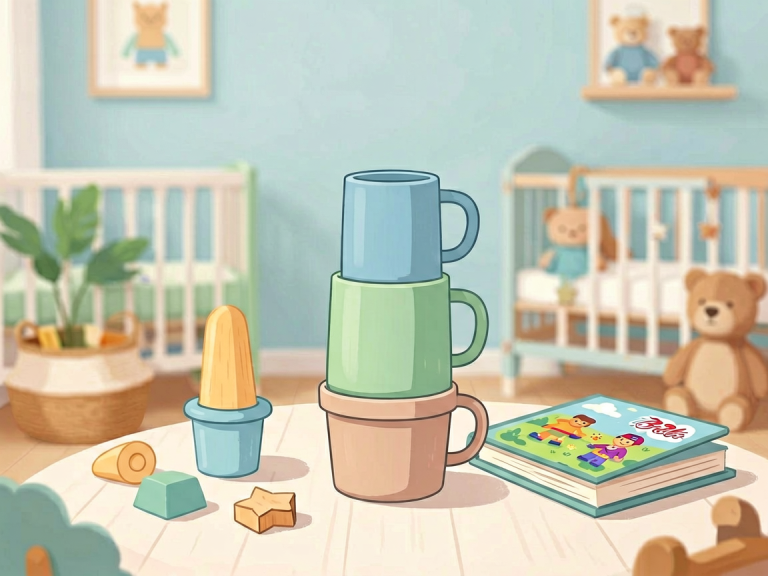
For a different emotional layer, you can model a “uh-oh” moment. Knock over a stacking cup deliberately, then look surprised and say “Oh no!” but then laugh. Your baby learns that mistakes are not catastrophic—they can be followed by laughter and repair. This is a profound lesson in emotional resilience.
Conclusion: The Playful Path to Emotional Intelligence
Emotional learning is not a curriculum to be taught; it is a relationship to be lived. Through play, babies learn that their feelings are seen, that they can trust the world to respond, and that even big emotions—surprise, frustration, joy—can be navigated with love. Every game of peek-a-boo, every dance, every shared giggle is a tiny lesson in emotional intelligence. The activities described above are not complicated; they only require presence, patience, and a willingness to enter a baby’s world. When we play with intention—not to teach, but to connect—we give our babies the greatest gift: a secure emotional foundation from which they can explore all the feelings that make us human.
As caregivers, we need not worry about perfection. Babies are not looking for flawless performances; they are looking for authentic responses. A tired smile, a silly face, a gentle hum—these are enough. In the simple act of playing, we are doing the most important work of early childhood. And in that work, we build not just babies’ brains, but their hearts.