The Power of Play: Top Toys for Boosting Language Development in 5-Year-Old Girls
Introduction
At the age of five, a girl’s brain is a sponge for language. She is transitioning from simple sentences to complex narratives, learning to express emotions, ask questions, and tell stories. While school and daily conversations play a huge role, the right toys can supercharge this development. Toys are not just entertainment—they are tools that encourage vocabulary expansion, sentence structure, storytelling, and social communication. For parents, grandparents, and educators who want to support a 5-year-old girl’s language growth, choosing toys that stimulate conversation, imagination, and active listening is key. This article explores the most effective types of toys for building language development in 5-year-old girls, explaining why each works and offering practical suggestions.
Understanding Language Development at Age Five
Before diving into toy recommendations, it’s helpful to understand what a typical 5-year-old girl is capable of linguistically. She can usually speak in full sentences of five to six words, understand time-related words (yesterday, tomorrow), follow three-step directions, and use past tense correctly. Her vocabulary might reach 2,000 to 3,000 words, and she loves to ask “why” and “how” questions. She is also developing phonological awareness—the ability to hear and play with sounds in words—which is a critical precursor to reading. Toys that challenge her to describe, explain, negotiate, and create narratives will directly strengthen these skills. Additionally, social interaction during play is vital: when a 5-year-old plays with a friend or an adult, she practices turn-taking, listening, and responding appropriately. Therefore, the best language-building toys are those that naturally encourage dialogue, not just passive consumption.
Storytelling and Pretend Play Toys
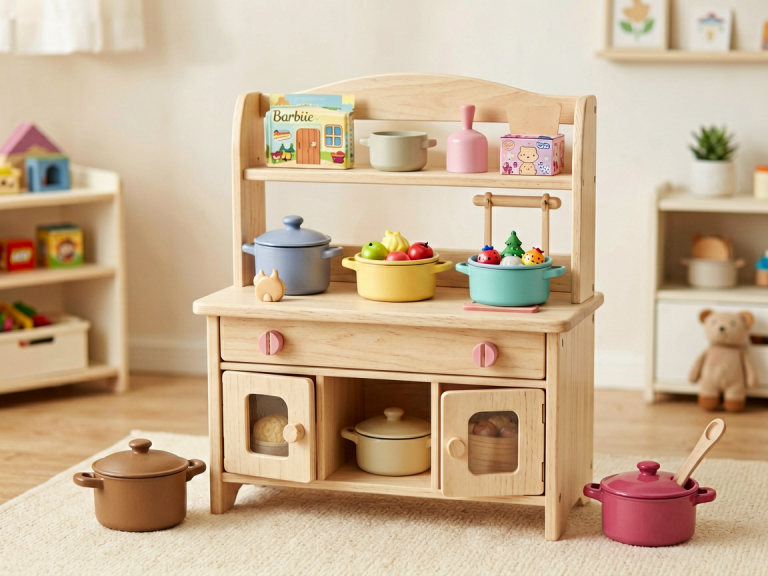
Pretend play is one of the most powerful language development activities for a 5-year-old girl. When she puts on a costume or picks up a play kitchen, she steps into a new role and must create dialogue and scenarios. Toys that facilitate this include dress-up sets (doctor, chef, princess, astronaut), dollhouses with miniature characters, and playsets like a grocery store or veterinarian clinic. For example, a 5-year-old girl playing with a wooden dollhouse might say, “The mommy is cooking dinner, and the baby is sleeping. Now the daddy comes home and says, ‘What’s for dinner?’” By imagining and verbalizing these interactions, she practices sentence variety, emotional vocabulary (happy, sad, angry), and cause-and-effect reasoning. Parents can extend this by asking open-ended questions during play: “Why is the baby crying?” or “What will the doctor do next?” Such prompts encourage her to elaborate, building both vocabulary and narrative structure. Puppets and finger puppets are another excellent choice because they allow a shy child to “speak through” a character, reducing pressure while still engaging her verbal skills. Storytelling sets, such as felt boards with characters and backgrounds, also invite her to arrange scenes and tell a story—a wonderful way to boost sequential thinking and descriptive language.
Interactive Board Games and Card Games
Board games and card games are often overlooked as language tools, but they are incredibly effective for 5-year-old girls. Games that require asking questions, giving clues, or describing pictures directly support vocabulary and expressive language. For example, games like “Spot It!” or “Memory” involve naming objects quickly, reinforcing word recall. “Zingo!” (a bingo-style game with pictures and words) helps with word-picture association and even early reading. Cooperative games, such as “Hoot Owl Hoot,” encourage players to talk and plan together, using phrases like “We need to move the owl to the blue spot” or “What color should we pick?” These conversations naturally teach prepositions, color names, and strategic thinking. Another fantastic category is storytelling card games, like “Story Cubes,” where players roll dice with pictures and must create a story incorporating the images. A 5-year-old girl might roll a dice showing a star, a key, and a castle, then say, “Once upon a time, a girl found a magic key that opened a castle, and the star led her home.” This activity directly fosters creativity, sequencing, and sentence complexity. For a more structured language game, “I Spy” or “20 Questions” type games (available as card decks) help her practice asking yes/no questions and using descriptive attributes (color, size, shape). All these games have the added benefit of teaching turn-taking and active listening, which are crucial for social communication.
Arts, Crafts, and Sensory Play Kits
While arts and crafts are primarily seen as creative outlets, they are also rich opportunities for language development. When a 5-year-old girl is making a collage, painting, or playing with clay, she often talks about what she is doing. The key is to choose kits that encourage verbal description and narration, rather than silent, step-by-step following of instructions. For example, a “Make Your Own Storybook” kit that includes blank pages, stickers, and markers invites her to draw pictures and then dictate or write a story. As she explains her drawings, she practices organizing thoughts into sentences. Playdough or modeling clay sets with theme-based accessories (animals, food, vehicles) can spark conversations like “I’m making a purple dinosaur, and he is eating a big leaf.” Parents can model descriptive language by saying, “Your dinosaur has a long neck and tiny arms. What does he like to do?” Sensory bins—filled with rice, beans, sand, or water beads, plus small toys—are another excellent tool. As she digs, pours, and hides objects, she naturally uses action words (scoop, pour, hide, find) and positional words (under, inside, behind). The process of discovering and naming objects in the bin builds vocabulary in a hands-on, engaging way. Additionally, arts and crafts that involve sequencing, such as bead threading kits or sticker-by-number projects, require her to follow verbal instructions, reinforcing comprehension and memory.
Books, Audiobooks, and Interactive Reading Toys
No language development toolkit is complete without books. At age five, girls benefit greatly from picture books with rich vocabulary and slightly longer stories. But toys that combine reading with interaction can multiply the effect. Electronic reading pens (like LeapReader or VTech’s reading systems) allow a girl to touch words on a page and hear them spoken aloud, which supports phonics and word recognition. Similarly, audiobooks or story-playing devices (such as Yoto Player or Toniebox) let her listen to stories repeatedly, absorbing sentence patterns, new words, and narrative structure. A 5-year-old girl who listens to a story like *The Very Hungry Caterpillar* multiple times will start using phrases like “on Monday he ate through one apple” in her own play. For a more active experience, “storytelling” toys that record and playback her own voice—like a simple tape recorder or a microphone toy—encourage her to retell stories, invent new endings, or describe her day. This practice strengthens memory, sequencing, and oral fluency. Puppets that come with a book are also effective: she can hold the puppet while you read, acting out the character’s lines. This multi-sensory approach deepens engagement and vocabulary retention.
Digital Apps and Screen-Based Learning Toys (Used Wisely)
While hands-on toys are often preferred, carefully selected screen-based tools can also support language development for 5-year-old girls. Many apps are designed to expand vocabulary, teach phonics, and encourage storytelling. For example, apps like “Endless Reader” (focusing on sight words) or “Toca Boca” apps (like Toca Life, which allows open-ended storytelling) give her a digital stage to create dialogue. However, the key is that the app should be interactive and creative, not just passive video watching. Parental co-viewing is crucial: when you sit with her and ask questions about what’s happening on screen, you turn digital time into conversational time. A toy like an interactive globe (e.g., LeapFrog Magic Adventures Globe) combines exploration with facts and questions, prompting her to ask and answer. Even a simple voice assistant like Alexa or Google Home can be used for “story mode” where she asks for a story and then discusses it. But remember: screen time should be limited and balanced with real-world play. The best approach is to use these tools as supplements, not replacements, for physical toys and face-to-face interaction.
How to Choose the Right Toy for Your 5-Year-Old Girl
With so many options, how do you pick the best toy for language development? First, consider your child’s interests. A girl who loves animals will be more engaged with a farm playset or a zoo board game than with a princess castle. Second, look for toys that encourage two-way communication—toys that ask questions, require response, or reward narration. Avoid toys that only say phrases or play music without involving the child. Third, choose open-ended toys that can be used in many ways. A set of building blocks with people figures can inspire countless stories, whereas a single-use toy might be quickly abandoned. Fourth, check for age-appropriateness: toys that are too simple bore her, while those too advanced frustrate her. The right challenge keeps her talking and thinking. Finally, remember that the presence of a caring adult or peer amplifies the language benefits. A toy in isolation is far less powerful than a toy used for shared play. So, whenever possible, play alongside her—ask questions, praise her ideas, and introduce new words naturally.
Conclusion
Language development in a 5-year-old girl does not happen through drills or flashcards alone. It happens through joyful, playful interaction with the world around her. The right toys—storytelling sets, board games, craft kits, books, and even thoughtful digital tools—can create countless opportunities for her to practice words, build sentences, and weave narratives. By choosing toys that invite conversation, imagination, and active participation, parents can turn playtime into a powerful language lesson. Most importantly, the best toy is always a loving, engaged adult who listens, responds, and encourages her to express herself. When a 5-year-old girl feels heard, she is motivated to say more—and the toys simply become the spark that lights the fire.