Engaging Language-Building Activities for 5-Year-Old Girls: Fun Ways to Boost Vocabulary and Communication Skills
Title: Engaging Language-Building Activities for 5-Year-Old Girls: Fun Ways to Boost Vocabulary and Communication <a href="https://www.playlearningguide.com/category/skills/”>Skills
Language development during early childhood is a cornerstone of future academic success and social interaction. For 5-year-old girls, this stage is particularly dynamic—they are refining their sentence structures, expanding their vocabulary from roughly 2,500 to over 5,000 words, and beginning to understand more abstract concepts like time, emotion, and cause-effect relationships. At this age, play is the primary vehicle for learning. By intentionally designing activities that are both enjoyable and linguistically rich, parents, caregivers, and educators can nurture a love for language while strengthening essential skills such as listening, speaking, and early literacy. This article presents a comprehensive collection of targeted activities specifically suited for 5-year-old girls, each supported by explanations of how they promote language growth. The activities are organized under clear subheadings for easy reference.
—
Storytelling and Reading Adventures
1. Picture Walks and Prediction Games
Before reading a new storybook, take a "picture walk" with the child. Flip through the pages, pausing at each illustration, and ask open-ended questions: "What do you think is happening here?" or "Why does the girl look sad?" This activity encourages a 5-year-old girl to use descriptive language, infer meaning from visual clues, and construct logical predictions. The process strengthens narrative comprehension and vocabulary as she learns words like *puzzled*, *frightened*, or *curious*. For added fun, have her create a "prediction bookmark" with a drawing of what she expects to happen; after reading, compare her guess with the actual story.
2. Story Retelling with Props
After finishing a favorite picture book (e.g., *The Paper Bag Princess* or *Amazing Grace*), provide simple props—a crown, a paper bag, a makeshift castle from boxes—and invite the child to retell the story in her own words. This activity demands that she recall the sequence of events, use dialogue, and articulate cause and effect. The act of physically manipulating props reinforces memory and allows her to experiment with different voices and tones, enhancing pragmatic language skills. Encourage her to add new characters or change the ending, which fosters creative language use.
3. Personalized Story Creation
Create a "Story Box" filled with small objects: a miniature rubber duck, a plastic flower, a toy dog, a button, a piece of fabric. Let the child pick three items and build a story around them. Ask guiding questions: "Where does the duck live? What does the flower say to the dog?" This open-ended play naturally elicits complex sentences, conjunctions, and descriptive adjectives. Writing down her story (or recording it) and reading it back to her demonstrates the connection between spoken and written language, laying a foundation for literacy.
—
Creative Play and Role-Playing
1. Pretend Play Scenarios
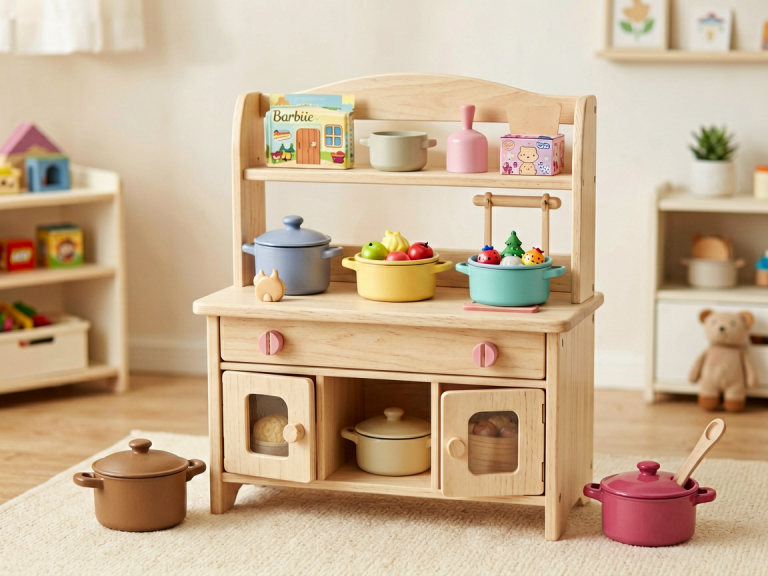
Five-year-old girls often gravitate toward imaginative play involving families, shops, doctor's offices, or schools. Actively participate in these scenarios by assigning roles and introducing new vocabulary. For instance, during "grocery store" play, use words like *cashier*, *receipt*, *aisle*, *sale*, and *change*. Ask the "shopkeeper" questions that require detailed responses: "Can you tell me where to find the organic apples? How much do they cost per pound?" This type of structured interaction pressures the child to formulate complete sentences, use polite forms, and negotiate meaning. Over time, it builds fluency and confidence in conversational turn-taking.
2. Puppet Show Conversations
Hand puppets (or even simple sock puppets) are powerful tools for language development. Help the child create two characters and stage a short dialogue about a problem—for example, one puppet lost her favorite toy and the other helps find it. Guide the child to express emotions, ask for help, and offer solutions. Puppetry reduces anxiety about speaking because the child projects her voice into the puppet, making it easier to experiment with new words and intonation. Record a puppet show on a phone and play it back; children love hearing themselves and often self-correct errors spontaneously.
3. Dress-Up and Social Narratives
Provide a dress-up trunk with hats, scarves, sunglasses, and costume pieces. Let the child choose a character—a princess, a scientist, a veterinarian—and then interview her "in character." Ask questions like, "What is your most exciting discovery today?" or "How do you take care of a sick dragon?" The role-playing shifts the child from her everyday speech patterns into a more formal or imaginative register, expanding her vocabulary about different professions, emotions, and settings. It also enhances her ability to maintain a consistent narrative voice.
—
Music, Rhymes, and Rhythm
1. Song Adaptation and Fill-in-the-Blanks
Take familiar tunes like "Twinkle, Twinkle, Little Star" or "Row, Row, Row Your Boat" and adapt the lyrics to include new vocabulary. For example, sing "Sparkle, sparkle, shiny sun / What a bright and warm day you've spun." Pause at certain words and let the child fill in the blank with a rhyming word she chooses. This activity sharpens phonological awareness—the ability to recognize and manipulate sounds within words—which is a critical precursor to reading. Additionally, chanting songs with gestures (e.g., clapping on syllables) reinforces syllable segmentation.
2. Call-and-Response Chants
Create simple call-and-response chants about daily routines or nature. For instance:
Adult: "What do you see when you look up high?"
Child: "A blue, blue sky with clouds that fly."
Encourage the child to invent her own responses, reinforcing sentence patterns and rhyme. The rhythmic nature of call-and-response builds auditory memory and listening comprehension. Over time, children begin to play with language more creatively, making up silly rhymes that strengthen their command of word families.
3. Story Songs with Actions
Choose or compose a short narrative song, such as "The Little Seed" (about a seed growing into a flower). Each verse introduces a new action (sprouting, reaching for the sun, opening petals). As the child sings and acts, she internalizes verbs and prepositions (*up, down, out, through*). Discuss the song afterward: "What happened first? Then what?" This combines music, movement, and language sequencing, making abstract concepts like time order concrete.
—
Interactive and Educational Games
1. "I Spy" with Descriptive Clues
Transform the classic game "I Spy" into a language enrichment activity. Instead of saying "I spy something green," challenge the child to use multiple descriptors: "I spy something that is green, round, and grows on a tree." This forces her to recall and combine attributes. Then reverse roles: she gives the clues and you guess. The game naturally teaches categorization, comparison, and adjectives—essential building blocks for descriptive writing later on. To increase difficulty, add "rhyming clues": "I spy something that rhymes with *bear* and has a sweet smell" (pear).
2. Barrier Games
Sit opposite a child at a table with a vertical barrier (a large book) between you. Each person has the same set of building blocks or shape pieces. One person describes a structure she built, step by step, while the other tries to replicate it without seeing the original. For example: "Place the red block on the blue block. Now put the yellow triangle to the left of the red block." This game demands precise spatial language (left, right, above, next to) and forces the child to listen carefully and ask clarifying questions: "Do you mean my left or your left?" Such exchanges improve receptive language and the ability to give clear, sequential instructions.
3. Rhyming Bingo
Create simple bingo cards with pictures of common objects (cat, hat, ball, wall). Call out a word (e.g., "bat") and the child must identify which picture on her card rhymes with it. This sharpens phonemic awareness—the ability to hear and manipulate individual sounds—which is directly linked to reading proficiency. To extend the activity, have the child produce a rhyming sentence: "The bat wore a hat." The playful nature keeps frustration low while repetition cements sound patterns.
—
Art and Craft with Language Prompts
1. Talk-Back Drawing
Instead of silent drawing, encourage a "talk-back" process. Ask the child to describe what she is drawing as she draws: "I'm drawing a big, fluffy cat with a striped tail. Now I’m adding whiskers that go out to the sides." This verbalization forces her to translate mental images into words, strengthening the brain's language-production pathways. After the drawing is done, ask her to tell a short story about her creation, using as many details as possible. Write her dictation on the back of the paper; later, she can "read" it back, building print awareness.
2. Labeling and Writing Practice
Set up a "word wall" in her play area where she can tape vocabulary cards to objects: *window*, *chair*, *table*, *lamp*. Encourage her to write or trace new words she learns from stories. Then, during craft time, have her create a "dictionary" by drawing a picture and writing the word beneath it. For 5-year-old girls, the novelty of using a stapled "book" and "being an author" sparks motivation. This activity bridges spoken language to written symbols, reinforcing letter-sound correspondences in a meaningful context.
3. Collage Storytelling
Provide magazines, old greeting cards, scissors, and glue. Ask the child to cut out pictures of people, animals, objects, and places, then arrange them into a collage that tells a story. As she works, prompt narration: "What is the girl doing in the garden? Why is the cat hiding behind the tree?" The collage becomes a visual anchor for extended oral storytelling. Encourage her to present her finished collage to the family, describing each element. This builds confidence in public speaking while integrating descriptive language, sequencing, and cause-effect reasoning.
—
Daily Conversations and Real-Life Language
1. "Morning Meeting" Reviews
Each morning (or at dinner), hold a brief structured conversation: "What was the best part of your day so far? What made you feel happy or surprised?" Model expanded answers yourself: "I felt proud when I finished a difficult puzzle because I didn't give up." This routine encourages the child to reflect, use feeling words (*proud, nervous, excited*), and connect events with emotions. For a 5-year-old girl, asking "Why?" and "What next?" pushes her to elaborate, moving beyond one-word answers.
2. Grocery Store Language Hunt
Turn errands into language adventures. At the supermarket, ask the child to find items based on descriptive clues: "Can you find a vegetable that is long, orange, and grows underground?" (carrot). Have her read aloud simple signs or price tags (e.g., "$1.99"). Let her "write" a shopping list with drawings and scribble writing; later, she can check off items as you put them in the cart. The real-world context makes language learning concrete and purposeful.
3. "What If" Imagination Questions
During car rides or quiet moments, pose open-ended "what if" questions: "What if it rained ice cream? What would we do? What flavor would we catch?" These questions require hypothetical reasoning, conditional language ("if…then"), and creative vocabulary. Encourage her to build on your ideas: "And then we could build an ice-cream castle!" This type of dialogic exchange is proven to boost vocabulary diversity and syntactic complexity. Record her best answers in a special "Imagination Journal" to reread later.
—
Conclusion
Language development in 5-year-old girls flourishes when it is woven into playful, meaningful activities that capture their natural curiosity and love for stories, pretend play, music, and art. By incorporating reading adventures, role-playing, rhythmic games, descriptive art projects, and everyday conversational prompts, adults can create a rich linguistic environment that goes far beyond flashcards or workbooks. The key is to follow the child's interests, keep interactions joyful, and model language in a way that invites her to participate actively. With patience, creativity, and consistency, these activities will not only expand her vocabulary and grammar but also ignite a lifelong passion for communication and learning.