Smart Science, Small Budget: 10 STEM Toys Under $15 That Inspire Real Learning
Introduction: The Power of Affordable Discovery
In an era where educational technology often comes with a three‑digit price tag, many parents and educators assume that quality STEM learning requires a significant financial investment. But the truth is, some of the most powerful science, technology, engineering, and math experiences are hiding in plain sight—right under the $15 mark. These are not mere gimmicks; they are carefully designed tools that spark curiosity, develop problem‑solving skills, and lay the foundation for future innovation. This article explores a curated selection of STEM toys that cost less than a movie ticket yet deliver hours of hands‑on experimentation. From chemistry kits that fit in a pocket to coding games that need no screen, each item proves that intellectual growth does not have to come with a high price. By focusing on core scientific principles—observation, hypothesis testing, iteration, and creative design—these toys transform play into genuine discovery. Whether you are a parent looking for birthday gifts, a teacher stocking a classroom station, or a hobbyist who loves to tinker, the following categories offer practical, affordable, and scientifically robust options. Let us dive into the world of low‑cost, high‑impact STEM play.
1. Chemistry in Your Pocket: Miniature Lab Kits
One of the most exciting branches of science for children is chemistry—the magic of mixing, bubbling, and color change. While full chemistry sets can cost $30 or more, several compact kits remain under $15 and still deliver authentic laboratory experiences. The Thames & Kosmos Kids First Chemistry Set (often available for around $12) includes test tubes, a pipette, a measuring spoon, and a booklet with safe experiments using household substances like baking soda and vinegar. It teaches the scientific method: make a prediction, conduct a reaction, observe the result, and record the outcome. Another excellent choice is the National Geographic Mega Crystal Growing Lab (recently priced at $13.99). Although it focuses on crystal formation rather than liquid reactions, it introduces concepts of supersaturation, nucleation, and geometric structures. Children watch crystals grow over a few days, learning patience and systematic observation. Both kits are non‑toxic, reusable, and come with clear instructions that encourage independent exploration. For under $15, a child can perform dozens of experiments—far more than any expensive tablet app can offer. The tactile nature of pouring, mixing, and seeing physical changes reinforces abstract concepts in a way that digital simulations simply cannot match.
2. Physics Fidgets: Simple Machines and Force Experiments
Physics can seem intimidating, but when it is embodied in a toy, it becomes intuitive. One prime example is the 4M KidzLabs Newton’s Cradle (around $10). This classic desk toy demonstrates conservation of momentum and energy through the swinging motion of metal balls. By pulling back one ball and releasing it, children observe how the energy transfers to the opposite side—a perfect entry point for discussing kinetic and potential energy. Similarly, the Discovery Mindblown Marble Run (priced at $14.99) allows kids to build a track and watch marbles roll, loop-de-loop, and spin. This toy teaches gravity, friction, and the concept of incline angles. Children can experiment: “What if I make the slope steeper? What if I add a bump?” Each adjustment is an engineering test. For an even lower price, Squishy Circuits Lite Kit (about $12) uses conductive play dough and LED lights to introduce basic electrical circuits. Children learn that a closed path is needed for current to flow. They can squish the dough into different shapes and insert LEDs, creating glowing sculptures. All these toys are under $15 and require no prior knowledge—just curiosity. They teach through failure: a marble falls off the track, so the child redesigns the supports. A light does not glow, so the child checks the connections. That iterative process is the heart of engineering.
3. Coding Without Screens: Unplugged Logic Games
In many households, screen time is a concern. Fortunately, there is a growing category of STEM toys that teach programming concepts without any electronics. The ThinkFun Roller Coaster Challenge (often discounted to $14.95) is a logic puzzle where children use plastic pieces to build a coaster that a marble must traverse correctly. It is actually a game of sequencing and conditional logic—similar to writing code: if the marble goes left, then it must hit a trigger. The 40 challenge cards increase in difficulty, fostering computational thinking. Another classic is the Code Master Programming Logic Game from ThinkFun (around $12). Players move an avatar through a map using “action tokens” that represent commands like “move forward,” “turn left,” or “use portal.” This is exactly how real code works—a sequence of instructions. No battery, no WiFi, no app. Similarly, the LEGO Classic Creative Bricks (a small set for about $10) may not seem “STEM,” but when combined with free online challenge cards, it becomes an engineering design exercise: build a bridge that holds a certain weight, or a tower that is at least 12 inches tall. These low‑cost, unplugged toys are especially valuable in classrooms with limited devices or for parents who want to foster problem‑solving away from screens.
4. Biology on a Budget: Magnifiers and Observation Tools
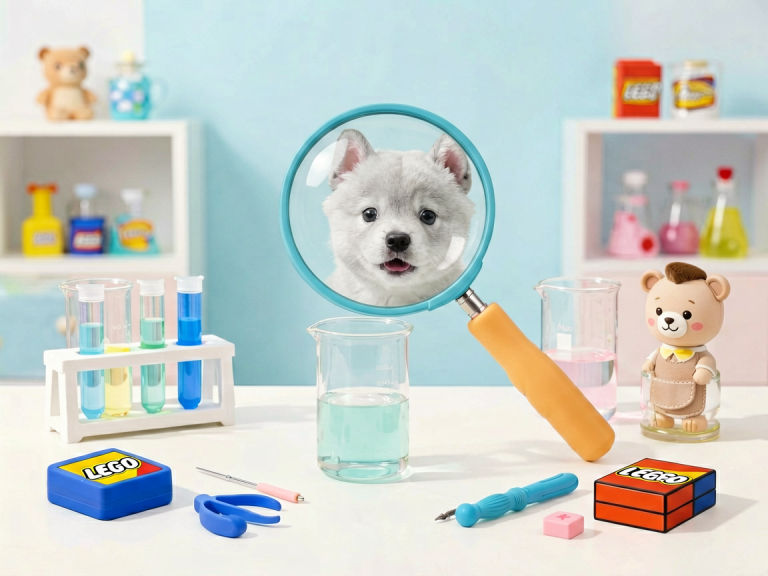
Biology invites children to explore the living world around them—but expensive microscopes can be a barrier. For under $15, excellent alternatives exist. The Educational Insights GeoSafari Jr. My First Microscope (about $13) is a sturdy, child‑safe microscope that magnifies from 2x to 8x. It is designed for preschool and early elementary children. Unlike complex adult microscopes, it has a fixed stage and soft eyepieces, making it frustration‑free. Children can examine leaves, coins, fabric, or their own fingerprints. This simple act of magnification sparks questions: “Why does this leaf have veins? Why is that coin rough?” Another budget gem is the 4M Bug Catcher Kit (around $10). It includes a magnifying container, tweezers, and a guide for catching and observing insects. Kids learn about insect anatomy, behavior, and habitats. They practice gentle, ethical observation—a crucial scientific skill. Even a plastic hand lens (under $5) from any educational supply store can be a powerful tool. Pair it with a free nature scavenger hunt printable, and you have an entire biology unit for less than the cost of a lunch. The key is that these toys emphasize direct observation rather than passive consumption. A child who uses a magnifier to watch a caterpillar transform into a chrysalis is learning science in the most authentic way possible.
5. Engineering Challenges: Building Kits for Future Architects
Engineering is about making things that work. Simple building kits under $15 can be remarkably effective. The Strawbees Construction Kit (small version, around $14) uses flexible plastic connectors and standard drinking straws to build 3D structures: bridges, towers, domes. Children can test the strength of different shapes. A triangle is stronger than a square—why? They discover structural integrity through trial and error. Another excellent choice is the K’NEX Bricks Building Set (price varies, but a 50‑piece bag often sells for $8–$10). While K’NEX is known for rods and connectors, even a small set allows children to build a working ferris wheel (with a crank) or a simple vehicle. They learn about gears, axles, and rotational motion. For younger children, LEGO DUPLO Simple Machines sets (the smallest one is about $12) focus on levers and wheels. Even a humble rubber band car kit (available for under $5 from many craft stores) teaches energy storage and transfer—wind the axle, release, watch the car zoom. Engineering toys like these cultivate spatial reasoning, perseverance, and the joy of creating something that works. They also reinforce the iterative cycle: build, test, fail, improve. That cycle is the same one used by NASA engineers designing a Mars rover.
6. Mathematics in Motion: Games That Make Numbers Fun
Math is often the least favorite STEM subject, but when it is presented as a game, attitudes change. The Math for Love Prime Climb board game (the small version is around $14) is a beautiful color‑coded game that uses multiplication and division to move spaces. It sneaks in prime factorization without feeling like a lesson. Another affordable option is Sum Swamp (about $11), a board game where players roll dice and add or subtract to cross a swamp. The physical movement and luck elements keep children engaged while they practice arithmetic. For a more hands‑on approach, the Learning Resources Fraction Tower Activity Set (around $13) uses color‑coded cubes to represent fractions, decimals, and percentages. Children can stack them to see that 1/2 equals 2/4 equals 0.5—a concrete representation that is far more effective than abstract worksheets. Even simple Play-Doh (a four‑pack for $5) can be a math tool: roll snakes to compare lengths, divide into equal parts, or form geometric shapes. The key is that these toys remove the fear of numbers by turning them into tangible objects. Children manipulate, experiment, and discover patterns. That is real mathematics, not rote memorization.
7. The Ultimate Low‑Cost STEM Tool: Craft Supplies and Nature
Strictly speaking, craft supplies are not “toys,” but they are the most versatile STEM learning resources under $15. A bag of balloons ($3), a box of baking soda ($2), a bottle of vinegar ($1), and a plastic funnel ($2) together cost about $8 and can launch a dozen experiments: rocket balloons, chemical volcanoes, inflating experiments with carbon dioxide. A roll of masking tape ($2) and a stack of newspaper (free) can become a bridge‑building challenge: build a bridge that spans 30 cm and holds a toy car. The tape and paper cost nothing, but the engineering thinking is priceless. Paper clips, straws, and index cards (under $5 total) can be used to build catapults, parachutes, and windmills. These open‑ended materials align with the Maker Movement and encourage creativity without instructions. They teach that science is not about having the fanciest equipment; it is about asking the right questions and trying ideas. Every famous scientist—from Marie Curie to Albert Einstein—started with simple, often improvised tools. By providing children with raw materials and a challenge (“Can you build a structure that will hold a book?”), we teach resilience, resourcefulness, and the scientific mindset.
Conclusion: More Than the Price Tag
The toys and materials discussed above collectively prove that a budget of $15 is not a limitation but an invitation to think differently. Instead of buying a single expensive gadget that does one thing, these investments offer multiple pathways: a crystal‑growing kit teaches chemistry; a marble run teaches physics; a logic game teaches coding; and a handful of straws teaches engineering. More importantly, they all share a common thread: they require active participation. A child cannot just watch a marble run; they must build it, adjust it, and reason about why it fails. They cannot just look at a magnifying glass; they must go outside and discover. That active learning—hands‑on, minds‑on, trial and error—is what truly develops STEM literacy. In a world of passive digital entertainment, these humble toys are quiet revolutions. They remind us that science is not a subject to be read about but a process to be lived. So the next time you are looking for a meaningful gift or classroom resource, look past the flashy packaging and the high price. Look for the toy that says, “Here is a problem. You figure it out.” That toy, almost certainly, costs less than $15—and its value is infinite.