From Grasping to Cutting: How Early Learning Toys for Babies Lay the Foundation for Scissor Skills
Introduction
The journey of a child’s physical and cognitive development is marked by countless small yet significant milestones. Among these, the ability to use scissors stands out as a complex fine-motor skill that requires hand strength, bilateral coordination, and precise visual-motor integration. While scissors may seem like a tool for preschoolers or older children, the groundwork for this skill is laid much earlier—during infancy. Early learning toys for babies, often dismissed as simple sources of entertainment, play a crucial role in building the muscular control, sensory awareness, and hand-eye coordination that eventually enable a child to cut with confidence. This article explores the direct and indirect connections between baby-friendly developmental toys and the later mastery of scissor skills, offering insights for parents and educators who wish to support children’s growth from the very start.
The Critical Role of Fine Motor Development in Infancy
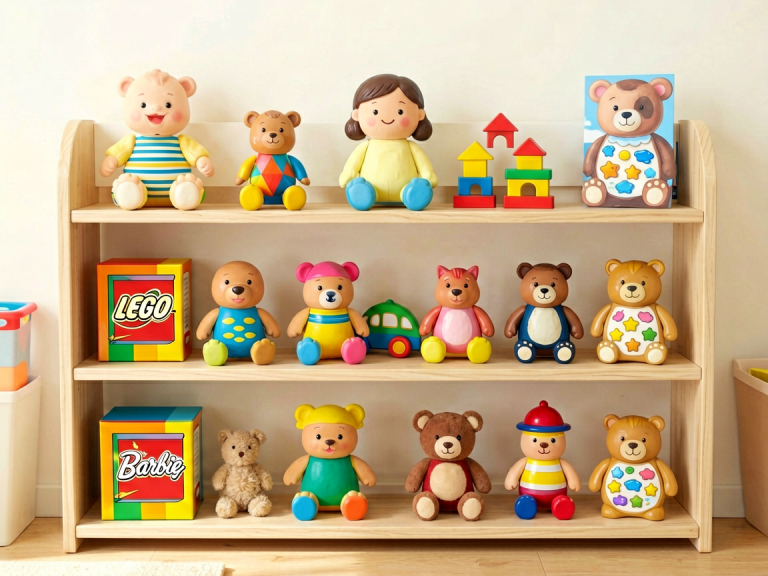
Fine motor development refers to the ability to make small, precise movements using the hands, fingers, and wrists. In the first year of life, babies progress from reflexive grasping to intentional, controlled actions. This progression is not automatic; it is heavily influenced by the opportunities they have to explore and manipulate objects. Early learning toys designed for babies—such as rattles, soft blocks, texture balls, and grasping rings—provide the repeated practice necessary to strengthen the tiny muscles in the hands and forearms. For example, when a baby reaches for a dangling toy and successfully closes their hand around it, they are not merely playing; they are training the muscles that will later hold a crayon, button a shirt, or operate a pair of scissors. Moreover, these toys encourage bilateral coordination—the ability to use both sides of the body together. A baby who shakes a rattle with one hand while holding a support with the other is already practicing the kind of two-handed cooperation that scissor cutting demands: one hand to hold the paper, the other to open and close the blades. Without this early neural and muscular conditioning, the transition to formal scissor skills becomes unnecessarily challenging.
Early Learning Toys That Promote Hand Strength and Coordination
Not all baby toys are created equal when it comes to supporting fine motor development. The most effective ones engage multiple senses and require active manipulation. Here are several categories of early learning toys that directly contribute to the prerequisites for scissor skills:
*Grasping and Squeezing Toys* – Soft cloth blocks, crinkle toys, and rubber teethers encourage babies to practice different types of grips. The palmar grasp (whole hand) is the first to develop, and toys that are large enough to wrap fingers around strengthen the hand’s intrinsic muscles. As babies grow, smaller toys such as linking rings or plastic keys promote a pincer grasp (thumb and forefinger), which is essential for controlling the two blades of a scissors.
*Pull and Push Toys* – Once babies start sitting up and moving, pull-along toys like wooden animals on a string require them to hold the cord while moving, which develops sustained grip strength and shoulder stability. This stability is critical later when a child needs to hold a sheet of paper steady while cutting.
*Shape Sorters and Stackers* – Inserting a square block into the correct hole demands spatial reasoning and refined motor control. The act of grasping a block, rotating it, and releasing it with aim teaches the hand-eye coordination that scissor use requires. Similarly, stacking rings forces a baby to align the center hole with a vertical post, a precursor to aligning scissors with a cutting line.
*Sensory Play Items* – Textured balls, water mats, and fabric books with tabs to pull encourage exploration through touch. Sensory feedback from different materials helps the brain map hand movements and adjust force application—skills needed later to cut through paper without tearing.
It is important to note that safety is paramount. All toys for babies should be large enough to prevent choking, free of sharp edges, and made from non-toxic materials. With these precautions, parents can confidently fill a baby’s environment with objects that are both fun and functional.
From Palmar Grasp to Pincer Grasp: The Journey to Scissor Readiness
The development of grip patterns in infancy follows a predictable sequence. At around three months, babies have a reflexive palmar grasp—they will hold anything placed in their palm, but they cannot release it voluntarily. By six months, they begin to transfer objects from one hand to the other and engage in raking motions to bring small items toward them. By nine to twelve months, the pincer grasp emerges, allowing babies to pick up small items like a piece of cereal using only thumb and forefinger. This is a landmark achievement for scissor readiness, because operating scissors requires a similar opposition of the thumb against the other fingers. The thumb slides into one handle loop, while the index and middle fingers (or all four fingers) go into the other loop. Without a well-developed pincer grasp, a child will struggle to maintain the correct finger placement and may revert to an awkward two-handed or fisted grip.
Early learning toys that encourage isolation of the index finger—such as a toy piano with large keys or a simple pop-up toy that requires a single finger press—help babies develop the dexterity needed to control one handle of the scissors independently. Moreover, toys that require twisting movements, like simple wind-up toys or screw-top containers, build the rotational wrist motion that aids in turning the scissors to follow a curved line. Even activities like tearing paper (under supervision) teach babies about the amount of force needed to separate materials, which translates directly to the controlled pressure used in cutting.
Introducing Scissor Skills: The Transition from Baby Toys to Toddler Tools
As a baby grows into a toddler—typically between 18 and 24 months—the foundation laid by early learning toys becomes evident. A child who has spent months squeezing, stacking, and picking up small objects will be more prepared to hold a pair of safety scissors correctly. At this stage, parents can introduce simple cutting activities that build on prior play experiences. For instance, playing with play-dough and using plastic knives to cut pieces reinforces the open-close hand motion required for scissors. Similarly, tearing construction paper into strips helps toddlers understand the concept of dividing a larger piece into smaller ones.
The best scissor practice materials are those that are soft and easy to cut, such as thin cardstock, straws, or strips of play-dough. Parents should offer sturdy, blunt-tipped scissors designed for small hands, with a spring mechanism that gently opens the blades after each squeeze. This support reduces frustration and allows the child to focus on the motion rather than on forcing the blades apart. Importantly, the confidence gained from early play with baby toys translates into a willingness to try new challenges. A toddler who is comfortable manipulating objects is less likely to become frustrated with scissors and more likely to persist until they succeed.
Practical Tips for Parents: Choosing the Right Toys and Activities
To maximize the developmental benefits of early learning toys in relation to scissor skills, parents can follow these practical guidelines:
- Start Early, But Keep It Playful. From birth, provide toys that are safe and stimulating. Tummy time mats with dangling toys encourage reaching and grasping. As your baby grows, rotate toys to maintain interest.
- Focus on Open-Ended Toys. Blocks, stacking cups, and simple puzzles allow for multiple types of manipulation. Avoid overly electronic toys that do not require active hand use.
- Emphasize Bilateral Play. Activities like clapping, rolling a ball, or holding a toy with both hands foster coordination. Offer two objects at once—one in each hand—to encourage crossing the midline.
- Introduce Cause-and-Effect Toys. Toys that respond to a button press or lever pull teach the child that their hand actions produce results, motivating them to refine their movements.
- Gradually Add Precision Challenges. Once your baby masters the palmar grasp, offer small, safe objects (such as large beads or wooden coins) for them to pick up. Always supervise to prevent choking.
- Transition to Scissors Only When Ready. Look for signs of readiness: interest in cutting, ability to hold a crayon with a tripod grasp, and good hand-eye coordination. Around age two or three, introduce scissors with a spring-loaded safety design.
- Model and Narrate. Show your child how you use scissors and describe what you are doing: “Look, I am opening the scissors and closing them to cut the paper.” This verbal explanation connects the physical action with the concept.
Conclusion
The connection between early learning toys for babies and scissor skills is not merely theoretical; it is a practical roadmap for parents and caregivers. Every rattle shaken, every block stacked, and every sensory toy squeezed contributes to the neuromuscular foundation that makes cutting possible. By understanding this progression, adults can intentionally choose toys that promote hand strength, precision, and bilateral coordination from infancy onward. The result is not only a child who can cut a straight line by age four, but one who has developed confidence, problem-solving abilities, and a love for hands-on exploration. The humble scissors, often seen as a simple school supply, becomes a powerful symbol of the intricate and beautiful journey of human development—a journey that begins with the very first toy placed in a baby’s eager hand.