Unlocking the Potential: How Educational Toys Shape the Minds of Elementary School Children
Introduction
In the bustling landscape of modern childhood, where digital screens often compete for attention, the humble toy remains a cornerstone of early development. For elementary school children—those roughly between the ages of six and twelve—play is not merely a pastime but a vital mechanism for learning, social interaction, and emotional growth. Educational toys, specifically designed to blend fun with skill acquisition, have emerged as powerful tools that can transform playtime into a rich, developmental experience. Unlike generic playthings, these toys are intentionally crafted to challenge young minds, foster curiosity, and build foundational competencies in areas such as problem-solving, literacy, numeracy, and even emotional intelligence. The market today offers an overwhelming array of options, from building blocks to coding robots, making it essential for parents, educators, and caregivers to understand what makes a toy truly educational and how to select the best ones for their children. This article explores the multifaceted world of educational toys for elementary kids, delving into their cognitive, social, and creative benefits, while providing practical guidance for choosing age-appropriate and impactful playthings.
The Cognitive Benefits of Educational Toys
At the heart of any educational toy lies its capacity to stimulate cognitive development. Elementary school children are at a stage where their brains are rapidly forming neural connections, and deliberate, playful engagement can significantly enhance these processes. Puzzles, for instance, are classic educational toys that require logical reasoning, spatial awareness, and patience. A simple jigsaw puzzle with fifty pieces forces a child to recognize patterns, match shapes, and strategize about where each piece belongs. Similarly, board games like chess or checkers introduce advanced planning and foresight—skills that directly translate to academic subjects such as math and reading comprehension.
Another powerful category is memory and matching games. These toys, often featuring colorful cards or tiles, train short-term and long-term memory while reinforcing vocabulary or numerical concepts. For example, a memory game about animal names or multiplication facts requires children to retain and retrieve information under playful pressure, thereby strengthening recall abilities. Furthermore, building sets like LEGO or magnetic tiles offer open-ended construction opportunities. When a child follows a set of instructions to build a model, they practice sequencing, following directions, and visualizing final outcomes. When they create their own designs, they engage in creativity and iterative problem-solving—tinkering, failing, and trying again. This process builds resilience and a growth mindset, which are crucial for academic success.
Recent research in developmental psychology underscores that “guided play” with educational toys can improve executive functions—the mental skills that help manage attention, impulses, and emotions. Toys that require rule-following, turn-taking, or multi-step planning, such as science experiment kits or simple coding games, effectively train these high-level cognitive abilities. For instance, a circuit-building toy that lets children connect wires and bulbs to light up a miniature house teaches basic physics principles while demanding careful attention to detail and systematic troubleshooting. Such experiences not only make learning tangible but also instill a sense of achievement that motivates further exploration.
Developing Social and Emotional Skills through Play
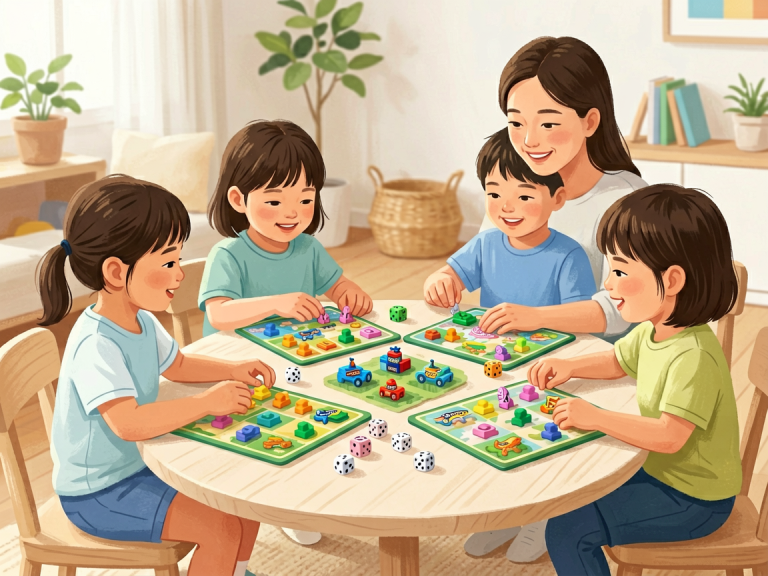
Education is not confined to academic knowledge alone; social and emotional development is equally vital for elementary children. Educational toys can serve as powerful catalysts for learning how to cooperate, share, negotiate, and empathize with others. Cooperative board games, where players work together toward a common goal rather than competing against each other, are particularly effective. Games like “Outfoxed!” or “The Sneaky Snacky Squirrel Game” require children to communicate, plan collectively, and celebrate shared victories, thereby reducing the anxiety of losing and fostering a sense of community.
Role-playing toys, such as playsets of a grocery store, a doctor’s clinic, or a kitchen, allow children to step into different social roles and practice real-world interactions. A child playing as a shopkeeper learns to manage money, greet customers, and count change, while the “customer” learns to ask politely and express needs. These scenarios build language skills, emotional regulation, and an understanding of social norms. Moreover, dolls or action figures with expressive faces can be used to explore feelings and narratives, helping children articulate their own emotions and develop empathy for others. For instance, a child who acts out a story where a doll is sad because it lost its toy learns to recognize and respond to sadness in real life.
Conflict resolution is another domain where educational toys shine. Many cooperative games include rules for handling disagreements, such as taking turns speaking or using a timer. Through repeated play, children internalize these strategies and apply them in peer interactions. Additionally, building sets that require teamwork—such as a large floor puzzle that two children must complete together—teaches patience, compromise, and the value of combining different strengths. These soft skills are increasingly recognized as critical indicators of long-term success, often outweighing pure academic knowledge.
STEM Toys: Building Foundations for Future Innovators
In an era increasingly driven by science, technology, engineering, and mathematics (STEM), educational toys that introduce these concepts in a hands-on, accessible way are invaluable for elementary kids. STEM toys demystify complex subjects and make them exciting, often sparking lifelong passions. Robotics kits, for example, allow children to assemble movable machines and program simple commands using visual block coding (like Scratch). A child who builds a robot that can follow a line or avoid obstacles learns about sensors, motors, and logical sequences without the intimidation of abstract theory. Brands like LEGO Boost or Makeblock offer age-appropriate sets that grow with the child, gradually increasing complexity.
Chemistry sets and biology exploration kits are another staple. Safe, non-toxic experiments—such as growing crystals, creating volcanoes with baking soda and vinegar, or examining pond water under a microscope—turn abstract scientific concepts into vivid, memorable experiences. These toys encourage observation, hypothesis testing, and recording results, mirroring the scientific method. Similarly, math-focused toys like fraction blocks, abacuses, or board games that require arithmetic calculation (e.g., “Sum Swamp”) make numerical operations tangible. A child who physically manipulates fractions by snapping together pieces that represent halves, thirds, and quarters develops a concrete understanding that pencil-and-paper drills often fail to convey.
Coding toys have also become immensely popular. From programmable floor robots like Bee-Bot to more advanced tablet-based apps like Osmo’s coding games, these tools teach sequencing, loops, and conditionals in a playful context. Importantly, they promote computational thinking—the ability to break down problems into smaller steps, recognize patterns, and debug errors. These skills are transferable not only to computer science but also to general problem-solving in any discipline. As elementary children are at a prime age for absorbing new languages and logical frameworks, early exposure to coding through toys can pave the way for future proficiency.
Creative and Artistic Educational Toys
While STEM toys often dominate discussions, creative and artistic educational toys are equally crucial for holistic development. Art supplies that encourage open-ended creation—such as clay, watercolor paints, collage materials, and fabric scraps—allow children to express their unique ideas and emotions. Unlike structured toys with predetermined outcomes, artistic toys foster divergent thinking, where multiple solutions and interpretations are celebrated. A child who builds a sculpture out of recycled materials learns about balance, texture, and design, while also developing fine motor skills and patience.
Musical toys also fall into this category. Simple instruments like xylophones, drums, or recorders introduce concepts of rhythm, pitch, and melody. Learning to play a few notes or follow a basic tune enhances auditory discrimination and memory. More advanced toys, such as electronic keyboards with light-up keys, teach children to read musical notation in a visual, interactive way. Music education has been consistently linked to improved language processing, mathematical ability, and spatial-temporal reasoning, making musical toys a wise investment.
Storytelling and imaginative play kits—such as sets of story cards, dollhouses, or puppet theaters—nurture language development and narrative skills. When a child creates a story with a beginning, middle, and end using toy characters, they practice sequencing, vocabulary, and character development. These activities also boost confidence in oral expression. Many educational toys now blend creativity with technology, such as light-up drawing boards or digital painting tablets designed for children, which can reduce frustration and extend creative possibilities without the mess of traditional media.
How to Choose the Right Educational Toys for Your Child
With an abundance of options available, selecting the best educational toys for an elementary-aged child can feel overwhelming. The key is to prioritize quality over quantity and to align choices with the child’s developmental stage, interests, and learning style. Here are some practical guidelines:
First, consider age appropriateness. A toy that is too simple will bore the child, while one that is too advanced may cause frustration and disengagement. For younger elementary children (ages 6–8), focus on toys that build basic literacy and numeracy, such as letter magnets, counting bears, and simple board games with short rules. For older children (ages 9–12), introduce more complex STEM kits, advanced strategy games, or creative tools like stop-motion animation sets.
Second, look for open-ended potential. Toys that can be used in multiple ways—such as building blocks, modeling clay, or blank art pads—encourage creativity and extended engagement. In contrast, toys with a single, fixed use often lose their appeal quickly. The “100 toy test” is a helpful heuristic: if a toy can be used in 100 different ways, it is likely highly educational.
Third, verify the “learning through play” principle. The best educational toys do not feel like homework. They are fun first, and the learning happens naturally as a byproduct. Avoid toys that claim to teach a specific skill through rote repetition or drills (e.g., flashcard-style electronic games) unless the child genuinely enjoys them. Instead, opt for toys that embed learning in a compelling narrative or challenge.
Fourth, consider social and collaborative play. While solo play has its merits, toys that can be shared with siblings or friends promote communication and teamwork. Board games, cooperative puzzle sets, and building kits that require multiple hands are excellent choices. Finally, observe your child’s natural inclinations. A child who loves building might thrive with construction toys; one who loves stories might prefer imaginative playsets. By tuning into their passions, you can select toys that feel like gifts rather than assignments.
Conclusion
Educational toys for elementary kids are far more than mere distractions—they are instruments of discovery, growth, and joy. By engaging young minds in purposeful play, these toys cultivate cognitive abilities, social grace, emotional intelligence, and a lifelong love of learning. From the logic of puzzles to the wonder of science experiments, from the harmony of music to the boundless possibilities of art, each category offers unique pathways for development. As parents, teachers, and communities, our role is not to dictate a single “correct” type of toy, but to provide a rich, varied landscape of play that invites children to explore, fail, try again, and ultimately, become the resilient, creative, and curious individuals they are meant to be. In a world that often prioritizes outcomes over processes, educational toys remind us that some of the most profound learning happens when we are simply having fun. So, the next time you see a child deeply absorbed in a game of chess, a building project, or a pretend market, remember: their play is their work, and their toy is a passport to a brighter future.