The Power of Creative Play: Unlocking Language Development in Children
Introduction: Why Play Matters More Than We Think
Language is the cornerstone of human connection, yet its acquisition is far from a mechanical process. While flashcards, drills, and structured lessons have their place, they often fail to capture the magic that makes language truly come alive. Enter creative play—a dynamic, joyful, and deeply effective approach to language development that has been celebrated by educators, psychologists, and linguists for decades. Creative play is not merely a break from "real learning"; it is a powerful engine for cognitive growth, social interaction, and linguistic fluency. In this article, we will explore how imaginative, unstructured, and playful activities can transform the way children acquire and use language, offering both theoretical insights and practical strategies for parents, teachers, and caregivers.
The Neuroscience Behind Play and Language
How Play Rewires the Brain for Communication
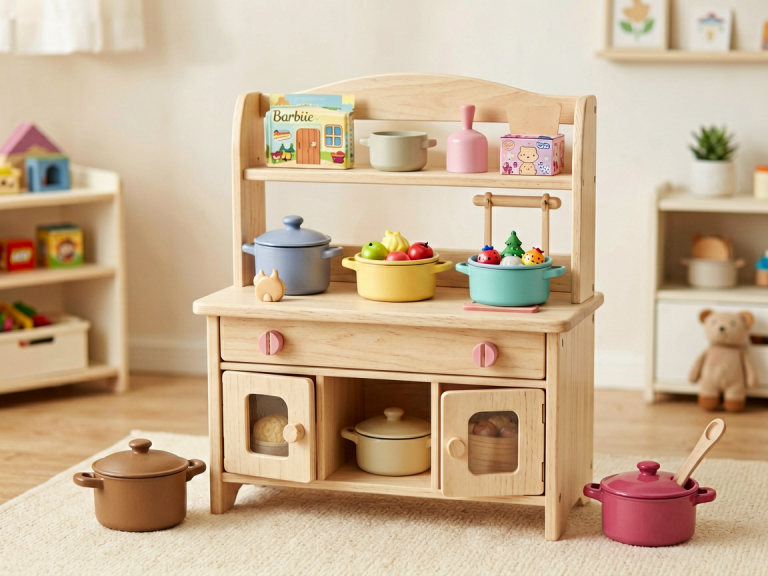
Recent advances in neuroscience reveal that play activates multiple regions of the brain simultaneously, creating rich neural networks that support language learning. When a child engages in pretend play—for instance, pretending to be a chef in a make-believe kitchen—their brain is not only processing vocabulary related to food and cooking but also practicing syntax, narrative structure, and social cues. The prefrontal cortex, responsible for executive functions like planning and self-regulation, is heavily engaged during imaginative scenarios, helping children organize their thoughts into coherent sentences. Meanwhile, the limbic system, which governs emotions, ensures that these language experiences are tied to positive feelings, making retention more likely.
The Role of Dopamine in Language Acquisition
Creative play triggers the release of dopamine, a neurotransmitter associated with pleasure and motivation. When children find joy in a playful activity, their brains become more receptive to new information. This is why a child who struggles to remember vocabulary from a textbook might effortlessly recall the word "spatula" after an afternoon of pretending to flip pancakes in a cardboard kitchen. Dopamine not only enhances memory but also encourages repetition—a key component of language mastery. Playful repetition feels natural and voluntary, unlike rote memorization, which can feel tedious and coercive.
Key Types of Creative Play That Boost Language Skills
Pretend Play and Storytelling
Pretend play, also known as symbolic play, is perhaps the most powerful tool for language development. When children take on roles—such as a doctor, a firefighter, or a magical wizard—they must use language to define their character, negotiate plot points, and interact with others. This type of play naturally encourages the use of complex sentences, question forms, and advanced vocabulary. For example, a child playing "hospital" might say, "Doctor, I have a terrible headache. Can you please give me some medicine?" This simple sentence demonstrates subject-verb agreement, polite request structure, and domain-specific vocabulary. Over time, children internalize these linguistic patterns and apply them in real-world contexts.
Construction Play and Descriptive Language
Activities like building with blocks, LEGOs, or creating forts from blankets and pillows also foster language growth. While constructing, children often narrate their actions: "I need a red block for the roof," or "Let's put the big brick here so the tower doesn't fall." This self-talk, known as private speech, is a crucial stepping stone to internalizing language. Moreover, construction play encourages the use of spatial and comparative language—words like "above," "under," "wider," and "taller." When children collaborate on a building project, they must use language to coordinate efforts, solve problems, and share ideas, further enhancing their communicative competence.
Music, Rhyme, and Word Games
Creative play that involves rhythm, melody, and wordplay taps into the musicality of language. Songs, chants, and nursery rhymes help children develop phonemic awareness—the ability to hear and manipulate individual sounds in words. This skill is a strong predictor of later reading success. Games like "I Spy," rhyming challenges, and tongue twisters make the sounds of language tangible and fun. For instance, playing "I Spy with My Little Eye" requires children to use descriptive adjectives and category labels: "I spy something green and round." This simple game builds semantic networks and reinforces vocabulary in a low-pressure environment.
Practical Strategies for Parents and Educators
Creating a Language-Rich Play Environment
The physical environment plays a critical role in encouraging creative play. Designate a space—whether a corner of a room or an entire playroom—where children have access to open-ended toys like blocks, costumes, art supplies, and puppets. Unlike electronic toys that dictate how they should be used, open-ended materials invite imagination and linguistic creativity. Rotate materials periodically to sustain interest and introduce new vocabulary. For example, include a basket of seasonal items (like plastic leaves in autumn or seashells in summer) to spark conversations about nature and change.
The Art of Scaffolding Without Interrupting
Adults can enhance language development during play without dominating the activity. The key is "scaffolding"—providing just enough support to help a child stretch their language skills while allowing them to lead. For instance, if a child is building a tower and says, "The block fall," an adult might respond, "Yes, the block fell! Let's try putting a bigger block on the bottom to make it steady." This subtle correction models correct grammar and introduces cause-and-effect language without breaking the flow of play. Similarly, asking open-ended questions like "What happens next in your story?" or "How did you make that castle so tall?" encourages children to elaborate and explore new vocabulary.
Incorporating Play into Daily Routines
Creative play does not have to be confined to designated playtime. Everyday activities can be transformed into language-rich playful experiences. Cooking together, for example, can involve naming ingredients, describing textures, and following sequences: "First we mix the flour, then we add the eggs." Bath time offers opportunities for water play with cups and toys, introducing concepts like "float," "sink," "full," and "empty." Even cleaning up can become a game: "Let's see who can put away all the red toys first!" These small moments accumulate into significant language gains over time.
Case Studies and Real-World Examples
The Magic of the "Story Basket"
In a preschool classroom in Finland, a teacher introduced "story baskets"—baskets filled with thematic props such as a miniature dragon, a wooden castle, and fabric pieces representing a forest. Children were invited to create stories using the objects. Within weeks, the teacher observed remarkable growth in vocabulary and narrative skills. One shy four-year-old, who previously spoke only in single words, began constructing three- and four-word sentences like "The dragon fly to castle" (later corrected naturally through peer play to "The dragon flew to the castle"). The tangible objects provided a concrete anchor for abstract language, reducing anxiety and boosting confidence.
Bilingual Playgroups: A Double Benefit
In a bilingual community in Toronto, parents organized playgroups where children were encouraged to engage in creative play using both English and their home language (e.g., Mandarin or Spanish). During a pretend grocery store activity, children would label items in both languages: "apple, pingguo" or "milk, leche." This approach not only reinforced vocabulary in two languages but also taught children code-switching—the ability to switch between languages depending on context. Research shows that bilingual children who engage in regular creative play demonstrate greater cognitive flexibility and metalinguistic awareness (the ability to think about language as a system).
Challenges and Misconceptions
The Myth That Play Is "Just Fun"
Some parents and educators worry that creative play is frivolous and takes time away from "serious learning." This misconception overlooks the abundant evidence that play is the primary vehicle through which young children learn. The pressure to achieve early literacy milestones has led to a reduction in unstructured playtime in many schools, yet studies consistently show that children who have ample opportunities for creative play outperform their peers in reading comprehension and oral language by third grade. Play is not the enemy of learning; it is its most natural ally.
Balancing Screen Time with Physical Play
In an age of digital devices, it is important to distinguish between passive screen time and interactive, creative play. Apps that require tapping and swiping are not the same as building a fort or role-playing with friends. While some digital tools can support language development (such as interactive story apps that let children record their own voices), they should supplement, not replace, physical, imaginative play. The tactile and social elements of hands-on play are irreplaceable for language learning.
Conclusion: Embracing Play as a Lifelong Foundation
Language development is a journey, not a race. Creative play provides a safe, joyful, and endlessly adaptable environment for children to experiment with words, meanings, and social interactions. From the earliest babbles of a toddler pretending to talk on a toy phone to the elaborate stories of a school-age child directing a puppet show, play is the thread that weaves language into the fabric of life. As parents, educators, and caregivers, our role is not to force language but to cultivate the conditions where it can flourish naturally. By prioritizing creative play, we give children not just words, but the confidence and curiosity to use them—today, tomorrow, and for a lifetime.
Let us remember: when a child says, "Let's pretend…", they are not escaping reality. They are building the scaffolding for a richly expressive future. So, go ahead—pick up a cardboard box, a set of crayons, or a simple blanket. The language lessons are already waiting inside.
*(Word count: approximately 1,380 words)*