Unlocking Imagination: Open-Ended Play Ideas for Early Learning
Introduction
In the landscape of early childhood education, the term “play” often carries an almost magical weight. Yet not all play is created equal. While structured, outcome-driven activities have their place, it is the open-ended variety—play with no fixed goal, no prescribed ending, and no single “right” way—that truly ignites a child’s natural curiosity, creativity, and cognitive flexibility. Open-ended play, by definition, invites children to explore, experiment, and invent using materials and ideas that can be manipulated, combined, and reinterpreted in countless ways. This type of play is not merely a pastime; it is a powerful engine for early learning.
Research in developmental psychology and neuroscience consistently shows that when children engage in open-ended play, they build essential skills: problem-solving, language development, self-regulation, social negotiation, and even early mathematical and scientific reasoning. The key is that the child, not the adult, drives the process. The role of the caregiver or educator is to provide a rich, inviting environment and then step back—observing, questioning, and supporting without directing. This article offers a collection of concrete, easy-to-implement open-ended play ideas designed for early learners (ages 2–6), each accompanied by a discussion of the developmental benefits and practical tips for setting up the activity.
—
1. Loose Parts: The Endless Possibilities of Found Objects
The concept of “loose parts” was popularised by architect Simon Nicholson, who argued that the most creative environments are those with materials that can be moved, combined, and transformed. In early learning, loose parts can be anything: pinecones, bottle caps, fabric scraps, wooden rings, pebbles, corks, shells, cardboard tubes, buttons, and so on. The magic lies in their lack of predetermined function—a pinecone might be a tree, a hedgehog’s spine, or a rocket’s nose cone, depending on the child’s imagination.
Setting it up: Scatter a variety of safe, clean loose parts on a low table, inside a shallow tray, or on a play mat. Add a few simple tools like tongs, small bowls, or scoops. Let the child decide what to create. Resist the urge to suggest a theme (“Why don’t you build a castle?”). Instead, observe and ask open questions later: “I see you put the red button inside the tube. What happens next?”
Developmental benefits:
- Cognitive flexibility: Children learn to see objects not as fixed entities but as raw material for ideas.
- Fine motor skills: Picking up small items, stacking, and balancing builds hand-eye coordination.
- Mathematical thinking: Sorting, classifying, counting, and comparing sizes, shapes, and numbers happen naturally.
- Language development: As children narrate their play, they practise storytelling, descriptive language, and new vocabulary.
Pro tip: Rotate the loose parts regularly to spark renewed interest. Store them in clear containers so children can self-select.
—
2. Sensory Bins: The Chemistry of Discovery
Sensory play is a cornerstone of early learning because it engages multiple senses simultaneously. An open-ended sensory bin—filled with rice, sand, water, kinetic sand, dried beans, or even shredded paper—becomes a microcosm of experimentation. The key to making it open-ended is to provide only a few tools (cups, spoons, funnels, scoops) and no instructions.
Setting it up: Choose a base material (e.g., uncooked rice colored with a few drops of food coloring and a splash of vinegar, then dried). Place it in a shallow plastic bin. Add a handful of objects: small plastic animals, spoons of different sizes, a sieve, empty yogurt pots, or even a few drops of water to change the texture. Then step back.
Developmental benefits:
- Scientific inquiry: Pouring, scooping, and sifting teach cause and effect, volume estimation, and basic physics of liquids and solids.
- Sensory regulation: The tactile input calms many children and helps them build tolerance for different textures.
- Social skills: When two or three children share a bin, they must negotiate space, agree on roles, and communicate—often without words.
- Creativity: The child might decide the rice is “snow” and the animals are “polar bears,” or that the beans are “cave rocks” and the spoons are “diggers.”
Pro tip: Keep a dustpan and brush nearby for inevitable spills—embrace the mess as part of the learning. For very young children, choose large objects to avoid choking hazards.
—
3. The Unscripted Kitchen: Playdough and Natural Doughs
Playdough is a classic open-ended material, but the most powerful version is one the child helps make. Homemade playdough (flour, water, salt, cream of tartar, oil) can be dyed with food coloring or natural pigments (turmeric, beetroot, spinach powder). Add tools like cookie cutters, rolling pins, plastic knives, garlic presses, and forks—but also unexpected items like pine needles, pasta, and stamps.
Setting it up: Provide a blob of dough on a tray along with a selection of tools. No recipe to follow, no “make a flower” instruction. Let the child squish, roll, cut, and reassemble. The dough itself is the medium for infinite transformations.
Developmental benefits:
- Fine motor strength: Kneading, rolling, and cutting builds the small hand muscles needed for writing.
- Emotional expression: Dough is malleable and forgiving—children can pound it when frustrated or shape it when joyful.
- Pretend play narrative: A flattened dough circle becomes a pizza, a pancake, a rug, or a flying saucer.
- Early math: Children naturally experiment with symmetry (folding dough), geometry (making spheres and cubes), and measurement (comparing sizes of rolled balls).
Pro tip: Offer one or two “surprise” items each session—like a small leaf or a shell—to prompt new ways of using the dough.
—
4. Nature’s Classroom: Outdoor Open-Ended Play
The natural world is the ultimate open-ended play environment. A fallen branch can be a magic wand, a balance beam, a digging stick, or a fence for an imaginary farm. Mud, leaves, stones, acorns, and twigs offer endless combinations. Outdoor open-ended play does not require fancy equipment—just a safe patch of grass, dirt, or sand, and the freedom to explore.
Setting it up: Head to a park, a backyard, or a forest. Bring a bucket, a shovel, and a few containers. Allow the child to lead. Let them dig a hole, fill the bucket with water and mud, arrange stones in a pattern, or collect leaves of different colors. Follow their interest. If they start building a “house” for an ant, let them.
Developmental benefits:
- Gross motor development: Climbing, balancing, running, and digging build strength and coordination.
- Risk assessment: Children learn to judge how high they can climb, how deep they can dig, whether a branch will hold their weight.
- Scientific observation: Studying insects, feeling soil texture, watching water make streams—these are early lessons in biology, geology, and physics.
- Imagination and storytelling: A patch of moss becomes a fairy bed; a puddle becomes a lake for toy boats.
Pro tip: Dress for mess. Keep a change of clothes and a towel in the car. Let the child get dirty—it is the evidence of authentic learning.
—
5. Art Without Rules: Process-Oriented Painting and Collage
Many early art activities are product-oriented: “Make a butterfly by gluing these pre-cut circles.” Open-ended art, by contrast, focuses on the process. The goal is not a recognizable object but the act of exploring color, texture, line, and shape. Provide materials and let the child decide how to use them.
Setting it up: Place a large sheet of paper on a table or taped to the floor. Offer a palette of fingerpaints in primary colors, plus a few tools: a sponge, a toothbrush, a piece of cardboard, a stick. For collage, provide torn tissue paper, fabric scraps, yarn, glue sticks, and a piece of cardboard. Do not give a theme. Let the child mix colors, smear, drip, layer, and tear.
Developmental benefits:
- Creative confidence: Without fear of “messing up,” children learn to take risks and express themselves freely.
- Sensory exploration: Paint texture, glue stickiness, paper tearing—all rich sensory input.
- Emotional regulation: The repetitive motion of brushing or dabbing can be calming.
- Cognitive skills: Mixing yellow and blue to make green is a real-world lesson in color theory; layering paper teaches spatial reasoning.
Pro tip: Display finished works without judgment. Ask the child to tell you about their picture (not what it is, but what they were doing when they made it). This keeps the focus on process.
—
6. Block Play: From Tower to City
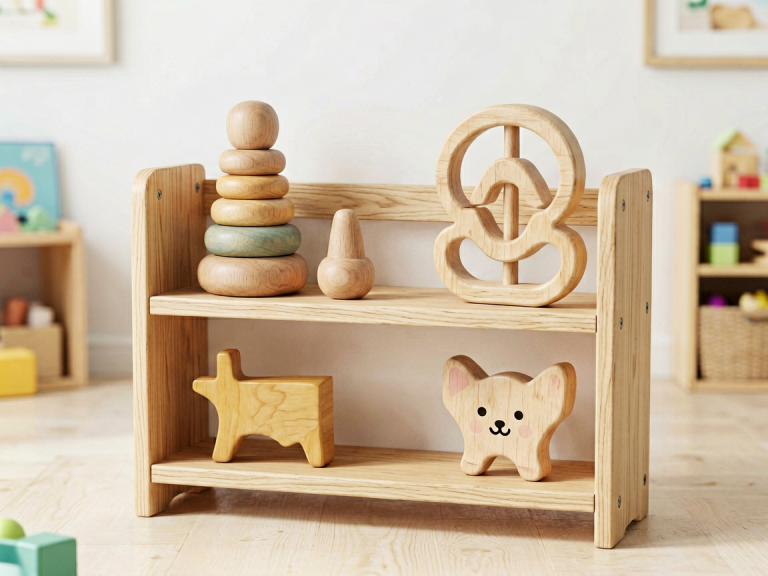
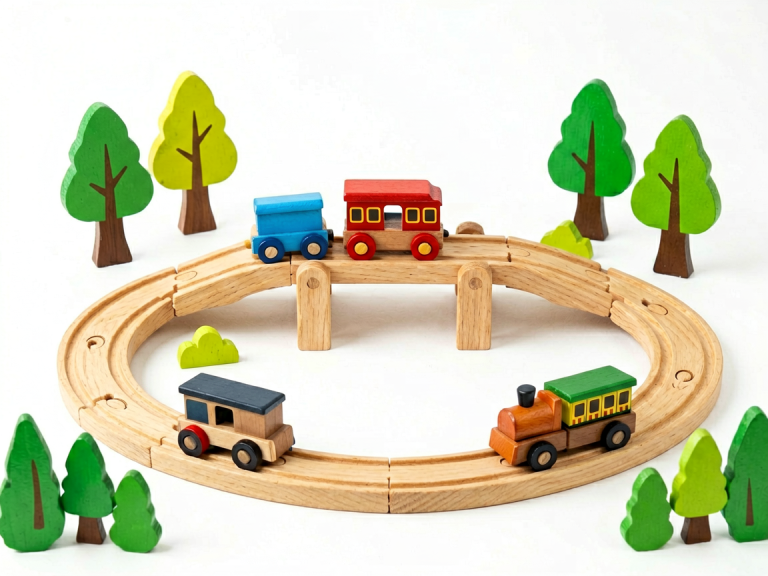
Blocks—whether wooden unit blocks, cardboard bricks, or large foam blocks—are perhaps the most iconic open-ended toy. Their simplicity allows for infinite complexity. A child might start by stacking two blocks, then build a tower, then a bridge, then an entire city with roads and tunnels.
Setting it up: Provide a generous number of blocks (at least 50–100 small ones) in a clear, accessible space on a low shelf or rug. Add a few small animal figures or toy cars. Then, leave the child alone. If they ask for help, respond with questions: “What would happen if you put that block sideways?” “How could you make the tower taller without it falling?”
Developmental benefits:
- Spatial awareness and geometry: Children learn about balance, symmetry, and the properties of shapes (a cube vs. a cylinder).
- Problem-solving: When a tower falls, the child must reassess and try a new strategy.
- Language and social play: Two children building together negotiate roles (“I’ll be the architect, you be the builder”) and create shared narratives.
- Persistence and grit: The iterative process of building, collapsing, and rebuilding teaches resilience.
Pro tip: Resist the urge to “correct” or show them how to build. The errors are the lessons. After play, ask the child to help sort the blocks back into categories—this adds a subtle math element.
—
Conclusion: The Gift of Unstructured Time
In a world that often prizes efficiency and measurable outcomes, open-ended play can feel counterintuitive. Yet the research is clear: the brain develops most powerfully when it is free to wonder, experiment, and make mistakes without the pressure of a right answer. The ideas presented here—loose parts, sensory bins, playdough, nature play, process art, and block building—are not exhaustive. They are starting points.
The most important element is the adult’s mindset: to provide the invitation, then to trust the child. Ask thoughtful questions (“What do you think will happen if…?”), offer vocabulary (“That’s a delicate balance!”), and above all, protect large chunks of uninterrupted time. When we honour open-ended play, we honour the child’s innate drive to learn. We give them not a script, but a stage—and they will write their own masterpiece.
Word count: approximately 1,320 words