Unlocking Potential: A Comprehensive Guide to Educational Toys for Beginners
Introduction
In an era where screens dominate children’s attention, the role of educational toys has never been more critical. These carefully designed playthings are not merely distractions; they are powerful tools that stimulate cognitive development, fine motor skills, creativity, and social interaction. For beginners—whether a toddler exploring shape recognition, a preschooler learning letters, or a young child encountering basic logic—the right educational toy can lay a foundation for lifelong curiosity. This article delves into the world of educational toys for beginners, explaining their importance, the key features to look for, and how to integrate them effectively into early learning experiences.
Why Educational Toys Matter for Beginners
The first years of life are a period of rapid brain development. According to neuroscientists, a child’s brain forms up to one million new neural connections per second during the first three years. Educational toys capitalize on this plasticity by providing hands-on, sensory-rich experiences that traditional passive activities (like watching television) cannot replicate. For beginners, these toys serve several crucial purposes:
- Encouraging Active Learning: Unlike passive entertainment, educational toys require manipulation, problem-solving, and experimentation. A simple stacking ring, for instance, teaches size discrimination, hand–eye coordination, and patience.
- Building Foundational Skills: Early literacy, numeracy, and spatial reasoning often start with toys. Alphabet puzzles introduce letter shapes; counting bears introduce one-to-one correspondence; building blocks introduce geometry.
- Fostering Independence and Confidence: When a beginner successfully fits a peg into a hole or completes a simple puzzle, they experience a sense of accomplishment. This bolsters self-esteem and motivates further exploration.
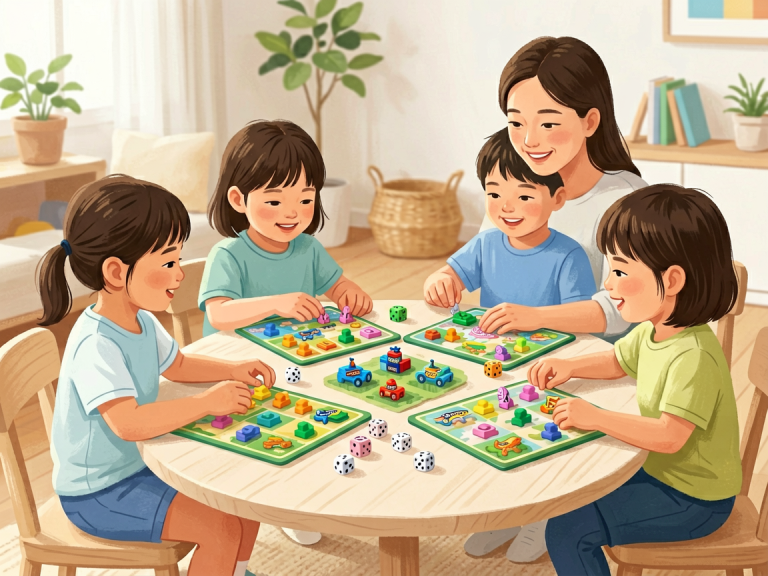
- Supporting Social and Emotional Growth: Many educational toys are designed for cooperative play. Sharing a set of magnetic tiles or taking turns with a shape sorter teaches turn-taking, empathy, and communication.
Key Characteristics of Effective Educational Toys for Beginners
Not every toy labeled “educational” truly delivers value. Beginners have specific developmental needs, so the most effective toys share certain characteristics:
- Age-Appropriate Complexity: A toy that is too advanced will frustrate a beginner; one that is too simple will bore them. The best toys offer a “just-right” challenge. For example, a one-year-old might benefit from a wooden rattle that responds to shaking, while a three-year-old might enjoy a simple matching game.
- Open-Endedness: Toys that allow multiple uses encourage creativity. Wooden blocks, for instance, can become towers, cars, or animals depending on a child’s imagination. Open-ended toys grow with the child, offering new possibilities as skills develop.
- Sensory Engagement: Beginners learn through their senses. Toys that incorporate different textures, colors, sounds, and even scents (like non-toxic scented dough) engage multiple neural pathways. A textured ball or a musical shaker is excellent for infants.
- Safety and Durability: Beginners often mouth toys, throw them, or drop them. Non-toxic materials, rounded edges, and sturdy construction are non-negotiable. Look for certifications like ASTM or CE marks.
- Clear Feedback: A toy that provides immediate feedback—such as a puzzle piece clicking into place or a light turning on when a button is pressed—helps beginners understand cause and effect. This reinforcement accelerates learning.
Categories of Educational Toys for Beginners
To simplify selection, educational toys for beginners can be grouped into broad categories based on the skills they target:
1. Sensory and Motor Development Toys
These toys are ideal for infants and toddlers who are building basic motor control and sensory awareness. Examples include:
- Stacking rings and nesting cups – Teach size sequencing and hand–eye coordination.
- Soft blocks with mirrors and crinkle paper – Stimulate tactile and visual senses.
- Activity gyms with hanging toys – Encourage reaching, grasping, and kicking.
- Sensory balls (spiky, bumpy, or textured) – Promote gripping and rolling.
2. Building and Construction Toys
Construction play develops spatial reasoning, problem-solving, and fine motor skills. For beginners, larger pieces are easier to manipulate:
- Large interlocking blocks (like Duplo) – Allow toddlers to build simple structures.
- Magnetic tiles – Easy to connect and create 2D and 3D shapes.
- Wooden unit blocks – Classic, open-ended, and excellent for balancing.
3. Early Literacy and Numeracy Toys
These toys introduce letters, numbers, and words in a playful, low-pressure context:
- Alphabet puzzles with chunky pieces – Help with letter recognition and pronunciation.
- Counting bears or farm animals – Teach counting, sorting, and basic math concepts.
- Letter magnets – Stick on the fridge to form simple words.
- Sound books – Combine pictures with associated sounds (e.g., animal noises, letter sounds).
4. Problem-Solving and Logic Toys
Beginners can start developing logical thinking through simple puzzles and pattern games:
- Simple peg puzzles – Match shapes to corresponding holes.
- Jigsaw puzzles with 2–12 pieces – Build visual discrimination and patience.
- Shape sorters – Require matching shapes to cutouts.
- Lacing beads or stringing boards – Develop sequencing and fine motor control.
5. Creative Arts and Imaginative Play
Fostering creativity is essential for cognitive flexibility. For beginners, consider:
- Non-toxic finger paints or chunky crayons – Encourage self-expression.
- Play dough with simple tools – Strengthens hands and sparks imagination.
- Simple puppets or dolls – Promote storytelling and social-emotional skills.
- Musical instruments (shakers, xylophones, small drums) – Introduce rhythm and cause-effect.
How to Choose the Right Educational Toys for Beginners
With countless products on the market, parents and educators often feel overwhelmed. Here is a practical step-by-step approach:
- Observe the Child’s Interests: A child fascinated by vehicles may engage more with a toy car ramp than with alphabet cards. Follow their passions to maximize engagement.
- Consider the Child’s Current Skill Level: If a beginner is struggling with stacking two blocks, a 20-piece puzzle will be frustrating. Choose toys that are slightly challenging but still achievable with a little effort.
- Prioritize Quality over Quantity: A few well-chosen toys offer more benefit than a closet full of plastic gadgets. Invest in durable, thoughtfully designed toys that encourage deep play.
- Look for Toys That Grow with the Child: For example, a shape sorter can be used initially for matching shapes, then later for color recognition, and even for simple addition games as the child grows.
- Read Reviews and Research Brands: Reputable educational toy companies (like Melissa & Doug, Hape, PlanToys, or Fisher-Price) often base their designs on developmental milestones. Check for awards from child development organizations.
Tips for Parents and Educators
Integrating educational toys into a beginner’s daily routine is not about formal lessons; it is about creating an environment where learning happens naturally. Here are some best practices:
- Model Play: Sit with the child and demonstrate how to use a toy, but avoid taking over. Let them explore at their own pace. For instance, show how to stack blocks, then step back and let them try.
- Rotate Toys Regularly: Children can lose interest when the same toys are always available. Store some toys in bins and rotate them every week or two. This maintains novelty and rediscovery.
- Combine Digital and Physical Play: Some modern educational toys incorporate simple apps or screens, but for beginners, tactile interaction remains superior. If using a digital component, ensure the toy also includes a physical element (e.g., an app that reacts to a physical block).
- Focus on Process, Not Product: Praise the effort, not just the end result. If a child builds a wobbly tower that falls, acknowledge their perseverance: “You worked so hard to stack those blocks! Let’s try again together.”
- Avoid Over-Structuring: Beginners learn best through free play. Do not turn every toy into a lesson. Allow unstructured time where the child can invent their own rules and uses for the toy.
Conclusion
Educational toys for beginners are far more than playthings—they are the building blocks of a child’s intellectual, physical, and emotional development. By choosing toys that are age-appropriate, open-ended, and sensory-rich, we provide children with the tools they need to explore the world with curiosity and confidence. Whether it is a simple wooden puzzle, a set of colorful stacking cups, or a set of magnetic tiles, the right toy can spark a love of learning that lasts a lifetime. For parents and educators, the key is to be intentional without being prescriptive: surround the child with opportunities, then step back and watch the magic of discovery unfold. In the hands of a beginner, an educational toy becomes a passport to endless possibilities.