Unlocking Imagination: A Guide to Using Toys for Creative Play
Creative play is not merely a pastime for children; it is a vital engine for cognitive development, emotional intelligence, and problem-solving skills. While the market overflows with electronic, single-purpose toys that dictate a fixed way of playing, the true magic of childhood emerges when children learn to use toys as tools for boundless imagination. This guide explores practical strategies to transform any collection of toys—from blocks to dolls to action figures—into catalysts for creative play.
Choosing Open-Ended Toys as a Foundation
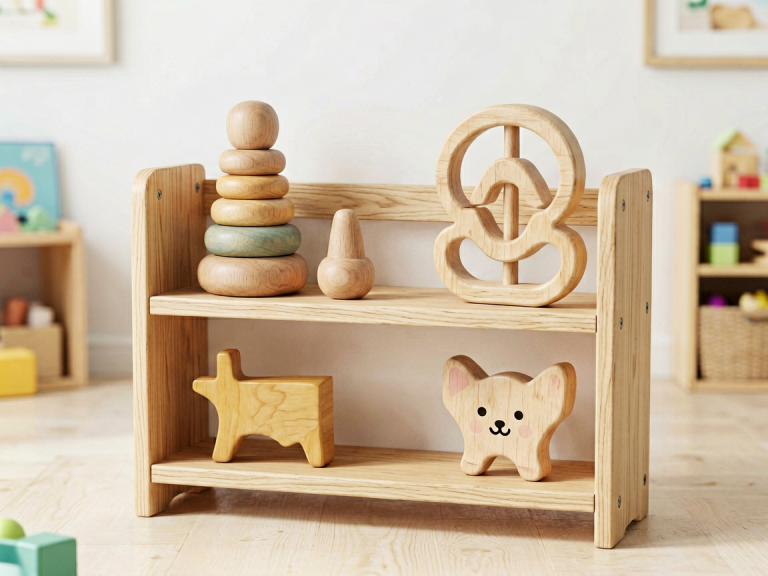
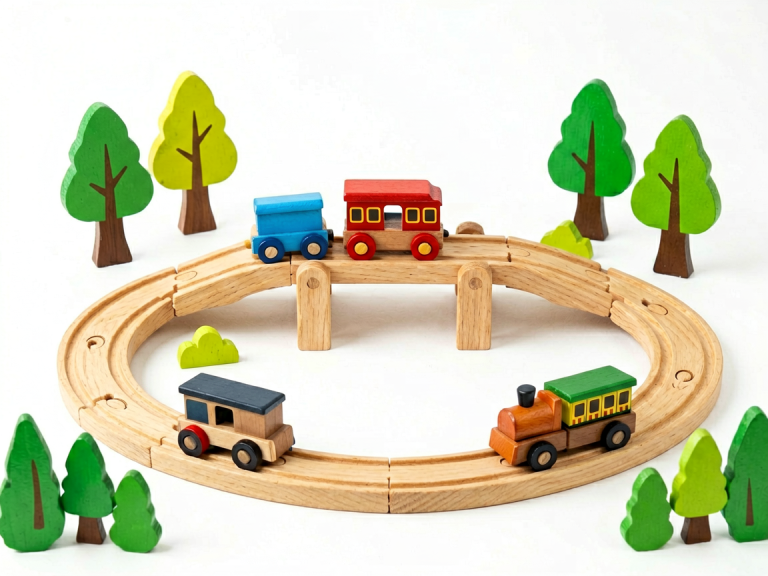
The first step to fostering creative play is selecting toys that invite multiple interpretations. Open-ended toys, such as wooden blocks, LEGO bricks, playsilks, and modeling clay, lack a predetermined outcome. A set of plain wooden blocks can become a castle, a spaceship, a bridge, or a pizza oven, depending on the child’s narrative. When building a toy collection, prioritize items that can be combined, manipulated, and reconfigured. For instance, a simple set of animal figurines can inspire a safari adventure, a farm drama, or a jungle rescue mission. Avoid toys that only do one thing—like a plastic fire truck that only makes noise and moves forward. Instead, choose a generic vehicle that can serve as a taxi, an ambulance, or a delivery van in the child’s story. The fewer the built-in limitations, the greater the potential for creative expression.
Designing Play Environments That Spark Stories
The physical space where play occurs significantly influences its creativity. A sterile, crowded toy box often overwhelms children and discourages sustained imaginative engagement. Instead, create small, organized play stations or “invitations to play.” For example, arrange a tray with a few rainbow-colored scarves, a couple of small wooden people, and a handful of flat stones. Without any instructions, a child might turn the scarves into rivers, the stones into stepping stones, and the people into adventurers crossing a dangerous ravine. Rotate toys regularly to maintain novelty; hiding half the toys and swapping them monthly restores their magic. Also, consider the backdrop: a simple blanket draped over chairs becomes a cave, a fort, or a castle. Adding natural elements like pinecones, leaves, or sand from the garden further enriches the sensory experience and invites cross-material creativity. The environment should whisper, “What story will you tell today?” rather than scream, “This is how you play with me.”
Embracing Loose Parts and Mixed Materials
A powerful technique for creative play is combining traditional toys with everyday household items or natural loose parts. Loose parts are materials with no specific play purpose—bottle caps, corks, fabric scraps, cardboard tubes, buttons, and pebbles. When a child has a set of toy dinosaurs and a basket of loose parts, the possibilities multiply. A cardboard tube becomes a cave; a piece of blue silk becomes a lake; a bottle cap becomes a dinosaur’s dinner plate. This kind of play encourages divergent thinking—generating many solutions to one problem. Parents and educators can facilitate by keeping a “junk box” accessible and modeling how to incorporate these items into play without directing the outcome. For instance, while playing with a dollhouse, you might say, “I wonder what this spool of thread could be in our house?” and then let the child decide. Over time, children internalize the habit of seeing everyday objects as potential characters, props, or settings, which is the essence of creative thinking.
Using Guided Questions Without Over-Directing
Adults often struggle with how much to intervene during play. The key is to ask open-ended questions that expand the child’s narrative without taking control. Instead of saying, “Let’s build a castle,” try, “What kind of building do you think these blocks want to become today?” When a child is holding a toy figure, ask, “What is she thinking right now?” or “Where is she going and why?” These prompts encourage the child to build a story, develop characters, and explore emotions. Another strategy is to introduce a playful problem: “Oh no, the teddy bear’s boat is sinking! What could he use to save himself?” Such challenges stimulate creative problem-solving. However, avoid turning every play session into a lesson. Allow long periods of uninterrupted, self-directed play. The adult’s role is to be an attentive observer and occasional co-player who follows the child’s lead, not a director who scripts the scene.
Encouraging Role-Play and Narrative Building
Toys that represent characters—dolls, action figures, puppets, or even stuffed animals—are natural mediums for role-play, which is a cornerstone of creative development. Children can step into the shoes of a doctor, a superhero, a parent, or an astronaut. To deepen this experience, provide props that support storytelling: a toy stethoscope, a homemade cape, a steering wheel made from a paper plate, or a simple crown. Encourage children to invent backstories for their toys. For example, ask, “Where did this rabbit come from before she arrived at our house?” or “What is the pirate’s biggest secret?” This builds narrative skills and empathy. Additionally, mix character sets from different themes—a princess, a robot, and a dinosaur can coexist in the same story, breaking genre boundaries and encouraging truly original plots. Children who regularly engage in role-play develop stronger language skills and a greater capacity to understand different perspectives.
Combining Digital Tools with Physical Toys
In the age of screens, creative play can also integrate technology in a balanced way. Instead of replacing physical toys with apps, use digital tools to extend imaginative play. For instance, a child can take photos of their block construction and then draw a comic strip about it on a tablet. Or they can record a short audio story about their toy figures using a simple voice memo app. Another idea: watch a short, wordless animation together and then reenact it with toys, inventing new dialogue and endings. The goal is to treat digital media as a supplement, not a substitute. The physical act of manipulating toys remains central because it engages fine motor skills, spatial reasoning, and sensory feedback that screens cannot replicate.
Allowing for Mess and “Bad” Stories
Finally, creative play thrives when children feel safe to make mistakes, create “ugly” art, or tell stories that don’t make logical sense. Some play sessions will be chaotic, with toys scattered and narratives that wander or abruptly end. That’s perfectly fine. Resistance to clean, linear play is actually a sign of deep exploration. Avoid correcting a child’s “wrong” use of a toy. If a child uses a race car as a hairbrush, celebrate that imaginative leap. Similarly, don’t rush to fix a play scenario that seems stuck. Silence and boredom often yield the most creative breakthroughs. As adults, our job is to trust the process. The most creative play happens when children forget about rules and outcomes, immersing themselves fully in the world they are creating with their toys.
In conclusion, toys are not just objects to play with—they are keys to a kingdom of imagination. By choosing open-ended toys, designing flexible environments, embracing loose parts, asking thoughtful questions, encouraging role-play, integrating technology wisely, and tolerating mess and nonlinear narratives, we give children the tools and freedom to become inventors, storytellers, and problem-solvers. The true gift is not the toy itself, but the infinite possibilities that unfold when a child learns how to use it as a stepping stone into their own creativity.