Avoiding Common Pitfalls in Screen-Free Play: What Every Parent Should Know
In an era dominated by digital devices, many parents actively seek to carve out screen-free time for their children. The benefits are well-documented: improved creativity, deeper social skills, enhanced physical health, and better emotional regulation. Yet well-intentioned efforts often backfire. Parents, in their eagerness to distance children from screens, inadvertently recreate the same pressures, structures, and expectations that make digital entertainment so appealing. Effective screen-free play is not simply the absence of screens—it is a rich, child-led experience that requires careful thought and, paradoxically, a kind of intentional letting go. Below are the most common mistakes to avoid, along with practical guidance for cultivating truly nourishing play.
Mistake 1: Over-Structuring Playtime
One of the most pervasive errors is turning screen-free time into a rigid schedule of planned activities. Parents may feel that without a schedule, children will become bored or waste time. This leads to a calendar filled with "playdates," "creative time," "outdoor exploration," and "educational games," each with a clear start and end time. While structure has its place, over-structuring destroys the very essence of screen-free play: spontaneity, self-direction, and deep immersion.
When children are constantly told what to play and when to stop, they never learn to initiate their own activities. They become passive recipients of adult-led entertainment, which is ironically similar to the passive consumption of screen content. A child who is told "now we do puzzles for 20 minutes, then we go outside" has not actually engaged in free play. She has simply shifted from one externally imposed activity to another. The boredom that parents fear is actually a crucial ingredient. Boredom forces children to dig into their own imagination, to negotiate with siblings, to invent rules, and to persist through frustration. Over-structuring robs them of that developmental opportunity.
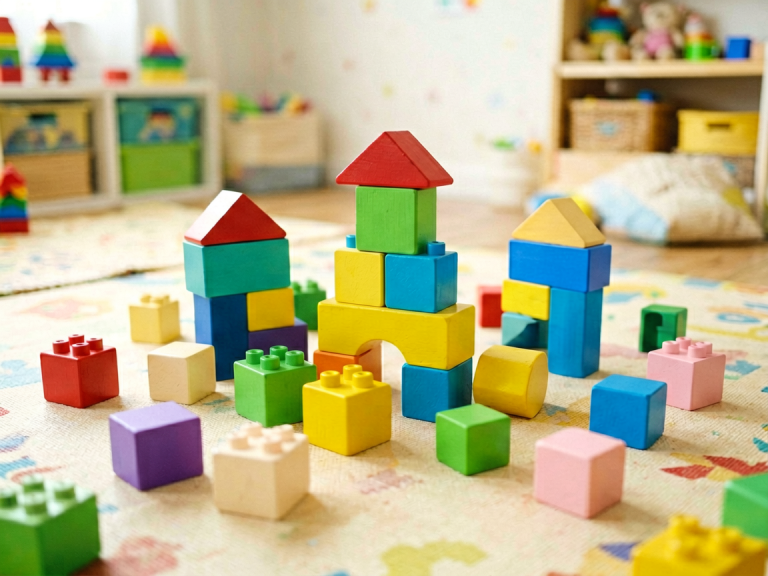
Solution: Allow large, unbroken blocks of unstructured time—at least an hour or two. Provide simple materials (blocks, art supplies, dress-up clothes, outdoor access) and then step back. Resist the urge to intervene unless safety or genuine conflict arises. Trust that children's minds are naturally creative when given space.
Mistake 2: Prioritizing Educational Outcomes Over Free Play
Many parents view screen-free time as a golden opportunity to "teach" their children. They set up elaborate science experiments, force handwriting practice, or insist on counting games. The underlying assumption is that if a child is not actively learning something measurable, the time is wasted. This is a tragic misunderstanding of how children learn best.
The most profound learning in early childhood happens through self-directed, imaginative play. When a child builds a fort, she is unconsciously learning about physics, balance, and spatial reasoning. When she pretends to run a grocery store, she practices math, social negotiation, and narrative thinking. When she digs in the dirt, she explores biology and sensory processing. These experiences are far more integrated and meaningful than any worksheet or structured lesson. By constantly steering play toward "educational" goals, parents signal that the child's own interests are less important than adult-approved outcomes. This can crush intrinsic motivation and make play feel like another chore.
Solution: Let go of the obsession with measurable learning. Trust that the process of play is itself educational. Ask open-ended questions during play ("Tell me about your castle") instead of directing the action. Save structured lessons for later years or for brief, voluntary moments. The best screen-free environment is one rich in open-ended tools—not in lesson plans.
Mistake 3: Using Screen-Free Play as a Punishment
"Since you were rude, no screen time for the rest of the day. Go play with your toys." This kind of statement positions screen-free play as a deprivation, a consequence of misbehavior. Over time, children internalize the message that play without screens is a lesser form of entertainment—something to be endured rather than enjoyed. This creates a negative emotional association with books, board games, outdoor play, and imaginative activities.
Furthermore, using screen-free time punitively can lead to power struggles. A child who feels that play is a punishment may resist it actively or develop a twisted relationship with downtime. She may learn to associate silence and unstructured time with boredom and discipline, rather than with freedom and joy. The goal is to make screen-free play so deeply fulfilling that children naturally prefer it to screens—at least for substantial portions of the day. That cannot happen if it carries punitive undertones.
Solution: Reframe screen-free time as a neutral or positive baseline, not a reward or punishment. Screens can be limited through fair, predictable family rules (e.g., one hour after homework) that apply to everyone, regardless of behavior. Consequences for misbehavior should be logical and related to the offense—such as losing a privilege, not losing the opportunity for healthy play.
Mistake 4: Ignoring the Child’s Own Interests
Parents often steer screen-free play toward what they think children *should* enjoy: nature hikes, classical music, building sets, or educational puzzles. Meanwhile, a child might be fascinated by something much simpler—lining up stones, watching ants, or repeatedly dropping a ball. When adults dismiss these "small" interests as meaningless and push their own agenda, they undermine the child's autonomy and passion.
Screen-based entertainment is masterful at tailoring content to individual preferences. A child who loves dinosaurs will be served dinosaur games, videos, and stories by algorithms. In contrast, a well-meaning parent might insist on cooking activities because "it's more productive." The result? The child feels misunderstood and less motivated. True engagement in screen-free play requires that the child’s curiosity lead the way. Even if that curiosity seems trivial to an adult, it is the engine of deep learning.
Solution: Observe your child without judgment. What does she return to again and again? What makes her lose track of time? Provide materials and environments that support those specific passions. Then ask her to teach you about what she loves. This validates her interests and strengthens your connection. The child who is free to follow her fascinations will develop sustained attention and a lifelong love of discovery.
Mistake 5: Over-Supervising and Over-Intervening
Many parents believe that screen-free time requires constant adult presence and active engagement. They hover nearby, offering suggestions, correcting mistakes, and managing interactions. While involvement is loving, excessive supervision sends a subtle message: "You cannot play without my help." Children internalize this and become dependent, unable to resolve conflicts, handle boredom, or create their own fun.
Moreover, constant adult direction stifles risk-taking and problem-solving. A child who is always told how to build a taller tower will never experience the joy of figuring it out on his own. A child whose every squabble with a sibling is mediated by a parent will not learn diplomatic negotiation. Screen-free play should include stretches of independent, unsupervised exploration (within safe boundaries). This builds resilience, executive function, and self-confidence.
Solution: Be available but not intrusive. Sit nearby and read a book, do your own quiet activity, or simply observe. Let children struggle through minor frustrations—these are the moments when growth happens. Intervene only for safety or when a conflict escalates beyond the children’s ability to manage. After the play session, you can reflect together, but resist the urge to direct the action in real time.
Mistake 6: Focusing on Quantity Over Quality
Some parents celebrate a full day without screens as a victory, regardless of how that time was spent. They fill every minute with activities, outings, or passive tasks (like coloring books or TV-free video games). Yet a full day of joyless, forced "play" is not restorative. Quality matters far more than quantity.
A single hour of deeply engaged, child-led play—building an elaborate Lego castle, acting out an original story with friends, exploring a creek—can be more enriching than eight hours of aimless, structured time. Children need the freedom to enter a state of "flow," where they are completely absorbed. This cannot happen if the schedule is too busy or if the activities are uninspiring. Furthermore, children need downtime that is genuinely restful: lying in the grass, daydreaming, cuddling with a pet. Not every moment needs to be productive.
Solution: Prioritize a few, high-quality pockets of screen-free time rather than trying to eliminate screens entirely. Observe when your child is most alert and creative—morning? after lunch?—and protect that time for deep play. Allow for lazy, quiet moments as well. The goal is not to fill every minute, but to create space for joy.
Mistake 7: Failing to Model Screen-Free Behavior
Perhaps the most overlooked mistake: parents who enforce screen-free rules while themselves constantly glued to phones, laptops, or televisions. Children learn far more from what they see than from what they are told. When a parent says "put down the iPad and play outside" but then checks email every five minutes, the child receives a mixed message. The implicit lesson is that screens are actually more important, because adults choose them over connection.
Modeling is especially powerful because children long to imitate their parents. If they see you reading a physical book, cooking without a device nearby, gardening, or playing a board game with friends, they will naturally gravitate toward those activities. Conversely, if they see you using screens as a primary source of relaxation and entertainment, they will view screen-free time as a punishment reserved only for children.
Solution: Commit to your own screen-free hours. Set aside designated times when the entire family unplugs—mealtimes, weekend mornings, or a weekly "tech Sabbath." Keep your phone in another room during playtime. Show enthusiasm for your own hobbies that don't involve screens. When your child sees you lost in a good book or tinkering with a woodworking project, you are offering the most powerful invitation to play without screens.
Conclusion: The Art of Not Doing
Avoiding these mistakes requires a shift in mindset. Screen-free play is not about filling time, teaching lessons, or punishing misbehavior. It is about trusting children to be the architects of their own wonder. It is about giving them the raw materials—time, space, freedom, and a few open-ended tools—and then getting out of the way. The most important thing a parent can do is create an environment rich in possibilities and then practice the art of non-interference. When we step back, children step forward. Their natural curiosity, creativity, and joy take over, often in ways we could never have planned. That is the true magic of screen-free play.