The Toy Path to Critical Thinking: A Developmental Journey from Blocks to Board Games
Introduction
In an age of digital saturation and instant gratification, the ability to think critically—to analyze, evaluate, and synthesize information—has become more precious than ever. Parents, educators, and caregivers increasingly seek tools that nurture this skill from an early age. While structured curricula and educational apps abound, one of the most organic and joyful avenues for developing critical thinking lies in the humble toy. Yet not all toys are created equal. The “best toy path” for critical thinking is not a single toy but a curated, developmental sequence that matches a child’s cognitive growth, challenges their assumptions, and invites them to ask “why” and “what if.” This article outlines that path, moving from concrete, open-ended play to abstract, rule-based problem-solving, ensuring that each stage builds upon the last.
The Foundational Stage: Open-Ended and Sensory Toys (Ages 1–3)
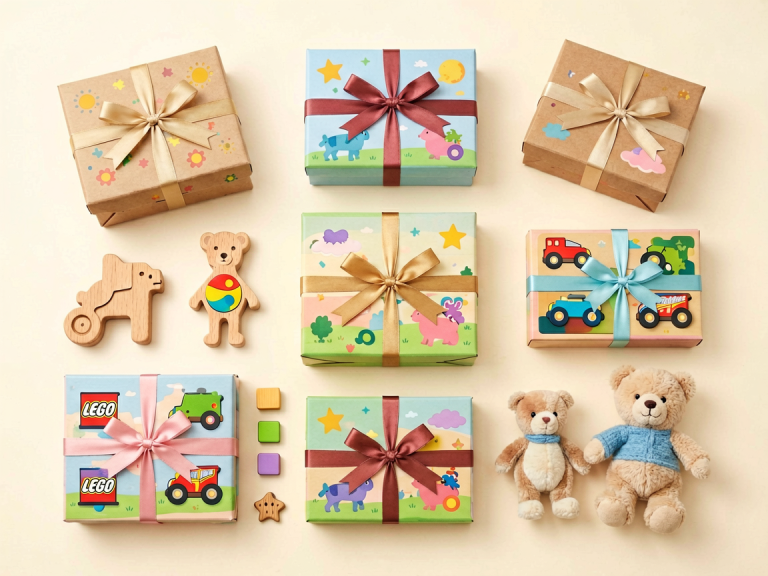
Critical thinking begins long before a child can articulate a logical argument. It starts with exploration, pattern recognition, and cause-and-effect understanding. For toddlers and preschoolers, the best toys are those without a single “correct” outcome. Wooden blocks, stacking cups, shape sorters, and simple construction sets like Duplo or Mega Bloks offer infinite possibilities. When a child tries to stack a block on a curved surface and it falls, they are engaging in hypothesis testing: “If I place it differently, will it stay?” This trial-and-error process is the embryo of scientific reasoning.
Sensory toys—water tables, sandboxes, playdough, and kinetic sand—also play a crucial role. They encourage children to manipulate materials, observe transformations, and adjust their actions. A child who adds water to dry sand and discovers it becomes moldable is performing a rudimentary experiment. The key here is open-endedness: the toy does not dictate a single play pattern. Instead, it invites the child to create their own rules, fostering divergent thinking—the ability to generate multiple solutions to a problem. This stage lays the neural groundwork for later analytical skills.
The Exploration Phase: Construction and Building Sets (Ages 3–6)
As children enter the preschool and early elementary years, their capacity for logical sequencing and spatial reasoning expands. This is the golden age for construction toys such as LEGO Classic sets, magnetic tiles (Magformers, Magna-Tiles), and interlocking building systems like K’NEX or Plus-Plus. These toys shift the focus from simple stacking to systematic planning. A child building a tower must consider balance, weight distribution, and structural integrity. When the tower collapses, they must diagnose the failure: Was the base too narrow? Was a piece misaligned? This process mirrors the scientific method: observation, hypothesis, test, revision.
Magnetic tiles are particularly powerful because they allow for rapid prototyping. A child can design a bridge, test if it holds a toy car, and quickly modify the design. The visual and tactile feedback is immediate, reinforcing the connection between cause and effect. Furthermore, these toys often require following pictorial instructions for specific models, which trains children in sequential thinking and attention to detail. However, the true critical thinking growth occurs when they deviate from instructions and invent their own creations, forcing them to solve real-time spatial problems.
The Strategic Stage: Board Games and Puzzles (Ages 6–10)
Once children have a solid foundation in hands-on problem-solving, they are ready for structured games that require strategic reasoning, planning ahead, and logical deduction. Classic board games like “Catan Junior,” “Ticket to Ride: First Journey,” “Chess,” “Checkers,” and “Blokus” are excellent. These games introduce rules that constrain behavior, forcing players to think within a system while also seeking optimal outcomes. For example, in “Blokus,” players must fit their colored pieces on a grid while blocking opponents. This requires spatial foresight, anticipation of others’ moves, and adaptive strategy—all hallmarks of critical thinking.
Puzzles also belong in this stage. Jigsaw puzzles, especially those with increasing piece counts (100 to 500 pieces), teach fractional thinking (how parts form a whole), pattern matching, and persistence. More importantly, puzzles require metacognition—thinking about one’s own thinking. A child must ask: “Should I sort by edge pieces first? By color? By shape?” This self-monitoring is a key component of critical thinking. Logic puzzles, such as “Logic Links” or “Rush Hour,” directly train deductive reasoning by presenting a problem that must be solved through systematic elimination of possibilities.
The Digital Frontier: Coding and Logic Toys (Ages 8–12)
The modern critical thinking path cannot ignore technology. However, the best digital toys are those that engage computational thinking—breaking down complex problems into smaller, manageable steps. Board games like “Robot Turtles” (which teaches basic programming concepts without a screen) and physical coding kits like “Code-a-Pillar,” “Botley,” or “LEGO Boost” provide a hands-on introduction to algorithms, loops, and conditional statements.
For older children, more sophisticated coding toys like “Sphero,” “Dash and Dot,” or “Makey Makey” allow for open-ended projects. A child programming Sphero to navigate a maze must define the goal, break the route into steps (sequence), test the code, debug errors, and iterate. This process directly mirrors analytical problem-solving in mathematics and computer science. Unlike passive screen time, these toys demand active creation. Moreover, they teach systems thinking: understanding how inputs (code) produce outputs (robot movement), and how small changes can have cascading effects.
The Social Dimension: Collaborative and Role-Playing Games (Ages 10+)
Critical thinking is not an isolated activity; it thrives in social contexts where ideas are challenged and refined. Collaborative games, such as “Forbidden Island,” “Pandemic,” or “Escape Room in a Box,” require players to communicate, share hypotheses, negotiate strategies, and evaluate trade-offs. These games teach perspective-taking—understanding that different players have different information and priorities. They also foster critical evaluation of arguments: a player must decide whether a teammate’s plan is feasible or flawed, and articulate why.
Role-playing games (RPGs) like “Dungeons & Dragons” (even in simplified versions) are perhaps the ultimate critical thinking tool. Players must interpret rules, improvise solutions, weigh risks, and make decisions with incomplete information. A character facing a locked door might try picking the lock, breaking it down, or finding an alternate route. Each option has consequences, and the player must evaluate the best course based on their character’s skills, the environment, and potential dangers. This nurtures narrative reasoning and ethical deliberation—deciding not only what is efficient but what is right within the story.
Conclusion: Curating the Path, Not Just the Toys
The best toy path for critical thinking is not a checklist of expensive gadgets but a thoughtful progression that respects a child’s cognitive maturity. It begins with open-ended sensory exploration, moves to structured construction, advances to rule-based strategy, incorporates computational logic, and finally embraces social collaboration. At every stage, the key is active engagement—toys that prompt questions rather than provide answers. A child who learns to ask “What happens if I change this?” or “Why did that work?” is developing a mindset that will serve them far beyond the playroom. As parents and educators, our role is not to prescribe the “perfect” toy but to create a supportive environment where curiosity is rewarded, failure is seen as data, and play is recognized as the most natural school of thought. By following this toy path, we give children the greatest gift: the ability to think for themselves.