Unlocking the Alphabet: How to Build Early Reading Skills Through Play
Introduction
The journey to literacy begins long before a child opens their first textbook. In fact, the most powerful foundation for reading is laid not in formal lessons, but in the spontaneous, joyful, and messy world of play. For parents, educators, and caregivers, the question “How do I teach my child to read?” often carries an underlying anxiety—a fear that without structured drills, flashcards, and phonics worksheets, the child will fall behind. Yet decades of developmental research point to a different truth: children learn best when they are actively engaged, curious, and having fun. Play is the natural language of childhood, and when we intentionally design playful experiences that incorporate letters, sounds, stories, and print, we build early reading skills organically and deeply.
This article explores practical, research-backed strategies for nurturing early reading through play. We will examine why play is so effective, how to create a print-rich environment that invites exploration, and specific play-based activities that target phonological awareness, vocabulary, comprehension, and print concepts—all while keeping the child’s joy at the center. By the end, you will have a toolkit of ideas that transform everyday moments into powerful literacy opportunities.
Why Play Works: The Science Behind the Joy
Before diving into activities, it is essential to understand the cognitive and emotional mechanisms that make play such a potent vehicle for reading development. Play is not merely a break from learning; it is learning in its most integrated form. When children play, they are in a state of “flow”—fully absorbed, intrinsically motivated, and willing to take risks. This state lowers the affective filter, a term from language acquisition theory that describes the emotional barrier that can block learning. When a child feels safe, happy, and engaged, their brain is more receptive to new information.
Neuroscientific studies show that play stimulates the release of dopamine, a neurotransmitter associated with pleasure and reward, which strengthens neural connections. For reading, this means that each playful encounter with a letter or a story creates a positive emotional anchor. The child begins to associate reading with warmth, laughter, and agency, rather than with pressure or boredom. Moreover, play allows for repetition without monotony. A child who pretends to be a grocery store clerk will write “shopping lists” and “price tags” again and again, practicing letter formation and decoding in a context that feels purposeful. Repetition is crucial for building automaticity in reading, and play provides that repetition in a natural, self-directed way.
Designing a Print-Rich Play Environment
One of the most effective steps you can take is to transform the physical space where your child plays into a landscape of print. This does not mean covering every surface with commercial posters. Instead, think of embedding written language into the tools and props of play.
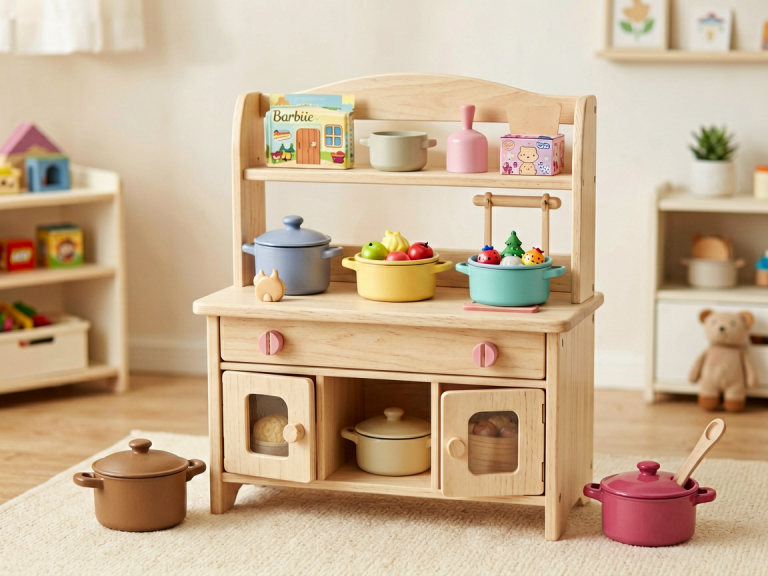
Start with the dramatic play area. If your child loves to play “restaurant,” create simple menus with pictures and words. Use index cards to label the name of each dish: “pizza,” “salad,” “juice.” Add a notepad and a stubby pencil so they can take orders. In a “doctor’s office” setup, include a clipboard with a pretend prescription pad and a sign that says “Waiting Room.” For a “post office,” supply old envelopes, stickers, and a “mailbox” made from a shoebox. Every time your child engages with these props, they are encountering print in a meaningful context—they are not just looking at letters; they are *using* them to communicate.
Beyond dramatic play, consider your book nook. Arrange books with covers facing outward so that children can see the titles and illustrations. Include a small bench or pillows, and keep a basket of “reading tools” like magnifying glasses, toy glasses (without lenses), and a simple reading wand—a stick with a star on top that children can use to point at words. This transforms the act of reading into a playful ritual. You can also create “story stones” by gluing pictures from magazines onto flat river stones, or write simple words on them. Children can pick stones and arrange them to create their own short sentences or tell a story aloud.
Playful Pathways to Phonological Awareness
Phonological awareness—the ability to hear and manipulate the sounds of language—is a strong predictor of future reading success. And it can be cultivated entirely through games, no worksheets required.
One classic game is “I Spy” with sounds. Instead of colors or objects, play “I spy with my little eye something that starts with the /b/ sound.” If the child is not yet ready for initial sounds, start with rhyming. “I spy something that rhymes with ‘cat’—it’s a ___ (hat).” You can play this while waiting in line, on a car ride, or during bath time. Another powerful activity is “Sound Marching.” As you walk around the house or the yard, chant a word slowly, stretching out each sound: “ssss-uuu-nnn.” Ask the child to jump forward when they hear a specific sound, or to stomp their foot for each sound they hear. This kinesthetic approach—linking sounds to movement—helps solidify the auditory skill.
For older preschoolers (ages 4–5), introduce “Word Families” using toys. Gather a set of small objects: a cat figurine, a bat, a mat, a hat. Say, “These all belong to the ‘at’ family! Let’s see… cat, bat, mat, hat. Can you find the one that starts with /m/?” Then, let the child play with the objects and create new endings, even if they are nonsense words. Nonsense words are fantastic for phonological awareness because they force the child to rely purely on sound, not on meaning. Laugh together as you create a “zat” or a “frat.” The goal is not correctness but playful exploration of sound patterns.
Building Vocabulary and Comprehension Through Storytelling Play
Vocabulary grows most efficiently when words are encountered in rich, meaningful contexts. Play offers countless opportunities for introducing new words without explicit instruction. For example, during a block-building session, instead of just saying “tall,” you might say, “Your tower is magnificent! It’s so tall that it touches the ceiling.” Use words like “sturdy,” “foundation,” “architect,” and “balance.” Use them naturally, and then define them through action. Let the child try to make the tower “sturdy” by adding more blocks at the base. This is direct vocabulary instruction disguised as play.
Another technique is “Storytelling with Props.” After reading a familiar picture book, collect a few objects that relate to the story. For *The Very Hungry Caterpillar*, you might have a green sock puppet (the caterpillar), a few plastic fruits, a tiny butterfly, and a leaf. Invite the child to retell the story using the props. They will naturally recall the sequence of events, use descriptive language, and develop narrative comprehension. You can also prompt them with questions: “What happens next?” “Why did the caterpillar get a stomachache?” “How does the caterpillar feel when it becomes a butterfly?” Through this guided play, the child internalizes story grammar—characters, setting, problem, resolution—which is essential for reading comprehension later.
For children who are just beginning to understand print, try “Message in a Bottle.” Write a simple two- or three-word message on a slip of paper—“I love you”—and put it inside a small plastic bottle with a cork. Hide it in the sandbox or under a pillow. When your child “finds” the message, read it together with great excitement. They will soon want to write their own messages. This is an authentic, low-stakes way to introduce the concept that written words carry meaning—a foundational insight for reading.
Making Letters Tangible: Multisensory Play for Letter Recognition
Before children can decode words, they need to recognize letters—not just as abstract shapes, but as symbols with names and sounds. Multisensory play is particularly effective here because it engages multiple pathways to the brain.
One simple activity is “Sandpaper Letters.” Cut out large letters from sandpaper sheets. Let the child trace the letter with their finger while saying the letter name and its sound. Then, they can trace over it with a crayon on paper, rubbing the texture. The tactile input reinforces the shape. You can also use shaving cream on a tray, finger paint, or even pudding. Spread a thin layer on a cookie sheet and have the child “write” letters with their finger. The mess is part of the fun.
“Letter Hunt” is another favorite. Hide magnetic letters around the room. When the child finds one, they must say its name and sound before placing it on a magnetic board. For a group of children, turn it into a race with simple rewards like a sticker. For a more challenging version, give them a “letter detective” clipboard with a list of letters to find. This combines gross motor movement, visual discrimination, and phoneme awareness.
For children who are ready to blend sounds, use “Alphabet Soup.” Fill a large bowl with water and plastic letter shapes. Give the child a ladle or a pair of tongs. Call out a word like “cat.” The child must fish out the letters C, A, and T in order and place them on a nearby board. This game requires listening, sequencing, and letter knowledge—all wrapped in a water-play activity that children love.
Integrating Play into Daily Routines: A Holistic Approach
The most sustainable way to build early reading through play is to weave it into existing routines. Bath time can become a chance to sing alphabet songs or to use foam letters that stick to the tiles. Meal time can include reading the labels on jars and boxes—turning the kitchen into a literacy-rich space. Bedtime can end with a shared game of “What if?” where you imagine a new ending to the story you just read.
The key is to follow the child’s lead. If they show interest in dinosaurs, create a dinosaur-themed word hunt. If they love dancing, play “Freeze Dance” with letter sounds—when the music stops, show a card and the child must shout the sound. By aligning play with the child’s passions, you tap into their natural motivation, and the learning becomes effortless.
Conclusion
Building early reading skills does not require expensive programs or hours of drilling. It requires an understanding that children are wired to learn through play, and that our role is to be intentional designers of playful literacy experiences. By creating a print-rich environment, engaging in sound games, storytelling with props, multisensory letter play, and embedding literacy into daily routines, we give children the tools they need to become confident readers—all while preserving the joy and wonder that makes childhood so precious.
Remember, every time you laugh together while pretending to read a menu, or trace a letter in the sand, you are not just playing. You are building a bridge between the world of imagination and the world of words—a bridge your child will cross again and again on the lifelong journey of reading. So go ahead: play with purpose, and watch your child’s literacy bloom.