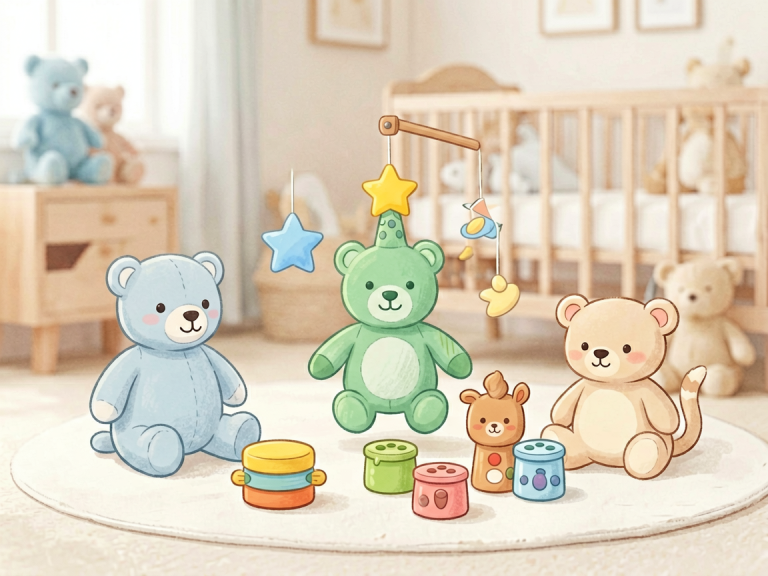
From Play to Peace: The Art of Screen-Free Quiet Time for Two-Year-Olds
Introduction
Every parent of a two-year-old knows the paradox: you want your child to be active, curious, and engaged, yet you also desperately need a pocket of calm in the day. In our hyper-connected world, the easiest solution often involves handing over a tablet or switching on a cartoon. But what if the path to quiet time didn’t require a screen at all? Screen-free play for two-year-olds is not only possible—it is profoundly beneficial. This article explores how intentional, unstructured play without digital devices can naturally lead your toddler into a restorative quiet time, nurturing their developing brain, emotional regulation, and your own sanity.
—
Why Screen-Free Play Matters for Two-Year-Olds
Two-year-olds are in a critical window of development. Their brains are forming neural connections at a staggering rate—over one million new connections per second. During this period, the quality of sensory input matters immensely. Screens, whether passive (television) or interactive (apps), tend to provide rapid, high-contrast, and often repetitive stimuli that can overstimulate a young brain. Studies from the American Academy of Pediatrics recommend no more than one hour of high-quality screen time per day for children aged 18–24 months, and for two-year-olds, the emphasis remains on active, human-led interaction over digital consumption.
Screen-free play, by contrast, engages the whole child: their senses, their motor skills, their imagination, and their social-emotional capacity. When a two-year-old stacks blocks, pours water, or sorts coloured pebbles, they are not merely “playing.” They are practicing cause and effect, developing fine motor control, learning to focus, and experiencing the natural rhythms of frustration and satisfaction. This kind of play builds a foundation for attention span—the very skill needed for quiet time.
Moreover, screens often hijack a toddler’s natural ability to self-regulate. A glowing screen can keep a child alert and aroused, making it harder to wind down later. In contrast, screen-free play allows the child to listen to their own body’s cues: when to run, when to sit, when to be still. This internal awareness is the precursor to peaceful quiet time.
—
The Hidden Power of Quiet Time
Quiet time for a two-year-old is not a punishment or a nap requirement. It is a developmental gift. During quiet time—often a 30- to 60-minute period of calm, low-stimulation activity—the young brain consolidates learning, processes emotions, and restores energy. It is the child’s equivalent of adult meditation or a lunch break.
But here is the catch: a two-year-old cannot simply be told “now be quiet.” Their nervous system must be gradually prepared for the transition. A child who has been running, shouting, and engaging in high-energy play will need more than a sudden announcement. This is where a screen-free play routine becomes the bridge. By designing a sequence of play activities that gradually slow down in pace and intensity, you guide your child into a state of receptive calm.
For example, after a period of active gross-motor play (like crawling through a tunnel or dancing to music), you can move to a table activity that requires concentration (puzzles or threading beads). Then, you can invite your child to a sensory bin filled with rice or sand, allowing them to sift and pour in a seated position. Finally, you can transition to a quiet, screen-free activity such as looking at a board book together or listening to soft lullabies. Each step reduces the neural stimulation, helping the child move from arousal to relaxation.
—
Designing a Screen-Free Play Routine That Leads to Quiet Time
Creating a successful routine requires intention, consistency, and a willingness to follow your child’s cues. The goal is not to force quiet but to invite it. Below are three key components of a screen-free routine that naturally culminates in quiet time.
1. Active Play That Tires the Body, Not the Brain
Two-year-olds need vigorous, whole-body movement to regulate their sensory systems. Before quiet time, plan an activity that uses large muscles: rolling a ball back and forth, climbing cushions, dancing with scarves, or simply chasing bubbles in the garden. This type of play releases energy and triggers the production of calming hormones like serotonin. Importantly, it should be screen-free—no videos of dancing animals, no interactive apps that simulate movement. Real movement in real space is irreplaceable.
2. Calming Sensory Play That Focuses the Mind
After active play, shift to a sensory activity that encourages fine motor work and attention. Sensory bins are excellent: fill a shallow container with dry rice, beans, or oats, and add scoops, small cups, and a few toys (like plastic animals or spoons). Let your child explore in a seated position. The repetitive action of pouring and sifting is deeply regulating. Alternatively, offer playdough or a simple water-play station with a towel underneath. The key is that these activities are open-ended and self-directed—no right or wrong way to play. This autonomy builds confidence and reduces resistance to the next transition.
3. The Quiet Time Invitation
When you notice your child’s movements slowing—they stop pouring, they sit back, they look around—it is time. Gently say words like, “I see your body is getting calm. Let’s find something very quiet now.” Offer a designated “quiet basket” that only comes out at this time: a few board books, a fabric book, a soft stuffed animal, a set of nesting cups. Dim the lights, close the curtains, and put on acoustic lullabies or white noise. Sit beside your child for a few minutes, modeling stillness. If they resist, do not force—simply stay present. Over days and weeks, they will learn that this quiet space is safe, predictable, and even pleasant.
—
Common Challenges and How to Overcome Them
Even with the best plan, real life with a two-year-old is messy. Here are three frequent hurdles and screen-free solutions.
Challenge: The child refuses to stop playing.
Solution: Instead of ending play abruptly, use a “play-out” method. Set a timer (visual timers work well) and say, “When the red disappears, it’s time for our quiet basket.” Involve them in cleaning up: “Let’s put the blocks to sleep in their bin.” The act of tidying becomes a closure ritual.
Challenge: The child is overtired and cranky.
Solution: Overtired two-year-olds often cannot access quiet play because their nervous system is flooded. In that case, skip the active play phase entirely and move directly to sensory calming: a warm bath, gentle rocking, or a slow massage with unscented lotion. Sometimes quiet time means just holding your child in a dim room.
Challenge: The screen is already a habit.
Solution: Withdrawal from screens can cause tantrums at first. Be prepared. Replace the screen time slot with a special, highly engaging screen-free activity that your child loves—like blowing bubbles or finger painting. Stick with the routine for at least two weeks. The brain will rewire. You may initially experience tears, but they are temporary; the long-term gain of a self-regulated, screen-free child is worth it.
—
The Emotional Benefits for Parent and Child
Screen-free play leading to quiet time is not just about avoiding blue light or reducing tantrums. It is about fostering a relationship built on presence. When you put away your own phone and sit on the floor with your toddler, you send a powerful message: *You are worthy of my full attention.* This deepens attachment, which is the bedrock of emotional security.
For the parent, quiet time becomes a genuine break—not a period of waiting for a screen to finish, but of knowing your child is content in their own quiet world. You can read a book, drink tea, or simply breathe. The house is still, not because the TV is on, but because your child has learned the beauty of being still.
Furthermore, children who develop the capacity for screen-free quiet play often grow into preschoolers who can entertain themselves, focus in school, and manage strong feelings. They learn that boredom is not a crisis but a door to creativity. They learn that quiet is not a void to be filled with noise, but a space to be with themselves.
—
Conclusion: A World Beyond the Screen
The journey from screen-free play to quiet time for a two-year-old is not a quick fix. It requires patience, creativity, and trust in the child’s own developmental timeline. But it is one of the most rewarding practices you can establish. In a world that screams for attention, you are giving your child a gift: the ability to find peace within themselves, without a glowing rectangle. Start small. Dedicate 20 minutes of screen-free play before your toddler’s usual nap or bedtime. Observe their response. Adjust. And remember, you are not just filling time—you are shaping a brain, a heart, and a lifelong relationship with calm.
Let the quiet begin.