Building the Foundation: Early Learning Toys for 6-Month-Olds and the Introduction of Sight Words
Introduction
The first year of a baby’s life is a period of astonishing growth. By six months, infants have transformed from helpless newborns into curious explorers who reach, grasp, and respond to their environment with increasing intention. Parents and educators often wonder how to best support this developmental surge, and the world of early learning toys offers a wealth of possibilities. One unexpected concept that sometimes arises in discussions about infant development is “sight words”—those high-frequency words like *the*, *and*, *is* that are typically introduced to toddlers and preschoolers beginning to read. Can sight words have any place in the playroom of a six-month-old? The answer, surprisingly, is yes—but not in the way one might think. At this tender age, early learning toys are not about teaching a baby to read; they are about laying the neural groundwork for later literacy. This article explores how carefully chosen toys for six-month-olds can incorporate visual, auditory, and tactile elements that subtly introduce the building blocks of sight words, while always prioritizing sensory exploration, motor development, and joyful interaction.
The Significance of Early Stimulation for 6-Month-Olds
At six months, a baby’s brain is a bustling construction site, forming up to one million new neural connections every second. This neuroplasticity means that every interaction—every rattle shaken, every soft book touched, every face smiled at—shapes the growing architecture of the mind. The American Academy of Pediatrics emphasizes that play is the primary vehicle for learning in infancy. For six-month-olds, the most critical areas of development include:
- Sensory integration: Babies are learning to process sights, sounds, textures, and tastes.
- Fine and gross motor skills: Reaching, grasping, sitting with support, and beginning to crawl.
- Object permanence: Understanding that an object still exists even when out of sight.
- Social-emotional bonding: Responding to caregivers’ voices and facial expressions.
Sight words, by definition, require the ability to recognize whole words by sight without decoding them phonetically. A six-month-old cannot yet read, but they can be exposed to the *visual patterns* that words represent. High-contrast images, bold black-and-white patterns, and simple shapes are already standard in infant toys because babies’ visual acuity is still developing; they see high-contrast edges best. When a toy incorporates a large, clear word like “BALL” next to a picture of a ball, the baby begins to associate the shape of the word with the object. This is not reading—it is pattern recognition, which is a precursor to reading. Therefore, early learning toys for six-month-olds can thoughtfully include sight words as part of a multisensory experience, not as a lesson but as an aesthetic and cognitive stimulus.
Selecting the Right Toys for Sensory and Cognitive Development
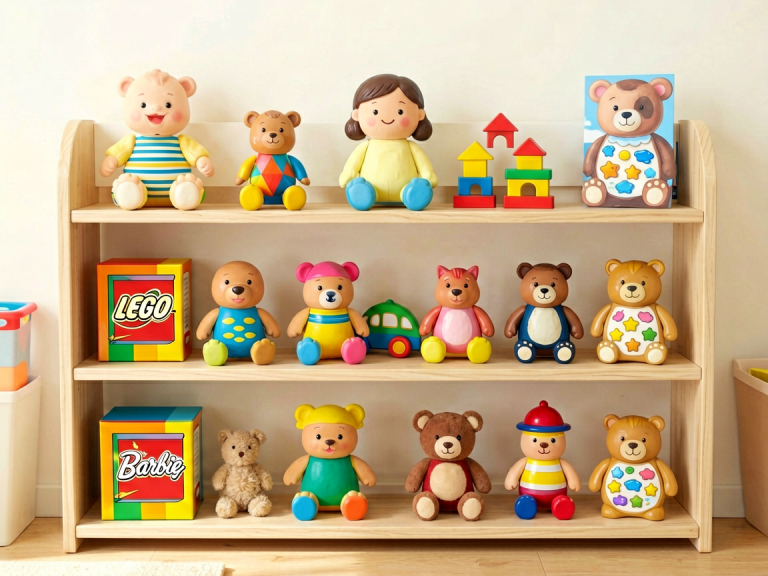
When choosing toys for a six-month-old, safety and developmental appropriateness come first. The best toys for this age share several characteristics: they are free of small parts that could pose choking hazards; they are washable, made from non-toxic materials; and they engage multiple senses. Below are categories of early learning toys that can be particularly effective, and each can be enhanced with a subtle connection to sight words.
Soft Fabric Books with High-Contrast Text
Fabric books are a staple for six-month-olds because they are chewable, crinkly, and easy to grasp. Look for books that feature large, simple images—a red apple, a yellow duck, a blue car. Some brands now print the name of the object in bold, black letters beneath the picture. At six months, the baby will focus on the colorful image, but the caregiver can point to the word and say it aloud: “Apple. A-P-P-L-E. That’s the word for apple.” This pairing of spoken word with printed word nurtures early print awareness. Over time, even though the baby cannot read, their brain starts to register that these squiggly lines have meaning. Sight words like “cat,” “dog,” and “ball” are perfect candidates for such books because they are short, common, and easily illustrated.
Sensory Blocks or Soft Cubes with Letters
Foam or fabric blocks that display a single letter on each side are another excellent choice. While a six-month-old will primarily explore the texture and weight of the block, and maybe gnaw on it, parents can use the blocks to chant simple letter sounds. For example, holding up the block with a large “S” and saying “Sssssss like snake!” helps connect auditory and visual. This is not a direct sight word lesson, but it primes the baby to notice individual letters. Later, when they encounter the same letter in a sight word like “is,” the visual familiarity will already be there. Blocks that also include simple words (e.g., “NO,” “GO,” “UP”) on one face can be used in floor play; the word itself becomes a visual landmark in the baby’s environment.
Activity Gyms and Play Mats with Word Cards
Many play mats come with hanging toys or detachable cards. Parents can supplement these by making or buying high-contrast word cards (black words on white background) and attaching them to the gym. At six months, babies are fascinated by things that move or swing. A card with the word “BABY” or “MAMA” can be hung at eye level. While the baby bats at it, the parent can repeat the word. This is not about memorization; it’s about creating a rich environment where printed language is a natural part of play. Some commercial products now offer “first words” sets designed for infants, with rounded corners and safe laminates.
Musical Toys That Incorporate Sight Words
Sound is incredibly engaging for six-month-olds. Toys that play a word song or that have buttons that say the name of an animal (“cow,” “duck”) are very common. To integrate sight words, look for musical toys that also show the word on a display screen or on the button itself. For instance, a small piano-shaped toy that lights up and says “C” and “D” and also shows the letter. While the baby may not look at the letter, the repetition of seeing the letter shape while hearing its name builds a foundational association. Some advanced toys even feature a “word mode” where pressing a picture says the word and displays it on a small LED screen—although for a six-month-old, the screen should be very simple and low-stimulus to avoid overstimulation.
Mirror Toys with Labels
Babies love mirrors. A safe, unbreakable mirror attached to a play mat or a soft toy often captivates a six-month-old. Some mirror toys include a label at the bottom that says “ME” or “MIRROR.” The baby’s own reflection is a powerful motivator; when the caregiver points to the baby and then to the word “BABY” printed nearby, the baby begins to link their visual self with the written label. This is a deeply personal introduction to a sight word. Of course, the baby will not read it; but the repeated exposure in a meaningful context (the face they see every day) is potent for later learning.
Integrating Sight Words into Play: A Gentle Introduction
The key to successfully incorporating sight words into early learning toys for six-month-olds is gentleness. At this age, babies learn through interaction with caring adults, not through formal instruction. Here are several strategies that parents and caregivers can use to weave sight words into play without pressure:
- Model pointing: When reading a soft book, run your finger under the word as you say it. The baby will watch your finger and the word, learning that print moves from left to right (or according to your language’s direction). This is pre-reading behavior.
- Use repetition: Choose a few sight words that are part of the baby’s daily life: “milk,” “bottle,” “blankie,” “mommy,” “daddy.” If you have a toy that displays these words, repeat them several times during play. The brain wires together the sound, the visual symbol, and the object.
- Sing the words: Babies are drawn to melodic speech. Turn a sight word into a simple chant or song. For example, while shaking a rattle, sing “Up, up, up! The word is U-P! Up, up, up!” This multisensory approach—auditory, visual, kinesthetic—capitalizes on the baby’s natural learning style.
- Keep it joyful: If the baby loses interest, stop immediately. The goal is positive association with printed language, not frustration. A six-month-old’s attention span is measured in seconds to a few minutes. Short, frequent exposures are far more effective than long sessions.
Importantly, sight words should never replace the primary sensory experiences that six-month-olds need. Crinkling paper, feeling different textures, chewing on teethers, and practicing tummy time are far more critical than any word exposure. Sight words are a bonus, not a goal.
Safety Considerations and Age-Appropriate Design
When selecting early learning toys that include sight words, safety must be the absolute priority. Toys must comply with safety standards (e.g., ASTM in the US, CE in Europe) for infants. Key points to check:
- No small parts: Any word card or letter block must be large enough that it cannot be swallowed or lodged in the mouth. Components should be securely attached; loose letters or paper could be torn and become choking hazards.
- Non-toxic materials: Infants explore everything with their mouths. Paints, inks, and materials must be non-toxic and free from BPA, phthalates, and lead. For fabric books, look for washable fabrics that won’t shed dyes.
- Avoid sharp edges: Wooden blocks with printed words should be sanded smooth. Plastic toys should have no sharp corners.
- Battery compartments: If the toy has lights or sound, the battery compartment must be secured with a screw so the baby cannot access batteries.
- No strings or cords: Toys with long cords can pose strangulation risks. Choose toys with short, thick attachments or none at all.
The Role of Parents and Caregivers in Guided Play
No toy, no matter how cleverly designed, can replace the human element. For a six-month-old, the most powerful early learning tool is a responsive caregiver. When a parent sits on the floor with the baby, talks about the toy, makes eye contact, and follows the baby’s cues, the toy becomes a bridge for connection. For sight word exposure, the caregiver’s voice and enthusiasm transform a simple block into a magical object. Here are some practical tips:
- Narrate your actions: “Look, this block has the letter ‘M.’ M for mommy! Can you pat the ‘M’?”
- Follow the baby’s gaze: If the baby stares at the word on the soft book, point to it and say it slowly. If the baby looks away, move on.
- Create a print-rich environment: Place a few low-key word cards around the play area—on the wall at the baby’s eye level, attached to the crib rail (safely), or on the floor during tummy time. Rotate them weekly to keep novelty.
- Be patient: Development varies widely. Some babies will show interest in printed words; others will ignore them entirely until much later. That is perfectly normal. The exposure is not wasted—it is part of the background neural wiring.
Conclusion
Early learning toys for six-month-olds serve as the first building blocks of a lifetime of learning. While it may seem premature to think about sight words when the baby cannot yet sit unsupported, the foundational experiences that these toys provide are exactly what later literacy depends on. High-contrast visual patterns, repetitive sounds, and caregiver interaction all contribute to a baby’s growing ability to recognize, differentiate, and eventually ascribe meaning to symbols—including the symbols we call words. By choosing toys that are safe, engaging, and thoughtfully incorporate simple sight words as part of a multisensory play experience, parents can plant seeds that will bloom when the child is ready. The goal is not to create a six-month-old who reads, but to nurture a six-month-old who loves to explore, who associates books and words with warmth and fun, and whose brain is prepared for the exciting journey of learning to read in the years ahead. After all, every great reader started as a baby shaking a rattle and staring at a bright red letter.