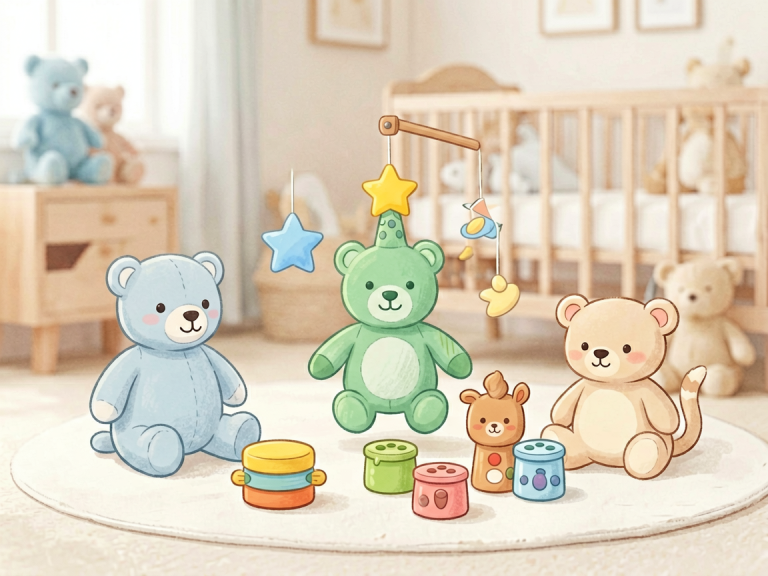
The Art of Screen-Free Play: Guiding 4-Year-Olds from Active Engagement to Peaceful Quiet Time
Introduction
In the modern digital era, the allure of screens is nearly irresistible—even for the youngest among us. A four-year-old’s world is naturally filled with wonder, curiosity, and boundless energy. Yet many parents and caregivers find themselves caught in a cycle of handing over a tablet or turning on a cartoon to gain a few moments of respite. While technology has its place, an over-reliance on screens can hinder the development of essential skills such as creativity, self-regulation, and the ability to transition from high-energy play to calm, restorative quiet time. This article explores the profound benefits of screen-free play for four-year-olds and offers practical, research-backed strategies to help children naturally wind down into a peaceful quiet time—without a single glowing pixel.
Why Screen-Free Play Matters for Four-Year-Olds
Cognitive and Emotional Development
At age four, a child’s brain is like a sponge, absorbing patterns, language, and social cues at an astonishing rate. Screen-based activities—especially passive ones like watching videos—engage children in a one-way flow of information. In contrast, screen-free play is inherently interactive. Whether building with blocks, pretending to be a firefighter, or sorting colorful buttons, the child is the director of his or her own learning. This autonomy strengthens executive functions: planning, problem-solving, and impulse control.
Moreover, screen-free play nurtures emotional regulation. When a child encounters a frustrating tower that keeps falling, he learns to manage disappointment, try a different approach, and eventually feel pride in success. Screens, with their instant gratification and constant novelty, can short-circuit this process, leaving children less able to tolerate boredom or delay gratification—a skill crucial for later quiet time.
Physical Health and Sensory Integration
The American Academy of Pediatrics recommends no more than one hour of high-quality screen time per day for children ages 2 to 5. Excessive screen use is linked to obesity, sleep disturbances, and even delayed language development. Screen-free play, especially active play, promotes gross motor skills: running, jumping, balancing, and climbing. It also supports sensory integration—the way the brain organizes information from touch, movement, sight, and sound. Manipulating playdough, digging in sand, or pouring water develop fine motor control and provide calming sensory input that prepares a child for a shift toward stillness.
Social Skills and Imagination
Four-year-olds are notorious for their vibrant imaginations. Screen-free play encourages role-playing, negotiation, and empathy. When two children decide to “go grocery shopping” with a cardboard box, they practice turn-taking, cooperation, and creative storytelling. Unstructured play also allows children to process their own experiences—a child who recently visited a doctor’s office might reenact that scenario, gaining mastery over any anxiety. These rich, self-directed experiences create a reservoir of calm that makes quiet time feel less like a punishment and more like a natural interlude.
The Transition from Play to Quiet Time: A Developmental Perspective
Why the Shift Is Challenging
For a four-year-old, the world is an exciting, overstimulating place. Their nervous systems are still learning how to shift gears. After a period of active, physically engaging play, suddenly asking a child to sit still and be quiet can feel like slamming on the brakes—jarring and unnatural. Many children resist quiet time because they interpret it as a sudden loss of control. Screens complicate this further: a child deeply absorbed in a cartoon is often thrown into a state of dysregulation when the show ends, leading to tantrums or difficulty settling.
The Role of Sensory Thresholds
Every child has a unique sensory threshold. Some are “sensory seekers” who crave intense movement and noise; others are “sensory avoiders” who need calm, predictable environments. Screen-free play can be tailored to meet both needs. A sensory seeker might benefit from vigorous activities like jumping on a trampoline or dancing to music before transitioning to quiet time. A sensory avoider might enjoy a quiet corner with soft pillows and a gentle sensory bin filled with rice or beans. The key is to recognize that quiet time is not a sudden stop—it’s a gradual deceleration.
Practical Screen-Free Play Ideas That Lead Naturally to Quiet
Active Play That Tires the Body
To help a four-year-old transition into quiet time, start with physically demanding play. Activities like “animal walks” (crab walk, bear crawl, frog jumps) engage large muscle groups and burn off excess energy. Obstacle courses made from pillows or furniture encourage running and crawling. A simple game of “red light, green light” teaches self-control while the child is in motion. The goal is not exhaustion but a pleasant sense of physical completion—the feeling of having moved enough to be ready for stillness.
Imaginative Play with a Calming Bend
Once the active phase is over, introduce imaginative play that incorporates quiet themes. For example, play “restaurant” where the child is a calm chef preparing a pretend meal using play food and quiet utensils. Or set up a “tent” made of a blanket over chairs and declare it a “cave” where animals go to sleep. Dress-up play can also slow down: encourage your child to be a “sleepy princess” or a “quiet pirate” who tiptoes around. Role-playing allows the child to internalize the idea of calm without being explicitly told to be still.
Sensory Play That Grounds and Soothes
Sensory bins are remarkably effective for quieting a busy mind. Fill a shallow container with dry rice, beans, or sand, and add scoops, small containers, and a few little toys. The repetitive motions of pouring, scooping, and sifting are naturally calming. Water play—like washing toy dishes or pouring cups of water into different sizes of containers—also has a meditative quality. For an extra soothing touch, add a drop of lavender essential oil (diluted and safe) to the water. These activities require no screens and provide a bridge between high-energy play and quiet time.
Art and Fine Motor Activities
Quiet, focused creativity is a wonderful prelude to rest. Offer a simple art tray with a few crayons, a piece of paper, and perhaps a sticker or two. Playdough (homemade, if possible) allows for squeezing, rolling, and shaping—all repetitive motions that calm the nervous system. Beading with large wooden beads on a string, or lacing cards, are excellent for concentration. The key is to keep materials simple and open-ended, so the child feels in control. Avoid overly messy or complex projects that might overstimulate.
Creating a Routine That Works
The Power of Predictability
Four-year-olds thrive on routine. Knowing what comes next reduces anxiety and builds cooperation. A consistent pre-quiet-time sequence—perhaps a 15-minute active play, 10-minute sensory or art play, and then a short cleanup—paves the way for a smooth transition. Use a visual schedule with pictures (a stick figure running, a hand playing with playdough, a book) to help the child see the timeline. Verbal cues like “In two minutes, we’ll start winding down” give the child time to mentally prepare.
The Environment Matters
Set the stage for quiet time by dimming lights, lowering voices, and removing distracting toys. A small, cozy nook with a comfortable floor cushion, a basket of quiet books, and a soft blanket signals that this is a special, peaceful space. Avoid screens entirely in this area. Some children respond well to a “quiet time box” filled with special items that only appear during quiet time—a new puzzle, a felt storyboard, or a quiet music player (acoustic only, no videos). The novelty helps maintain interest without overstimulation.
Gentle Transitions, Not Demands
Rather than announcing “Now it’s quiet time!” with a firm tone, use a gentle, playful approach. For example: “I wonder if the stuffed animals are tired? They look like they need a cozy nap. Can you help me tuck them in?” This frames quiet time as a shared, caring activity. Another strategy is to use a timer. Set a visual timer (like an hourglass or a colored light) for 10 minutes and say, “When the sand runs out, it will be time to rest our bodies.” This transfers some control to the child.
Overcoming Challenges and Embracing the Journey
What to Do When Your Child Resists
Resistance is normal, especially in the beginning. A child who is used to screen time may initially struggle with the perceived boredom of quiet time. Stay calm and firm but kind. If a child insists they “don’t want to” do quiet time, try offering two screen-free choices: “Would you like to look at books in your nook, or would you like to do a quiet puzzle on the table?” Both lead to the same goal, but the child feels empowered. If a meltdown occurs, remember that this is part of learning self-regulation. Sit with them, offer a soft touch, and say, “I know it’s hard to be still. Your body is learning. Let’s take three deep breaths together.”
The Temptation of the “Quick Fix”
The hardest moments are when a parent is exhausted, and a screen seems like the easiest path to a quiet household. However, research repeatedly shows that screens before quiet time can actually stimulate a child’s brain, making it harder for them to fall asleep or rest. The short-term ease comes at the cost of a longer, more difficult transition. Remind yourself that the investment in screen-free play pays long-term dividends: your child will develop a healthier relationship with technology, stronger self-soothing skills, and a natural ability to enjoy stillness.
Celebrating Small Wins
Quiet time does not have to be perfect. Some days, your four-year-old will lie still for 15 minutes; other days, they will play quietly but not rest. Both are acceptable. The goal is not to force sleep but to give the child (and you) a break from constant stimulation. Keep a journal or a simple note of what worked—maybe a particular sensory activity was a hit, or a new book became a favorite. Over weeks and months, you will see your child’s ability to settle grow. Celebrate that growth with a simple “Wow, you did such a good job making your body calm today!”
Conclusion
Screen-free play is not merely an absence of technology; it is a rich, dynamic environment where four-year-olds explore, create, and learn to regulate their own energy and emotions. By intentionally designing play that moves from active to quiet, and by establishing a predictable, gentle transition to quiet time, parents give their children a gift that lasts a lifetime: the ability to find peace without a power cord. The journey may require patience, creativity, and a willingness to resist the siren call of the screen, but the reward—a calmer, more centered child—is worth every effort. Let this be the season your family discovers the joy of unplugging, together.