Nurturing Young Minds: Screen-Free Activities That Foster Early Reading Skills
Introduction
In an era dominated by digital devices, parents and educators often find themselves wrestling with the question of how much screen time is appropriate for young children. While educational apps and e-books can offer some benefits, research increasingly suggests that the most profound early literacy development occurs through tangible, interactive, and screen-free experiences. Early reading is not merely about decoding letters; it is about building a rich foundation of oral language, phonological awareness, print concepts, vocabulary, and a love for stories. When screens are removed, children engage more fully with their senses, their imagination, and the people around them. This article explores a range of proven, engaging screen-free activities that support early reading skills, from infancy through the early elementary years. Each activity is designed to be simple, low-cost, and deeply effective in nurturing a lifelong reader.
The Case for Screen-Free Literacy
Before diving into specific activities, it is important to understand why screen-free approaches hold particular power for early reading. Young children learn best through multisensory, hands-on experiences. When a child holds a physical book, turns its pages, and points to pictures, they develop fine motor skills alongside cognitive associations. Screen time, by contrast, often encourages passive consumption—even the most interactive apps cannot replicate the responsive, contingent feedback of a caregiver who pauses, asks questions, and adapts in real time. Furthermore, excessive screen exposure in early childhood has been linked to delays in language development, reduced attention span, and decreased opportunities for creative play. By deliberately choosing screen-free activities, we protect precious windows of brain development and cultivate a deep, personal connection to reading that no algorithm can replace.
Storytelling Without Books: The Oral Tradition
One of the most powerful screen-free activities is oral storytelling. Long before written language existed, humans passed down knowledge and culture through spoken stories. For early readers, hearing stories told aloud—without the crutch of a book—builds listening comprehension, narrative structure awareness, and vocabulary in a uniquely engaging way. Parents can tell simple stories about their own childhood, invent fantastical tales featuring the child as the hero, or retell classic fairy tales with new twists. The key is to use expressive voice, gestures, and eye contact. Children can be invited to contribute: “What happened next?” or “What color was the dragon?” This interactive process teaches story elements (beginning, middle, end) and encourages prediction—both crucial for later reading comprehension. For very young children, repetitive storytelling with predictable phrases (e.g., “And the little bear said, ‘Who’s been eating my porridge?’”) builds phonemic awareness and memory.
Letter Hunts and Environmental Print
Turning the world into a reading playground is another powerful strategy. Children can go on letter hunts in the home or neighborhood. Use magnetic letters, letter tiles, or simply point out letters on cereal boxes, street signs, and storefronts. Create a simple scavenger hunt: “Find five things that start with the letter ‘B’.” This activity builds letter recognition and connects abstract symbols to real-world meaning—a cornerstone of early literacy. Environmental print—words children see in everyday contexts (e.g., STOP, M&M, McDonald’s)—is especially effective because it is meaningful and memorable. Encourage children to “read” these signs even before they can decode them. Over time, they begin to understand that print carries a message. You can extend this by cutting out logos and labels from packages and gluing them into a homemade “I Can Read” book.
Phonological Awareness Through Rhymes and Songs
Phonological awareness—the ability to hear and manipulate sounds in spoken language—is the strongest predictor of later reading success. Screen-free activities that emphasize rhyme, alliteration, and syllables are therefore invaluable. Sing nursery rhymes, clap out syllables in children’s names (“El-e-phant has three claps!”), and play rhyming games like “I spy something that rhymes with cat.” Another classic is “Willaby Wallaby Woo,” a song that plays with initial sounds. For older preschoolers, try “Odd One Out”: say three words (e.g., cat, bat, book) and ask which does not share the same beginning sound. These games are fun, require no materials, and can be played during car rides, bath time, or waiting in line. They directly wire the brain for the phonics instruction that will come later.
Hands-On Alphabet Exploration
Young children learn best when they can touch, feel, and manipulate objects. Instead of screen-based alphabet games, set up tactile letter stations. Use sand, shaving cream, or finger paint to trace letters. Shape playdough into letters. Use a tray of rice or salt for writing practice with a finger. Each sensory experience reinforces the letter’s shape and strengthens the neural pathways associated with letter recognition. Another engaging activity is “alphabet soup”: place magnetic letters in a bowl of water and have the child fish them out with a slotted spoon, identifying each letter as it is retrieved. For letter-sound correspondence, pair each letter with an object: a plastic apple for “A,” a small button for “B,” and so on. Let the child sort the objects into the correct letter bins. These activities are slow, deliberate, and joyful—far more effective than a flashcard app.
Dramatic Play with a Literacy Twist
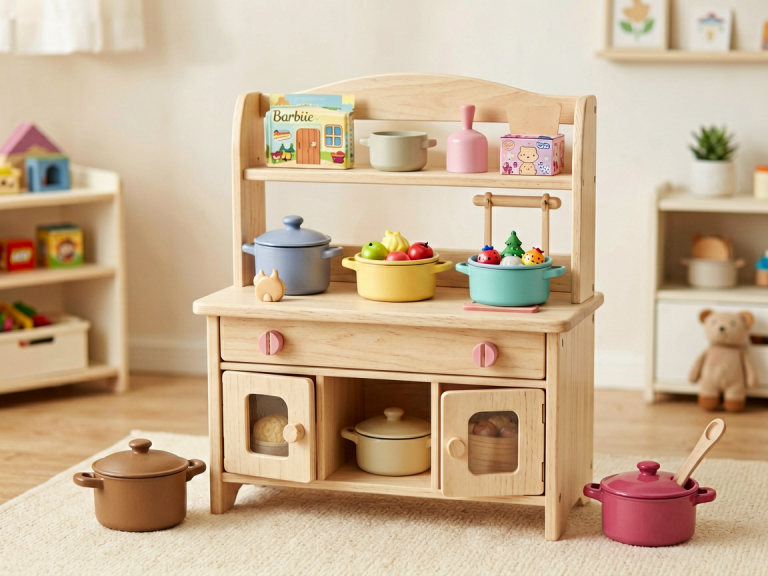
When children engage in pretend play, they naturally experiment with language and stories. Adults can gently steer this play toward literacy by adding simple props. For example, set up a “post office” in the living room with envelopes, junk mail, stickers, and a play mailbox. Encourage your child to write (or scribble) letters to stuffed animals, then “deliver” them. This teaches that writing conveys a message. A “restaurant” can include menus with pictures and words; the child can take orders by marking a pad. A “library” with real books and a date stamp mimics the world of readers. Through these activities, children internalize the purposes of reading and writing: communication, information, and entertainment. They also practice emergent writing—scribbles that later evolve into letter-like forms and eventually real letters.
Wordless Picture Books and Retelling
Wordless picture books are a secret weapon for early reading. Without text, children are forced to construct the story themselves by interpreting illustrations. This builds narrative skills, inference, and visual literacy—all critical for reading comprehension. Sit with your child and “read” a wordless book together. Ask open-ended questions: “What do you think is happening here?” “How does the character feel?” “What will happen next?” After the first reading, ask the child to retell the story in their own words. You can even record their storytelling on a voice recorder (screen-free if you use a simple digital recorder) and play it back, allowing them to hear themselves as a storyteller. Over time, children become aware of story structure and can apply these skills when they begin reading books with text.
The Power of Predictable Books and Choral Reading
For children just starting to decode, predictable books with repetitive phrases, rhyme, and rhythm are ideal. Use physical copies of books like *Brown Bear, Brown Bear, What Do You See?* or *Chicka Chicka Boom Boom*. Instead of letting the child struggle alone, try choral reading: read the book together in unison. Point to each word as you say it, modeling one-to-one correspondence. Then, pause at the predictable phrase and let the child fill in the next word. This builds confidence and sight word recognition. You can also make your own predictable books by writing simple sentences with repetition: “I see a cat. I see a dog. I see a bird.” Let the child illustrate each page. Creating a personal book fosters a sense of ownership and pride.
Nature Walks and Story Notebooks
Combine outdoor exploration with literacy by taking a nature walk with a purpose. Bring a small notebook and crayons. Stop to observe leaves, insects, clouds, or flowers. Ask your child to describe what they see, and scribe their words (or let them attempt writing). Later, at home, you can turn these observations into a simple story or a list poem. For example, “Today I saw a red ladybug, a bumpy toad, and a fluffy cloud that looked like a bunny.” This activity builds observational skills, vocabulary, and the understanding that experiences can be captured in writing. For older children, encourage them to write a sentence or two independently. The physical act of writing—gripping a crayon, forming letters—strengthens fine motor skills essential for letter formation.
Interactive Read-Aloud with Props and Movement
Reading aloud is the single most important activity for early reading success, but it can be enriched with screen-free engagement. Choose a book and gather simple props: a stuffed animal for the main character, a blanket for a cave, a scarf for a river. As you read, invite your child to act out parts of the story. When the character walks, they walk. When the character is scared, they hide their eyes. This kinesthetic involvement deepens comprehension and keeps attention focused. Another variation is “read and do”: after reading a book about baking, actually bake cookies; after a book about construction, build with blocks. Connecting stories to real-life experiences makes reading meaningful and memorable.
Creating a Print-Rich, Cozy Reading Environment
Finally, the physical environment matters enormously. A screen-free reading corner—with comfortable cushions, a bookshelf at child height, and a basket of favorite books—invites children to self-select reading time. Involve your child in organizing books by category (animals, trucks, fairy tales) and make a simple chart to track books read. Display their own “published” books proudly. When children see reading and writing as valued parts of daily life, they internalize literacy as a source of joy rather than a skill to be mastered.
Conclusion
In a world that constantly pushes screens toward even the youngest children, the decision to prioritize screen-free activities for early reading is both deliberate and powerful. These activities—oral storytelling, letter hunts, rhyming games, tactile alphabet play, dramatic play, wordless books, nature journals, and interactive read-alouds—do more than teach letters and sounds. They build a loving bond between child and caregiver, nurture creativity and curiosity, and lay the groundwork for a lifelong relationship with the written word. The best part? They require no Wi-Fi, no charging cables, and no updates. Just time, attention, and the simple magic of human connection. And that, ultimately, is what early reading is truly about.