Building Fine Motor Skills: Engaging Play Activities for 6-Month-Olds
Introduction
At six months old, babies are at a fascinating developmental crossroads. They have gained enough head and trunk control to sit with support, their vision has sharpened significantly, and they are beginning to explore the world with their hands in a much more intentional way. This is a critical window for nurturing fine motor skills—the small, precise movements of the hands, fingers, and wrists that lay the foundation for later skills like writing, buttoning, and using utensils. While gross motor skills involve large muscle groups (rolling, crawling), fine motor skills require coordination, strength, and dexterity. Fortunately, play is the most natural and effective way to encourage this development. For a six-month-old, everyday objects and simple, safe activities can become powerful tools for building hand strength, hand-eye coordination, and the ability to manipulate objects. This article provides a detailed guide to play activities specifically designed for six-month-olds to enhance their fine motor skills, along with explanations of why each activity works and tips for parents.
Why Fine Motor Skills Matter at Six Months
Fine motor development in infancy is not just about preparing for kindergarten milestones. It is intrinsically linked to cognitive growth, problem-solving, and even language development. When a baby grasps a toy, transfers it from one hand to the other, or tries to pick up a small object, their brain is forming neural connections that support spatial awareness, cause-and-effect understanding, and memory. At six months, babies typically progress from a reflexive palmar grasp (using the whole hand) to a more controlled radial grasp (using the thumb and fingers). They also begin to rake at objects with their fingers and may start experimenting with a pincer grasp (thumb and index finger) by the end of this month or early in the next. Play activities that challenge these emerging abilities strengthen the small muscles in the hands and promote the necessary coordination in the wrist, forearm, and shoulder. Moreover, engaging in fine motor play provides sensory input—tactile, visual, and auditory—that helps the baby learn about textures, weights, and shapes. Therefore, dedicating short, supervised play sessions to these activities can have long-lasting developmental benefits.
Key Developmental Milestones for Fine Motor Skills at Six Months
Before diving into specific play activities, it is helpful to understand what a typical six-month-old can already do. At this stage, most babies can:
- Reach for and grasp a toy that is presented to them.
- Hold a toy in one hand and transfer it to the other.
- Shake a rattle or other noisy toy intentionally.
- Bring objects to their mouth (a primary way of exploring).
- Bang toys on a surface.
- Begin to use a raking motion to pull small objects toward themselves.
These milestones indicate that the baby is ready for more targeted fine motor practice. Activities should build on these existing skills while gently pushing the baby's capabilities—without causing frustration. Always remember that each baby develops at their own pace; the goal is to provide opportunities for practice, not to force achievement.
Play Activity 1: Grasping and Shaking—The Classic Rattle
One of the simplest yet most effective fine motor activities for a six-month-old is offering a lightweight rattle. Choose a rattle with a thin handle that the baby can wrap their fingers around, such as a wooden or silicone ring rattle. Encourage the baby to grasp it by placing it directly in their palm or by gently tapping it against their hand. Once they hold it, they will naturally shake it, discovering that their movement produces sound. This activity strengthens the palmar grasp and wrist flexion. It also teaches cause and effect: “When I move my hand, the rattle makes noise.” For added variety, use rattles with different textures, such as soft fabric with crinkly paper inside, or clear rattles with moving beads. Supervise closely to ensure no small parts come loose. You can also attach a wrist rattle (with a soft velcro band) to the baby’s ankle or wrist—the novelty of kicking or moving to produce sound adds an extra dimension of motor control.
Play Activity 2: Finger Food Exploration—Safe and Supervised
At six months, many babies begin showing interest in food, and some pediatricians recommend starting solids. Even if your baby is not yet eating purees, you can use safe, non-food items to practice finger dexterity. The classic “finger feed” activity involves offering larger, soft pieces of food that are safe to gum or just to hold. For example, a slice of ripe avocado (peeled, cut into thick strips), a long, cooked carrot stick, or a piece of banana. The baby will try to grasp these slippery objects, which requires them to adjust their hand position and tighten their grip. This activity builds the pincer grasp as they attempt to pick up smaller pieces later. Alternatively, use a silicone feeder (a mesh or silicone pouch that holds food) which the baby can grip and bring to their mouth. The act of holding the feeder and manipulating it toward the mouth involves hand-eye coordination and finger strength. Always supervise during any activity involving food, and ensure the pieces are large enough to prevent choking (at least as big as the baby’s fist).
Play Activity 3: Tearing and Crinkling—Sensory Play with Paper
Babies love the sound and texture of paper. Provide a piece of thin, crinkly paper (such as tissue paper, wax paper, or a clean paper grocery bag) that you have crumpled into a ball or laid flat. Let the baby grab, squeeze, and tear it. Tearing paper requires a coordinated effort—the baby must use both hands to pull in opposite directions, or squeeze tightly to create a rip. This strengthens the intrinsic hand muscles (the small muscles within the palm) and develops the concept of bilateral coordination (using two hands together). You can also introduce a crinkle toy (a fabric square with crinkly material inside) that is more durable. The auditory feedback of the crinkle sound is highly motivating. As the baby crushes and crumples, they are practicing finger isolation and grip release. For a sensory twist, tape a large piece of tissue paper to a table or high chair tray—the baby can swipe at it, pat it, and eventually pull it off, which adds a sticky resistance element.
Play Activity 4: Stacking and Nesting Cups—Cause and Effect
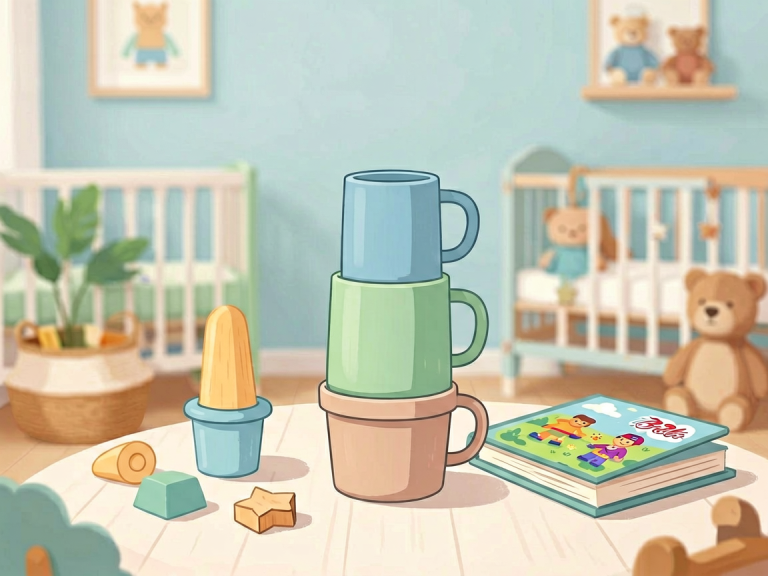
A set of lightweight, colorful stacking cups is a wonderful fine motor tool for six-month-olds. At this age, they are not yet able to stack cups in order, but they can grasp a single cup, bang it on the floor, put it in their mouth, and attempt to nest it inside another cup. Start by offering just two cups. Show the baby how to put one inside the other, or turn them upside down. The baby will practice grasping the edge of the cup, which requires an open-hand approach and then a curled finger grip. The act of pulling cups apart or trying to fit them together engages the wrist and finger muscles. Additionally, this activity promotes visual-spatial understanding. Use cups with different textures or with small holes at the bottom—the baby may enjoy poking their fingers through the holes, which is excellent for finger individuation (moving one finger separately from others). Always choose cups that are BPA-free and large enough that they cannot be swallowed—no sharp edges.
Play Activity 5: Mirror, Mirror—Self-Discovery and Reaching
Place an unbreakable, baby-safe mirror in front of your six-month-old during tummy time or while they are sitting supported. Babies are naturally fascinated by their own reflection. Encourage them to reach out and touch the mirror. This simple action requires them to extend their arm, open their hand, and pat or stroke the surface. The mirror provides visual feedback—they see their hand moving toward the reflection—which strengthens hand-eye coordination. You can also hold a soft toy or a brightly colored ball in front of the mirror to encourage the baby to reach for it while looking at both the toy and their own image. This dual focus challenges their visual tracking and motor planning. Over time, the baby may begin to intentionally tap the mirror or attempt to wipe its surface, further refining their finger movements.
Play Activity 6: Water Play with Sponges and Cups
Water play is a wonderful sensory and motor activity for six-month-olds, provided it is closely supervised and the water temperature is comfortable, luke warm. Fill a shallow plastic basin with just an inch or two of water. Add a few clean, soft sponges (cut into small, easy-to-grasp pieces) and some floating cups or water-safe bath toys. The baby can sit in a high chair or in an infant bath seat (always with adult hands on them). The activity: squeezing the sponge to release water. Squeezing requires a strong grip and coordinated release of the fingers. As the baby grasps the wet sponge, they also experience tactile input. They can dip cups into the water and watch it pour out. The simple act of holding a cup underwater and then lifting it out involves lifting the weight of the water, which builds wrist stability. This activity is especially engaging because the sensory feedback is dynamic and unpredictable. Make sure the play area is not slippery, and never leave the baby alone with water for even a second.
Tips for Parents: Maximizing the Fine Motor Play Experience
To get the most out of these activities, follow a few simple guidelines. First, keep sessions short—five to ten minutes at a time—since a six-month-old’s attention span is limited. Follow the baby’s cues: if they become fussy or lose interest, stop and try again later. Second, always supervise to prevent choking and ensure safe exploration. Third, offer toys with varied textures, sizes, and weights. Rotate toys to maintain novelty. Fourth, engage with the baby during play: talk to them, describe what they are doing (“You are holding the rattle! Shake it! You made a sound!”). This language exposure supports cognitive development. Fifth, avoid overstimulation. Too many toys at once can overwhelm the baby. Offer one or two items at a time. Finally, be patient and celebrate small victories. Every time a baby successfully transfers a toy from one hand to the other, or manages to pick up a slippery avocado slice, they are building neural pathways that will serve them for a lifetime.
Conclusion
Fine motor development at six months is a thrilling journey of discovery. Through simple, everyday play activities—grasping, shaking, tearing, stacking, reaching, and squeezing—babies strengthen the small muscles in their hands and lay the groundwork for more complex skills. The key is to provide a variety of safe, engaging experiences that match the baby’s emerging abilities. By incorporating these play activities into daily routines, parents can actively support their child’s fine motor growth while enjoying precious moments of bonding and exploration. Remember, every baby is unique; the joy of play lies not in achieving milestones quickly, but in the process of learning through hands-on interaction with the world.