Nurturing Imagination: Open-Ended Play Activities for 5-Year-Old Girls
At the age of five, a girl's world is a kaleidoscope of curiosity, language explosion, and burgeoning independence. She is no longer a toddler who needs constant redirection, nor yet a school-age child bound by a rigid curriculum. This sweet spot—the preschool to kindergarten transition—is the golden window for open-ended play. Unlike closed-ended toys that demand a single correct outcome (a puzzle that must fit exactly, a shape sorter that only works one way), open-ended play has no pre-determined endpoint. It invites a child to invent, experiment, and express herself freely. For five-year-old girls, whose social, emotional, and cognitive skills are rapidly maturing, open-ended activities provide the richest soil for creativity, problem-solving, and self-confidence. In this article, we will explore a wide range of open-ended play activities specifically designed to engage and empower five-year-old girls, with an emphasis on how each activity nurtures their holistic development.
Why Open-Ended Play Matters for Five-Year-Old Girls
Before diving into specific activities, it is essential to understand why open-ended play is especially valuable for this age group. At five, most girls are entering a phase of “mental representation”—they can hold complex imaginary scenarios in their minds and enact them through play. They are also developing a stronger sense of self and often want to exert control over their environment. Open-ended play honors this developmental stage by placing the child in the driver's seat.
Promoting cognitive flexibility. When a girl uses a cardboard box as a spaceship one day and a castle the next, she is exercising divergent thinking. This ability to generate multiple solutions to a single problem is strongly linked to later academic success and innovation. Closed-ended toys, by contrast, train convergent thinking (finding the one right answer). For a five-year-old who is already being introduced to early literacy and numeracy, open-ended play provides a crucial balance: it keeps her mind fluid and experimental.
Fostering emotional regulation and social <a href="https://www.playlearningguide.com/category/skills/”>skills. Five-year-old girls often engage in parallel play that gradually becomes cooperative. Open-ended activities such as dramatic play or building a collaborative fort require negotiation, turn-taking, and empathy. When a girl decides to be the “mommy” and her friend is the “baby,” they must constantly adapt their roles and communicate their needs. This unstructured social rehearsal builds resilience and emotional intelligence far better than any structured lesson.
Building confidence through mastery. Because there is no “right” way to engage in open-ended play, every girl succeeds on her own terms. A child who might feel discouraged by a failed puzzle can instead take pride in her own unique creation—a mud pie, a scrap fabric dress, a story she tells aloud. This intrinsic motivation fosters a growth mindset: she learns that her ideas are valuable and that she can improve through practice and imagination.
With these benefits in mind, let us now explore concrete, low-cost, and highly engaging open-ended play activities that are especially appealing to five-year-old girls.
Art and Craft Stations: Beyond Coloring Books
At five, many girls adore art, but a standard coloring book with predefined lines can actually inhibit creativity. Instead, create an open-ended art station that offers raw materials and invites invention.
The “Trash to Treasure” Collage Box
Gather a collection of clean, safe recyclables: cardboard tubes, egg cartons, bottle caps, fabric scraps, yarn, buttons, ribbons, and old magazines. Provide child-safe scissors, a glue stick, and a large sheet of paper or cardboard. Then, say nothing more than: “What can you make with these?” A five-year-old girl might create a fairy house with a bottle-cap door, a robot princess with yarn hair, or an abstract pattern that tells a hidden story. The key is that she chooses the theme, the colors, and the composition. This activity strengthens fine motor skills (cutting, gluing), spatial planning, and artistic decision-making. It also allows her to express current interests—if she is fascinated by mermaids, she will likely incorporate that into her collage.
Homemade Play Dough with Loose Parts
Store-bought play dough is fine, but making it together (with flour, salt, water, cream of tartar, and food coloring) is a sensory experience in itself. Once your dough is ready, resist the urge to provide cookie cutters. Instead, offer “loose parts”: small pebbles, dried beans, twigs, pinecones, sequins, feathers, and plastic animal figurines. Invite your daughter to sculpt whatever she imagines. She might roll the dough into a snake and decorate it with beads, or flatten it into a “pizza” and top it with leaf “pepperoni.” This activity engages the tactile sense, encourages hand strengthening, and sparks storytelling as she describes her creation.
Watercolor Exploration without Instructions
Instead of coloring books, give your five-year-old a set of watercolor paints, a thick brush, and a piece of watercolor paper. Demonstrate how to wet the brush and pick up color, but then let her experiment. She may discover that mixing yellow and blue makes green, or that adding more water creates a pale wash. She might paint a field of flowers, or simply enjoy watching the colors bleed. This unstructured, process-oriented art builds patience and observation skills. For a girl who likes pretend play, suggest she paint a “magical world” or “the weather today”—but never insist.
Dramatic Play and Storytelling: Building Inner Worlds
Five-year-old girls are natural storytellers. Their imaginative play often revolves around family, fairies, princesses, animals, and everyday routines. Open-ended dramatic play allows them to explore social roles, experiment with language, and process their experiences.
The “Costume Box” and Prop Collection
Create a dress-up bin with no specific costumes. Instead, collect adult-sized scarves, hats, old shirts, costume jewelry, a stethoscope (from a toy doctor kit), a plastic telephone, a flashlight, a mirror, fabric remnants, and a few wigs or masks. Avoid store-bought “princess dresses” that dictate a single role. When your daughter opens this bin, she can become a doctor examining a sick teddy bear, a chef running a restaurant, a queen holding court with her stuffed animal subjects, or a space explorer reporting from the moon. The open-endedness forces her to invent dialogue, solve problems (e.g., “What do we do if the hungry dragon comes?”), and collaborate with a playmate or even just herself.
Puppet Making and a Shadow Theater
Using paper bags, felt, or old socks, help your daughter create simple puppets. Then, use a large cardboard box as a theater with a cut-out “stage” window. You can also create a shadow theater using a white sheet and a flashlight. The puppets themselves need not be elaborate—a sock with googly eyes and a marker smile is enough. Encourage her to write a “play” (she can dictate the storyline as you scribe it) or simply improvise. This activity develops narrative skills, sequence of events, and public speaking confidence. It also allows her to work through emotions: a shy girl might make a bold puppet who speaks loudly, while an angry girl might create a puppet that learns to calm down.
The ‘Small World’ Play Tray
A “small world” is a contained scene—often on a tray or in a shallow bin—that invites miniature storytelling. For a five-year-old girl, you could create a fairy garden: soil, moss, small twigs, pebbles, tiny plastic fairies, acorn cups, and a small mirror as a “pond.” Alternatively, create a dinosaur land, a farm, a beach with sand and shells, or a snow scene with cotton balls. She will spend hours moving the figures, creating dialogue, and inventing conflicts and resolutions. This is particularly beneficial for language development because she naturally narrates her actions aloud. The small world also promotes fine motor control as she positions tiny objects.
Building and Construction: From Blocks to Blanket Forts
Spatial reasoning and engineering skills are often under-emphasized in play marketed to girls, but open-ended construction is equally valuable—and tremendously fun—for five-year-old girls.
Unit Blocks and Natural Materials
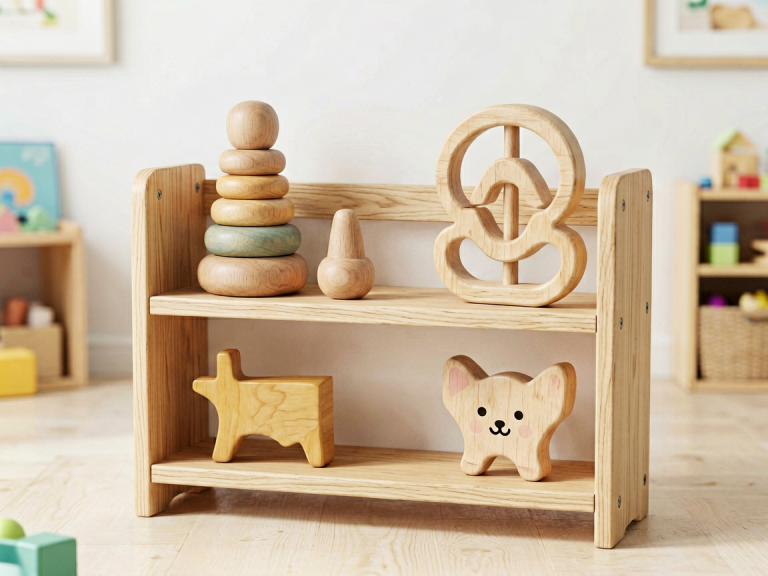
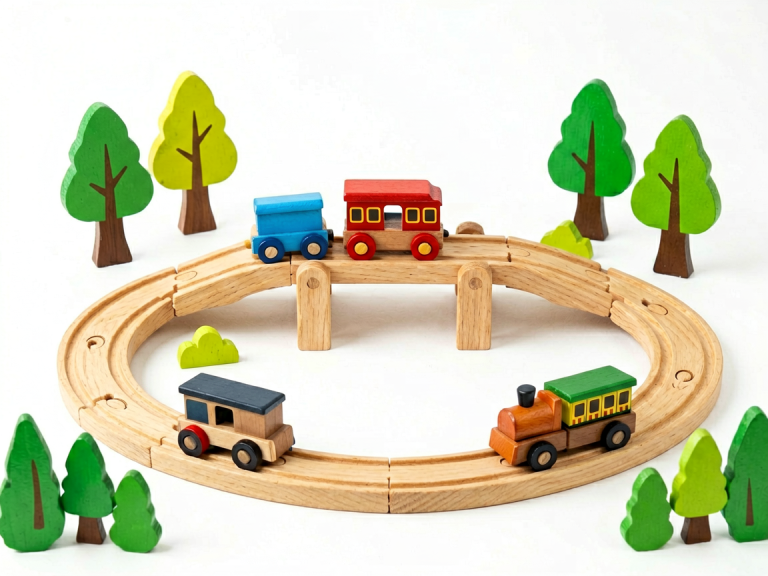
A set of wooden unit blocks (plain, unpainted, in various shapes) is a classic open-ended toy. They invite towers, bridges, castles, and enclosures. Add natural materials like pinecones, smooth stones, and tree cookies (slices of branches). A girl might build a stable for her toy horse, then decide she needs a roof made of fabric, then add a stone pathway. There is no blueprint, so she must problem-solve constantly: “Why did my tower fall? Maybe I need a larger base.” This builds understanding of physics, balance, and cause and effect. It also encourages focus and perseverance.
Blanket Forts and Pillow Buildings
Never underestimate the joy of a good old-fashioned blanket fort. Drape blankets over chairs, use clothespins to secure them, and add pillows and cushions inside. This is an activity that requires planning: how will the roof stay up? Where is the entrance? The fort can become a castle, a cave, a space station, or a cozy reading nook. A five-year-old girl might spend an afternoon decorating her fort with fairy lights (battery-operated), arranging her stuffed animals, and “hosting” tea parties inside. The physical act of moving furniture and negotiating space builds gross motor skills and spatial intelligence.
Magnetic Tiles and Geometric Creativity
Magnetic tiles (like Magna-Tiles or PicassoTiles) are another excellent open-ended construction material. Their transparency and magnetic edges allow girls to build cubes, pyramids, houses, and abstract sculptures. A five-year-old can create a car that glows, a dollhouse with windows, or a 3D flower. The shapes naturally introduce geometry and symmetry. Many girls enjoy sorting the tiles by color before building, or making patterns. Encourage her to design a “dream bedroom” or a “house for a mouse” and then talk about her design choices.
Outdoor and Nature-Based Play: Engaging the Senses
Outdoor play is perhaps the most naturally open-ended of all. Nature provides boundless materials that invite exploration, creativity, and physical activity.
Mud Kitchen and Potion Making
Set up a “mud kitchen” in your backyard or at a park: a small table or overturned crate, old pots and pans, wooden spoons, measuring cups, water, and access to dirt, leaves, flowers, and pebbles. A five-year-old girl will delight in mixing “soups” and “potions.” You can add a few drops of food coloring or a splash of vinegar and baking soda for a fizzy reaction. There is no recipe, only experimentation. This sensory play is calming and grounding, and it introduces basic scientific concepts (solids, liquids, mixing, volume). She might “cook dinner” for her dolls or pretend to be a witch brewing a spell.
Nature Scavenger Hunt with a Creative Twist
Instead of a traditional checklist scavenger hunt, give your daughter an open-ended prompt: “Find three things that are rough, two that are smooth, and one that you think is beautiful.” Or “Collect items to build a fairy bed.” She will forage for moss, feathers, acorns, and grasses. Later, she can arrange them into an art piece or a “nature mandala” on the ground. This activity sharpens observation skills, connects her to the natural world, and encourages her to see beauty in ordinary things. It also provides a quiet, meditative form of play that contrasts with the high-energy activities.
Obstacle Course by Design
Instead of setting up a predetermined obstacle course, let your daughter design one. Provide a few basic items: a hula hoop, a balance beam (a plank on the ground), a jump rope, a tunnel (a cardboard box open on both ends), and some cones. Ask her: “What do you want to do first? How will we move through this course?” She might decide that you crawl under the broom, hop three times, then spin around. This activity builds gross motor skills, planning, and leadership. It also gives her a sense of agency and pride when she directs you through her creation.
The Role of the Adult: Witness, Not Direct
A crucial element of open-ended play is the adult’s posture. For these activities to truly be open-ended, resist the urge to correct, teach, or redirect. Instead, adopt the role of a curious observer. Sit on the floor nearby, and comment on what you see without judgment: “You made the tower so tall—how did you get it to balance?” Ask open-ended questions: “Tell me about your story.” “What happens next?” “How do you think the fairy feels?” This validates the child’s process and encourages deeper thinking. Your presence also provides emotional safety, which is especially important for a five-year-old who might still be learning to manage frustration when her creation doesn’t work as planned.
Conclusion: Let Her Lead the Way
The most powerful gift we can give a five-year-old girl is the permission to explore without a script. Open-ended play activities—whether at an art station, in a mud kitchen, or among a pile of blocks—nourish her imagination, build her confidence, and lay the foundation for a lifetime of creative problem-solving. These activities require no expensive toys, no screens, and no adult-led instructions. They simply require a bit of space, a handful of loose parts, and a willingness to follow her lead.
As you implement these ideas, remember that the goal is not to produce a perfect tower or a beautiful painting. The goal is the process: the concentrated frown as she tries to attach a bottle cap, the delighted laugh when her fort collapses into a heap, the intricate story she weaves about a dragon who is afraid of spiders. In these moments, a five-year-old girl is not just playing—she is building the architecture of her own mind. And there is no activity more valuable than that.
Sources and further reading
For additional evidence-based guidance, consult these authoritative resources: