Unlocking Potential: How Open-Ended Play Cultivates Learning in Five-Year-Old Girls
Introduction
In the bright, ever-curious world of a five-year-old, every moment is an invitation to explore. At this age, children are rapidly developing cognitive, social, and emotional skills, and the way they spend their time matters enormously. For girls in particular, societal messages often nudge them toward structured, tidy, or “gentle” play—dolls with prescribed outfits, puzzles with single solutions, or crafts with specific outcomes. Yet a growing body of research in developmental psychology and early childhood education demonstrates that the most powerful learning happens not within rigid boundaries, but through open-ended play: unstructured, child-led activities that have no fixed goal or correct answer.
This article explores why open-ended play is especially vital for five-year-old girls, how it nurtures unique aspects of their development, and what parents and educators can do to foster it. Far from being “just messing around,” open-ended play is a sophisticated form of self-directed learning that builds resilience, creativity, problem-solving, and social understanding—qualities that will serve girls well throughout their lives.
—
What is Open-Ended Play?
Open-ended play is any activity that allows a child to determine the purpose, direction, and outcome. There are no instructions, no right or wrong moves, and no external reward—just the intrinsic joy of exploration. Examples include building with blocks, mixing sand and water, dressing up in costumes, creating stories with figurines, drawing without a template, or making “mud pies” in the garden.
For a five-year-old girl, open-ended play might look like arranging a pile of colorful scarves into a “castle,” pretending a cardboard box is a spaceship, or spending an hour adding leaves and pebbles to a tiny “house” for her toy bunny. The key is that she is in charge. She sets the rules, changes them, and decides when the activity is finished. This freedom is not chaos; it is a carefully orchestrated learning environment where the child is both the architect and the engineer of her own knowledge.
—
Cognitive Development: Problem-Solving and Creativity
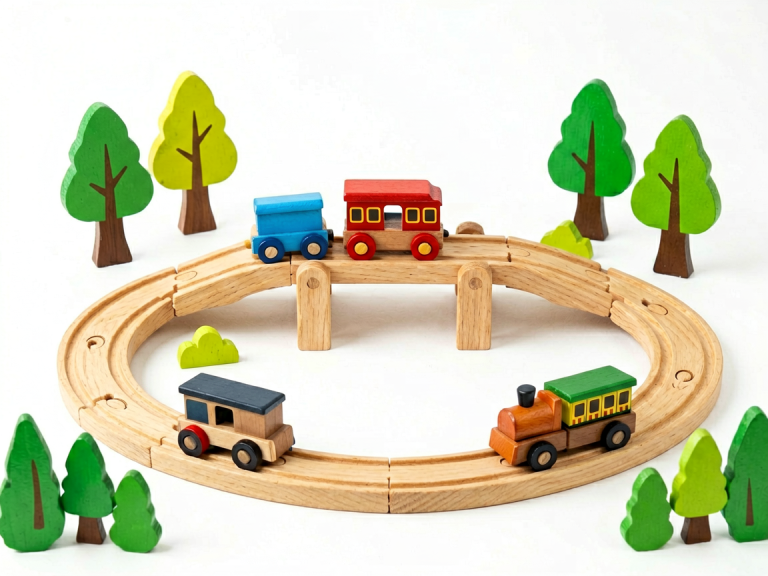
One of the most profound benefits of open-ended play is its impact on cognitive flexibility. When a five-year-old girl builds a tower with wooden blocks, she is not simply stacking—she is experimenting with balance, weight distribution, cause and effect. If the tower falls, she does not receive a “wrong” grade; she naturally tries a new arrangement. This iterative process strengthens executive functions such as planning, self-monitoring, and cognitive shifting.
Creativity flourishes in the absence of predetermined outcomes. A girl given a set of magnetic tiles and a box of craft feathers will invent her own constraints—perhaps building a “rainbow rocket” or a “feather bed for a tiny queen.” She learns that there are multiple ways to solve a problem, and that failure is not an endpoint but a stepping stone. Research from the University of Cambridge’s Play in Education group highlights that children engaged in open-ended play demonstrate higher levels of divergent thinking, a key component of creativity that predicts later academic and professional success.
Moreover, open-ended play supports mathematical and spatial reasoning. When a five-year-old girl figures out how to fit a triangular block into an irregular gap, or measures how many scoops of rice fill a container, she is internalizing foundational concepts of geometry, volume, and number sense—without a single worksheet.
—
Social and Emotional Learning: Building Confidence and Empathy
For five-year-old girls, social dynamics become increasingly important. Open-ended play offers a safe laboratory for experimenting with relationships, emotions, and self-advocacy.
When two girls engage in dramatic play—“Let’s pretend we’re veterinarians and this teddy bear is sick”—they negotiate roles, share materials, and co-construct narratives. This requires perspective-taking (“You be the doctor, I’ll be the pet owner”), emotional regulation (handling disagreements over who gets the stethoscope), and language skills (explaining symptoms, offering comfort). These interactions build empathy, as girls learn to read facial expressions, tone of voice, and body language in a low-stakes environment.
Open-ended play also fosters resilience. A girl who tries to build a block castle that keeps collapsing learns to manage frustration without adult intervention. She may try a different technique, ask a friend for help, or decide to build something else—each response building her sense of agency. Over time, this cultivates a growth mindset: the belief that effort and strategy can overcome obstacles. For young girls, who are often praised for being “good” or “pretty” rather than for their persistence, open-ended play offers a critical counterbalance by rewarding effort and creativity rather than compliance.
—
Language and Communication Skills
Language development surges between the ages of four and six, and open-ended play is a rich soil for this growth. Unlike structured activities that often rely on simple commands (“Put the red square here”), open-ended play invites complex, narrative-driven language.
A five-year-old girl arranging her toy animals might narrate an elaborate story: “The mama giraffe is worried because the baby giraffe wandered too far. She calls the elephant to help search.” In this process, she practices vocabulary (wander, search), syntax (complex sentences with subordinate clauses), and narrative structure (beginning, conflict, resolution). Researchers at Harvard’s Center on the Developing Child note that the back-and-forth dialogue inherent in pretend play—what they call “serve and return” interactions—strengthens the neural connections underlying language and communication.
When girls play together, they also learn turn-taking in conversation, asking questions, clarifying meaning, and using persuasive language (“If you give me the blue cape, I’ll let you wear the crown”). These skills are the foundation of academic literacy and social competence.
—
Breaking Gender Stereotypes through Play
Society often channels five-year-old girls toward “feminine” toys—dolls, kitchens, and pink dress-up clothes—while boys are given trucks, blocks, and science kits. Open-ended play, by its very nature, challenges these constraints. When play materials are neutral (wooden blocks, fabric scraps, clay, water, loose parts), girls are free to explore traditionally “male” domains like construction, mechanical reasoning, and rough-and-tumble play without judgment.
A five-year-old girl who builds a ramshackle fort with couch cushions and blankets is learning spatial planning and physics—the same skills celebrated in little boys who build with LEGO. She may also engage in superhero or monster play, which helps her develop assertiveness and physical confidence. Conversely, open-ended play allows boys to explore nurturing roles, but for girls, it is particularly important to counter the subtle message that their play should be neat, quiet, and domesticated.
By providing open-ended materials and resisting the urge to steer girls toward “pretty” or “girl-appropriate” activities, adults send a powerful message: your curiosity, your strength, and your ideas matter more than the color of your toy.
—
Practical Tips for Parents and Educators
Fostering open-ended play for a five-year-old girl does not require expensive toys. Here are practical strategies:
1. Embrace “loose parts.” Collect natural items (pinecones, stones, acorns), fabric scraps, ribbons, corks, cardboard tubes, and bottle caps. These objects can be combined in infinite ways, sparking creativity.
2. Limit structured activities. While a weekly dance class or art lesson is fine, avoid overscheduling. Five-year-olds need long, unhurried blocks of time—at least 45–60 minutes—to enter a deep state of play.
3. Ask open-ended questions. Instead of “What are you making?” try “Tell me about your story!” or “How did you decide to put that there?” This validates the child’s process rather than the product.
4. Resist the urge to “fix” play. If your daughter says, “I can’t make the bridge stay up,” resist the impulse to show her the “correct” way. Instead, ask, “What could you try next?” Mistakes are the engines of learning.
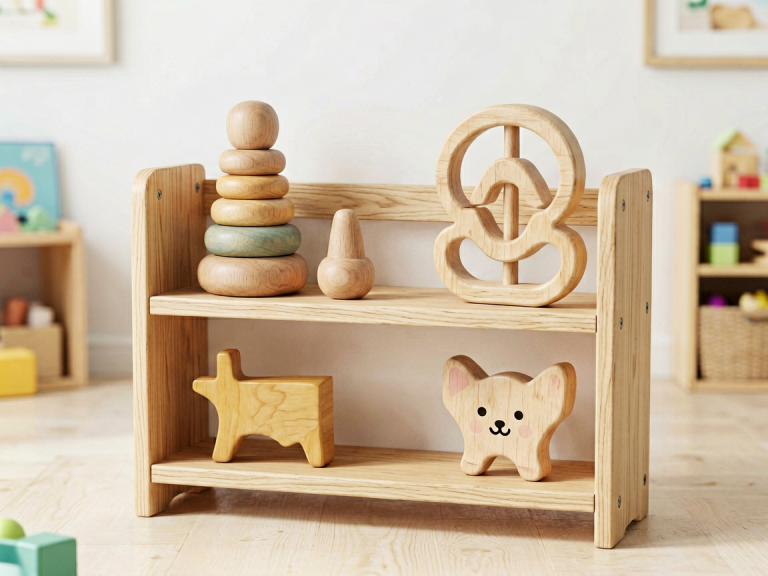
5. Create a “yes” space. Designate an area—a corner of the living room or a low shelf in her room—where she can access materials freely and where mess is acceptable. A play mat or a plastic tub for “inside mud” (like kinetic sand) gives her autonomy.
6. Model joy in exploration. Let your daughter see you tinkering, cooking without a recipe, or gardening. When she observes you enjoying uncertainty, she learns that not knowing the outcome is part of the adventure.
—
Conclusion
In a world that too often rushes children toward measurable outcomes—reading levels, test scores, tidy projects—open-ended play stands as a quiet revolution. For five-year-old girls, it is not a luxury but a necessity. It cultivates the flexible, creative, and resilient thinkers they will need to become confident problem-solvers and lifelong learners.
By handing a girl a pile of wooden blocks instead of a princess costume with matching shoes, by giving her a bucket of water and a brush on a sunny afternoon instead of a digital tablet, we are not simply “letting her play.” We are handing her the keys to her own mind. We are saying: *You are the author of your story. You are the engineer of your tower. You are the captain of your spaceship.* And in that freedom, she learns something far more valuable than any lesson plan can teach—she learns that she is capable of anything she can imagine.
Sources and further reading
For additional evidence-based guidance, consult these authoritative resources: