The Power of Wonder: How Open-Ended Play Fuels Learning for Five-Year-Old Boys
Introduction: More Than Just Child’s Play
A five-year-old boy kneels in the dirt, a stick in one hand and a plastic bottle cap in the other. He is not building a model rocket or completing a worksheet. He is, in his own mind, constructing a spaceship control panel, digging for dinosaur bones, or creating a secret potion for invisible dragons. To a casual observer, he might appear to be “just playing.” But in reality, he is engaged in one of the most powerful and profound learning experiences available to a child his age: open-ended play.
For five-year-old boys, the world is a vast landscape of physical energy, boundless curiosity, and a driving need to understand how things work. Their brains are developing rapidly, and their bodies are itching for movement. Traditional, structured learning—sitting at a desk, following step-by-step instructions, or completing a predetermined craft—can often feel restrictive and frustrating to a boy at this developmental stage. Open-ended play, in contrast, offers a liberating alternative. It provides a fertile ground where imagination, problem-solving, social <a href="https://www.playlearningguide.com/category/skills/”>skills, and emotional resilience flourish naturally. This article explores the profound benefits of open-ended play specifically tailored for five-year-old boys, offering insights for parents, educators, and caregivers who wish to nurture deep, authentic learning.
What Is Open-Ended Play? Defining the Concept
Open-ended play is an unstructured, child-led activity with no fixed outcome, set of rules, or prescribed end goal. Unlike a puzzle with a single correct solution or a board game with defined winners and losers, open-ended play allows the child to be the director, the inventor, and the explorer. The materials used—blocks, sand, water, sticks, cardboard boxes, fabric scraps, loose parts—are versatile and can be transformed into anything the child imagines. A cardboard tube might be a telescope, a light saber, a tunnel for toy cars, or a flute for an imaginary marching band. The play evolves organically based on the child’s curiosity, mood, and creativity.
For a five-year-old boy, this type of play is especially valuable because it aligns with his natural inclination to be active, to take risks, and to experiment. He is not bound by instructions on how to “correctly” use a toy. Instead, he is free to test hypotheses: “What happens if I stack these blocks higher? What if I push this car down a ramp covered in sand? Can I make a bridge that holds five dinosaurs?” Each question becomes a mini-experiment, and each experiment builds cognitive, motor, and problem-solving skills.
Why Open-Ended Play Is Critical for Five-Year-Old Boys
Cognitive Development: Building the Executive Function
At age five, the prefrontal cortex—the brain’s command center for impulse control, attention, planning, and flexible thinking—is undergoing a growth spurt. Open-ended play is a natural gymnasium for these executive functions. Consider a boy building a fort with blankets and pillows. He must plan the structure, adapt when a blanket slips, negotiate with a playmate about where to place the entrance, and persist when the fort collapses. This process demands sustained attention, working memory (remembering his original design), and cognitive flexibility (changing tactics when the plan fails). Research consistently shows that children who engage in frequent, high-quality open-ended play develop stronger self-regulation and problem-solving skills—abilities that are better predictors of future academic and life success than early literacy or numeracy drills.
For boys in particular, the physical component is crucial. Many five-year-old boys are kinesthetic learners: they process information best through movement and tactile experiences. Open-ended play allows them to be in motion while learning. A boy digging in a sandbox is not just getting dirty; he is learning about cause and effect (digging deeper makes the hole fill with water), geometry (how slopes affect the flow of sand), and physics (the weight of a rock versus a handful of sand). These embodied experiences create neural connections that abstract worksheets cannot replicate.
Social and Emotional Growth: Navigating the World of Others
Open-ended play frequently involves other children, and for five-year-old boys, this social dimension is a powerful classroom. When two boys decide to build a city out of blocks, they must negotiate roles (“You be the crane operator, I’ll be the architect”), share resources, resolve conflicts (“Hey, I need that long block!”), and cooperate toward a common goal. These interactions teach empathy, turn-taking, perspective-taking, and emotional regulation. A boy who is frustrated when his tower falls must learn to calm himself and try again—a far more authentic emotional learning opportunity than a teacher telling him to “use his words.”
Furthermore, open-ended play provides a safe space for boys to express emotions that might otherwise be suppressed. Through imaginative scenarios—a superhero rescuing a kitten, a dinosaur fighting a volcano—a boy can act out feelings of power, fear, or vulnerability in a controlled environment. He can be the brave leader or the scared monster, and both roles help him understand his own emotional landscape. In a culture that often pressures boys to be stoic and “tough,” open-ended play offers a precious outlet for emotional exploration.
Physical Development: Gross and Fine Motor Skills
Five-year-old boys are bundles of restless energy. Their large muscles are developing rapidly, and they crave opportunities to run, climb, jump, and balance. Open-ended play with outdoor materials—logs, rocks, hills, ropes—builds gross motor skills, spatial awareness, and body coordination. A boy who navigates a homemade obstacle course of tires and tree stumps is not just having fun; he is developing vestibular sense (balance) and proprioception (awareness of his body in space).
At the same time, open-ended play can also refine fine motor skills. Manipulating small loose parts—buttons, pebbles, bottle caps, twigs—requires precise finger movements. Drawing with chalk on pavement, threading beads onto a string, or using a screwdriver on a piece of scrap wood all strengthen the hand muscles needed later for handwriting. The beauty of open-ended play is that these skills are practiced willingly, without pressure, because the child is intrinsically motivated by the play itself.
Practical Examples of Open-Ended Play for Five-Year-Old Boys
The Construction Zone: Blocks, Boards, and Loose Parts
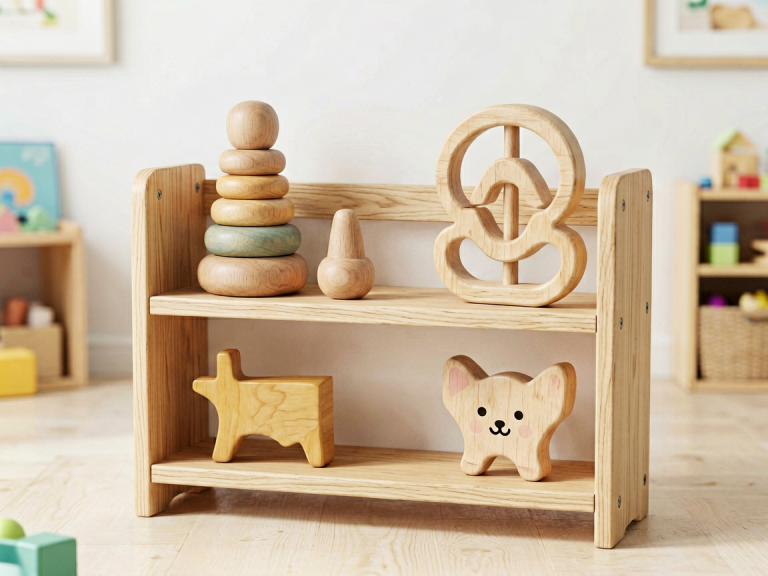
Provide a collection of wooden blocks (in various shapes and sizes), flat boards, cardboard tubes, fabric, and small items like pine cones or plastic animals. A five-year-old boy might spend an hour building a garage for his toy trucks, then suddenly transform the structure into a castle for knights, then a rocket ship. This type of building encourages mathematical thinking (balance, symmetry, counting), and it allows for repeated failure and redesign—a crucial lesson in resilience.
Water and Sand Play
A simple tub of water with cups, funnels, boats, and sponges can occupy a five-year-old for an entire afternoon. He will explore concepts of volume, flow, sinking, and floating. Adding sand extends the possibilities: building dams, digging canals, making mud pies. For boys who are less comfortable with verbal expression, water and sand play offers a sensory-rich environment where they can experiment without words.
Imaginative Role-Play: Dress-Up and Storytelling
A box of old hats, scarves, capes, and household items (old phones, cardboard crown, toy stethoscope) invites a boy to become a doctor, a firefighter, a robot, or a king. As he creates and acts out narratives, he develops language skills, narrative sequencing, and understanding of social roles. For five-year-old boys, especially those who may struggle with sitting still for story time, acting out a story brings literature to life.
Nature-Based Play: Sticks, Leaves, and Mud
The outdoors is the ultimate open-ended play space. A stick is a wizard’s wand, a digging tool, a hockey stick, or a walking cane. Leaves, acorns, and pine cones become ingredients for a “soup” or decorations for a fairy house. Climbing a tree teaches risk assessment (“Can I reach that branch? Is it strong enough?”) and builds confidence. For five-year-old boys who are often told to “sit still” and “be careful,” nature play gives them the freedom to test their limits in a relatively safe environment.
The Role of Adults: Facilitating Without Interfering
Many adults feel the urge to direct children’s play—to suggest an idea, correct a “mistake,” or call an end to an activity they deem “unproductive.” For open-ended play to truly benefit a five-year-old boy, adults must adopt a new mindset: that of a facilitator, not a teacher. The adult’s role is to provide a rich environment with safe, versatile materials; to offer ample time (at least 45 minutes to an hour of uninterrupted play); and to observe quietly, intervening only when necessary for safety or when the child explicitly asks for help.
When a child is struggling—perhaps his block tower keeps falling—a helpful adult might ask a curious question: “I wonder why that keeps happening. What could you change?” This type of Socratic questioning encourages independent problem-solving. The goal is not to solve the problem for the child but to support his own problem-solving process. Similarly, if two boys are arguing, the adult can guide them to find their own solution (“What can you both agree on?”) rather than imposing one.
It is also crucial to resist the urge to “correct” imaginative play. If a boy insists that his cardboard box is a spaceship, even though he is clearly inside a cardboard box in the living room, the adult should honor the fiction. Correcting a child during imaginative play (“That’s not a spaceship, that’s a box”) shuts down creativity and teaches him that his ideas are not valued. Instead, join the play: “Captain, what planet are we landing on? Do we need to refuel?”
Balancing Open-Ended Play with Other Forms of Learning
Open-ended play does not need to replace all structured activities. A balanced childhood includes time for reading together, learning letters and numbers, practicing fine motor skills through arts and crafts, and participating in guided activities like music or sports. However, it is essential to recognize that open-ended play is not “fluff” or “wasted time.” It is the foundation upon which more formal learning is built. A five-year-old boy who has spent hundreds of hours building with blocks, negotiating with friends, and solving self-imposed problems will enter kindergarten with a strong sense of curiosity, confidence, and the ability to persist through challenges.
Moreover, open-ended play can be integrated into academic learning. A counting game can be turned into a scavenger hunt for pine cones; a writing exercise can become making a map of an imaginary land; a science lesson can be exploring puddles after the rain. The key is to let the child’s interests lead. If a five-year-old boy is fascinated by construction vehicles, his open-ended play can include digging in the sandbox, drawing diagrams, reading books about bulldozers, and building his own crane from recycled materials. This self-directed, integrated approach to learning is far more memorable and meaningful than isolated skill drills.
Conclusion: A Call to Protect Play
In an era of increasing academic pressure and screen time, open-ended play is under threat. Many five-year-old boys spend their days in structured programs, on iPads, or in front of televisions. They are losing the invaluable opportunity to explore, create, and discover on their own terms. As parents, educators, and caregivers, we have a responsibility to protect and champion open-ended play. It is not merely a luxury or an option for “free time”; it is a biological and developmental necessity.
For a five-year-old boy, every stick, every mud puddle, every cardboard box is a universe of possibility. When we give him the time, space, and materials to explore that universe, we are giving him the greatest gift of all: the confidence to ask questions, the resilience to try and fail, and the creativity to imagine a world that does not yet exist. That is the true education—one that cannot be taught, but can only be discovered through play.
Sources and further reading
For additional evidence-based guidance, consult these authoritative resources: