Smart Play on a Budget: Top Educational Toys Under $50
In an era where screens dominate children’s attention, parents and educators are constantly searching for affordable tools that can stimulate young minds, foster creativity, and build essential skills. The good news is that you do not need to break the bank to provide high‑quality learning experiences. A carefully selected educational toy priced under $50 can offer just as much developmental value as its expensive counterparts. This article explores the importance of educational play, outlines criteria for choosing budget‑friendly options, and presents a curated list of toys that combine fun with learning—all for less than fifty dollars.
Why Educational Toys Matter
Educational toys are not merely distractions; they are active learning catalysts. Through hands‑on play, children develop cognitive abilities, fine motor skills, problem‑solving strategies, and social‑emotional intelligence. For instance, building blocks teach spatial reasoning and cause‑and‑effect, while puzzles enhance pattern recognition and perseverance. Even simple board games can introduce number sense, turn‑taking, and communication. The best educational toys align with a child’s natural curiosity, making learning feel like an adventure rather than a chore.
Moreover, the right toy can bridge formal schooling and home life. A child who struggles with math may find new confidence when using a colorful counting set. A shy child might open up through cooperative storytelling games. Because these toys are often designed to be replayed in multiple ways, they provide endless opportunities for exploration without additional cost—a crucial consideration for families on a tight budget.
Criteria for Choosing Educational Toys Under $50
Not every inexpensive toy delivers genuine educational value. To maximize your investment, consider the following guidelines:
1. Age‑appropriateness
A toy that is too advanced may frustrate a child, while one that is too simple will not challenge them. Look for the recommended age range on the package, but also observe your child’s individual developmental stage. Many quality toys offer adjustable difficulty levels.
2. Open‑ended play potential
Toys that can be used in many different ways—such as building bricks, play dough, or magnetic tiles—hold a child’s interest longer than single‑purpose gadgets. Open‑ended toys encourage creativity and iterative learning.
3. Skill focus
Identify the skills you want to nurture: STEM (science, technology, engineering, math), literacy, artistic expression, or social‑emotional development. Then choose a toy that specifically targets that area. For example, a simple circuit kit may cost $30 and introduce basic electronics.
4. Durability and safety
Children are rough on toys. Check for non‑toxic materials, sturdy construction, and small parts that could be a choking hazard. Brands that offer warranties or are made from recycled plastics are often more reliable.
5. Reviews and reputation
Before purchasing, read Amazon reviews or parent forums to see how the toy holds up in real‑world use. Often, lesser‑known brands produce excellent educational toys at a fraction of the price of big names.
Best Categories of Affordable Educational Toys
The market is rich with budget‑friendly educational toys. Below are the most effective categories, each offering unique learning benefits.
STEM Exploration Kits
Science, technology, engineering, and math toys are especially popular right now, and many excellent kits cost under $50. For example, a mini volcano science lab (around $15) lets children mix safe chemicals to create eruptions while learning about chemical reactions. A magnetic building set ($30–$40) includes rods and metal balls that teach polarity and structural stability. For older children, a simple coding board game like Robot Turtles ($25) introduces programming concepts without a screen.
Language and Literacy Tools
Reading readiness can be boosted by toys that make letters and words tangible. Alphabet puzzle mats ($20) allow children to hop from letter to letter, combining gross motor movement with phonics. Story cubes (around $12) are dice with pictures; players roll them and invent a story using the images—a fantastic way to develop narrative skills and vocabulary. For bilingual families, flash card sets in multiple languages (often under $10) provide daily exposure.
Creative Arts and Imagination
Art supplies that encourage creative expression are among the most cost‑effective educational toys. A large roll of butcher paper ($8) and a set of washable markers ($6) can keep a child engaged for hours, fostering fine motor control and self‑expression. Modeling clay ($10–$15) strengthens hand muscles and allows three‑dimensional problem‑solving. Music‑making instruments, such as a simple xylophone or harmonica (each under $20), introduce auditory discrimination and rhythm.
Cooperative and Strategy Board Games
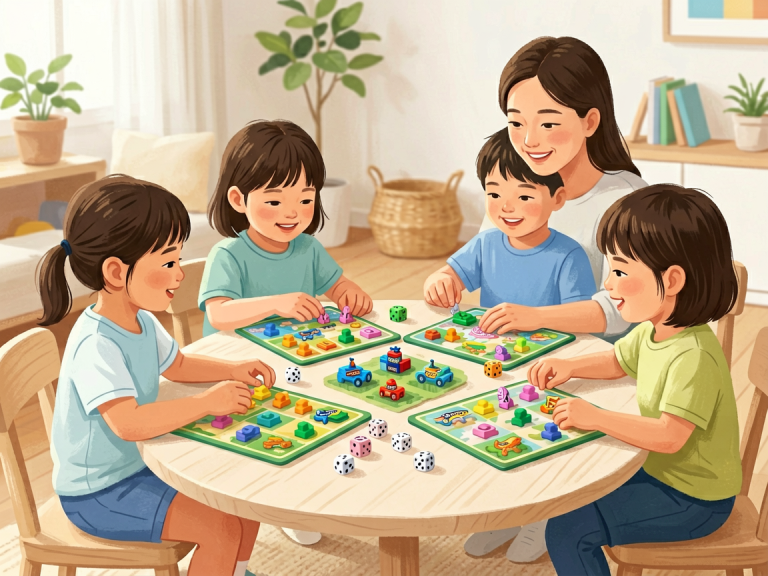
Board games are powerful social‑emotional learning tools. Games like Hoot Owl Hoot ($18) require players to work together to get owls home before sunrise, teaching teamwork and empathy. The Magic Labyrinth ($35) is a memory and strategy game that challenges spatial thinking. Even classic games like Uno Junior ($10) help with number recognition and color matching in a lighthearted setting.
Top Picks Under $50 with Examples
To give you a concrete starting point, here are five highly recommended educational toys, each priced below $50, that have received outstanding feedback from parents and educators.
1. ThinkFun Gravity Maze ($35)
This marble‑run logic game combines engineering and visual puzzle‑solving. Children build towers using magnetic pieces to guide a marble from a starting point to a target. It develops planning, spatial reasoning, and trial‑and‑error thinking. Recommended for ages 8 and up, but younger children can play with adult guidance.
2. Learning Resources Botley 2.0 ($45)
Botley is a screen‑free coding robot that can be programmed with a remote control. Children learn sequencing, loops, and conditional logic by directing Botley through obstacle courses. It is durable, comes with many props, and requires no tablet or smartphone—ideal for screen‑conscious families.
3. Melissa & Doug Wooden Pattern Blocks ($25)
A classic toy that never goes out of style. This set includes 130 colorful wooden shapes and 5 double‑sided pattern cards. Kids can match the patterns to create animals, flowers, and geometric designs, or invent their own. The tactile experience supports fine motor skills, symmetry, and creativity.
4. KiwiCo Discovery Box (single box $40)
KiwiCo offers monthly subscription boxes, but you can buy individual themed crates for around $40. Each box contains all materials and instructions for a single, engaging project—like building a working windmill or a solar‑powered car. The projects are hands‑on, science‑based, and designed for specific age groups.
5. Orchard Toys Shopping List Game ($22)
This interactive memory and matching game simulates grocery shopping. Players use shopping lists to collect items from a table of picture cards. It builds memory, categorization, and early math skills (counting items). The cooperative version allows younger children to play without competition.
Tips for Maximizing the Value of Budget Educational Toys
To truly get the most out of every dollar, follow these practical strategies:
- Rotate toys instead of buying more. Keep a bin of “out‑of‑rotation” toys and swap them every few weeks. This renews interest without spending extra money.
- Encourage multi‑use play. A set of wooden blocks can become a castle, a bridge, or a counting tool. Show children how to repurpose toys for different learning activities.
- Combine toys with everyday objects. A simple magnifying glass ($5) can turn a backyard walk into a science exploration. Pair educational toys with found objects to extend learning.
- Make play a family event. Use board games during family nights, or work on a STEM kit together. The social interaction enhances learning and creates shared memories.
- Look for sales and bundles. Many toy retailers offer clearance discounts, especially after holidays. You can often score high‑quality educational toys for well under $50 during sales.
Conclusion
Educational toys under $50 are a treasure trove of opportunity. They prove that effective learning does not require a hefty price tag—only careful selection, creativity, and a willingness to play alongside your child. By focusing on age‑appropriate, open‑ended, and skill‑targeted toys, you can build a rich learning environment at home without straining your budget. Whether it is a coding robot, a pattern block set, or a cooperative board game, the right toy can spark curiosity, build confidence, and lay the foundation for a lifetime love of learning. So next time you are shopping for a gift or looking to enrich your child’s playroom, remember that the best educational tool is the one that invites a child to ask “What if?”—and that magic can often be found for less than fifty dollars.