The Ultimate Guide to the Best Learning Toys for Kids: Fostering Growth Through Play
Introduction
In a world increasingly driven by screens and digital distractions, the humble toy remains one of the most powerful tools for early childhood development. But not all toys are created equal. The best learning toys for kids do more than just entertain—they challenge, inspire, and nurture critical skills that last a lifetime. From building spatial awareness to fostering emotional intelligence, well-designed educational toys transform play into a rich, hands-on learning experience. This guide explores the defining characteristics of truly effective learning toys and offers a curated look at the top categories that parents, educators, and caregivers should consider. Whether you are shopping for a toddler or a school-age child, understanding the “why” behind each toy will help you make informed choices that spark curiosity and joy.
—
Why Learning Toys Matter: The Science of Playful Education
Play is the brain’s favorite way to learn. Neuroscientific research shows that when children engage in self-directed, exploratory play, they activate neural pathways associated with problem-solving, creativity, and executive function. The best learning toys for kids are deliberately designed to tap into this natural process. They provide open-ended possibilities, encourage trial and error, and offer just enough challenge to keep a child in that sweet spot of productive struggle—often called the “zone of proximal development.”
Moreover, high-quality learning toys help bridge the gap between abstract concepts and tangible understanding. A child who builds a bridge with wooden blocks isn’t just playing; she is experimenting with gravity, balance, and structural integrity. A toddler who sorts colorful shapes into corresponding holes is developing fine motor skills, pattern recognition, and early math logic. These toys also promote sustained attention and resilience, as children learn to overcome frustration when a tower falls or a puzzle piece doesn’t fit. In an age of instant gratification, the slow, iterative process of physical play is more valuable than ever.
—
STEM Learning Toys: Building a Foundation for Science and Math
One of the most popular and effective categories of educational playthings is STEM (Science, Technology, Engineering, and Mathematics) toys. The best learning toys in this domain introduce foundational concepts through hands-on experimentation rather than rote memorization.
Construction Sets and Building Blocks
Classic wooden blocks, LEGO bricks, and magnetic tiles like Magna-Tiles are perennial favorites. They allow children to design, build, and rebuild structures that test their understanding of geometry, balance, and cause-and-effect. For older children, more advanced sets such as K’NEX or Meccano introduce gears, pulleys, and simple machines, turning play into an engineering workshop.
Science Kits and Experiment Sets
From crystal-growing labs to volcano-eruption kits, science toys that involve real chemical reactions or biological observations ignite a love for discovery. Look for kits that include clear instructions and safety gear, but also encourage children to ask “what if?” and design their own experiments. Brands like Thames & Kosmos and National Geographic offer age-appropriate options that cover topics from physics to botany.
Coding and Robotics Toys
Even preschoolers can grasp basic programming concepts with toys like Botley the Coding Robot or Code-a-Pillar. These screen-free toys teach sequencing, logic, and debugging. For older kids, programmable robots like LEGO Mindstorms or Sphero Bolt combine engineering with coding, offering a deep, immersive experience that mirrors real-world STEM careers.
—
Language and Literacy Toys: Unlocking the World of Words
Language development is one of the most critical outcomes of early play. The best learning toys for kids in this category encourage vocabulary expansion, storytelling, pre-reading skills, and a love for books.
Alphabet and Phonics Games
Wooden letter puzzles, magnetic alphabet sets, and interactive phonics readers help children connect sounds to symbols. Toys like the LeapFrog Letter Factory or Montessori sandpaper letters engage multiple senses, making abstract letter shapes more concrete.
Storytelling and Puppet Kits
Puppets, felt boards, and story cubes (like Rory’s Story Cubes) empower children to create their own narratives. This not only boosts language fluency but also develops narrative structure, sequencing, and empathy as they imagine different characters’ perspectives.
High-Quality Picture Books and Audiobooks
While technically not “toys,” books are an indispensable part of any learning toy collection. Board books with textures, lift-the-flap books, and richly illustrated storybooks invite interaction. Pairing a book with a related toy—such as a farm play set alongside a farm-themed book—deepens comprehension and vocabulary retention.
—
Social and Emotional Learning Toys: Developing Empathy and Cooperation
Academic skills are only part of the picture. The best learning toys for kids also nurture emotional intelligence, self-regulation, and social cooperation. These toys often involve role-play, collaboration, and turn-taking.
Dramatic Play Sets
Kitchen sets, doctor kits, tool benches, and dress-up costumes let children step into other roles and practice real-world scenarios. Through pretend play, kids learn to negotiate, share, and express feelings. A child pretending to be a patient at a toy vet clinic, for example, practices compassion and caring for others.
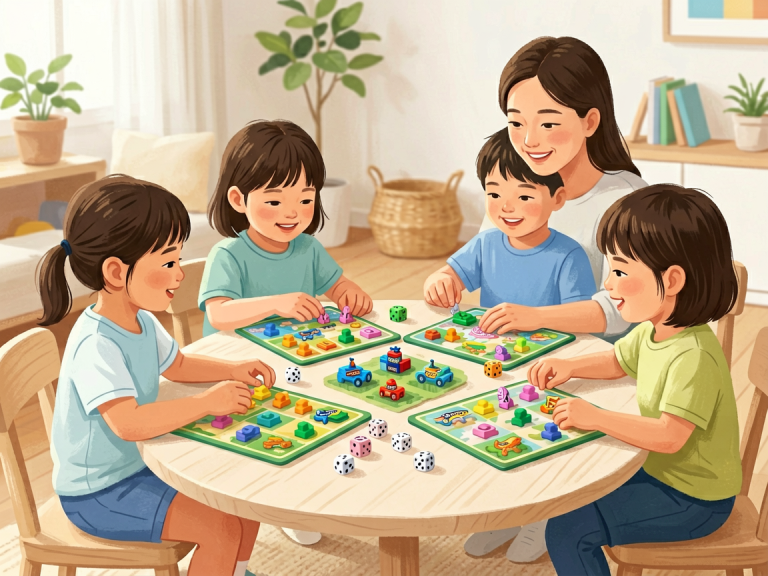
Cooperative Board Games
Unlike traditional competitive games, cooperative games like Hoot Owl Hoot! or The Sneaky, Snacky Squirrel require players to work together toward a common goal. These games teach patience, communication, and the idea that winning isn’t everything—a powerful lesson for young children.
Emotion Recognition Tools
Toys like feelings flashcards, emotion dolls, or board games such as “The Game of Feelings” help children identify and name their emotions. This vocabulary is the first step toward self-regulation. When a child can say “I feel frustrated” instead of throwing a tantrum, they have taken a giant leap in emotional maturity.
—
Creative and Imaginative Toys: Nurturing Artistic Expression
Creativity is not a luxury; it is a core cognitive skill that fuels innovation and flexible thinking. The best learning toys for kids in this category provide open-ended materials rather than prescribed outcomes.
Art and Craft Supplies
Good-quality crayons, watercolor sets, clay, and modeling dough (like Play-Doh) allow children to explore color, texture, and form. Look for non-toxic, washable materials that invite experimentation. For older children, origami paper, weaving looms, and bead kits introduce pattern and design.
Music and Rhythm Instruments
Simple percussion instruments—shakers, drums, xylophones—introduce rhythm, tempo, and auditory discrimination. Music toys also support language development and spatial reasoning. Even a set of bells or a child-friendly ukulele can spark a lifelong love of music.
Loose Parts and Open-Ended Play
Collections of natural objects (pinecones, stones, shells), wooden beads, fabric scraps, and recycled materials are often the most creative toys of all. Without a fixed purpose, children must invent their own uses. A cardboard box becomes a spaceship; a pile of pebbles becomes a counting game. This type of play fosters divergent thinking and problem-solving.
—
How to Choose the Best Learning Toys for Your Child
With thousands of products on the market, selecting the right toy can feel overwhelming. Here are a few evidence-based guidelines to help you navigate.
1. Prioritize Open-Ended Play
Toys that can be used in multiple ways—like building blocks, art supplies, or costumes—offer more learning value than single-use gadgets. They grow with the child and adapt to changing interests.
2. Match the Toy to the Child’s Developmental Stage
A toy that is too simple bores; one that is too complex frustrates. Check age recommendations but also observe your child’s actual abilities. A three-year-old may be ready for a simple puzzle even if the box says 4+, while a five-year-old might still enjoy stacking cups for sensory play.
3. Look for Quality and Safety
Durable, non-toxic materials are essential. Avoid toys with small parts for children under three, and check for certifications like ASTM or CE. Wooden toys often outlast plastic ones and feel more satisfying in small hands.
4. Encourage Hands-On, Screen-Free Interaction
While some digital toys have educational value, the best learning toys for kids typically involve physical manipulation. Hands-on play strengthens fine motor skills and provides richer sensory feedback than a touchscreen.
5. Follow the Child’s Lead
The most effective learning happens when a child is intrinsically motivated. Instead of imposing a toy, observe what fascinates your child—dinosaurs, trains, cooking—and choose toys that expand that interest. A passionate obsession is a powerful learning engine.
—
Conclusion
The market is flooded with toys that promise to make children smarter, but the truly best learning toys for kids are those that respect the child’s natural instinct to play. They are simple enough to invite exploration, complex enough to sustain engagement, and flexible enough to spark imagination. Whether it is a set of wooden blocks, a magnifying glass, a puppet, or a musical shaker, every well-chosen toy is a doorway to discovery. As caregivers, our role is not to over-engineer play but to provide the raw materials—and then step back and watch the learning unfold. In the end, the greatest gift we can give our children is not a specific toy but the time, space, and encouragement to play deeply. After all, play is not a break from learning; it is learning at its very best.