The Unstructured Classroom: Why Social Play Is the Foundation of Childhood Development
Introduction: More Than Just Fun and Games
In an era dominated by structured schedules, academic pressure, and digital screens, the concept of "social play" for children is often dismissed as mere idleness—a luxury that modern families can little afford. Yet, paradoxically, the very activities that appear least productive—building forts, negotiating rules for a game of tag, or pretending to be astronauts exploring an imaginary planet—are among the most sophisticated and essential learning experiences a child can have. Social play is not a break from learning; it is learning in its most organic, powerful, and irreplaceable form. This article explores the multifaceted world of social play for kids, examining its psychological, cognitive, and emotional benefits, the different forms it takes, the challenges it faces in contemporary society, and practical ways parents and educators can nurture it.
The Critical Role of Social Play in Development
Building Emotional Intelligence and Empathy
At its core, social play is a laboratory for human connection. When children engage in pretend play—say, deciding who gets to be the "mommy" in a make-believe kitchen or who will play the "villain" in a superhero scenario—they are actively practicing perspective-taking. They must read facial expressions, interpret tone of voice, and adjust their behavior based on the reactions of others. A three-year-old who hands a toy cup to a playmate and says, "Here, your tea is cold" is not just mimicking adult behavior; she is learning to recognize that her friend might want warm tea, that the friend has preferences separate from her own. This early exercise in empathy lays the groundwork for more complex social skills later in life, such as conflict resolution, cooperation, and the ability to form deep, lasting friendships.
Research in developmental psychology consistently shows that children who engage in frequent, high-quality social play demonstrate higher levels of emotional regulation. The playground is a space where frustration—when a tower of blocks collapses or a turn is not granted—is managed in real time, without the intervention of an adult. Learning to handle disappointment, to wait patiently, and to express anger constructively are all byproducts of unsupervised social play. In contrast, children whose play is heavily directed by adults or replaced by solitary screen time often struggle with these fundamental emotional skills.
Cognitive Growth Through Negotiation and Rule-Making
Social play is also a powerful engine for cognitive development. Consider a group of four-year-olds trying to decide how to play "cops and robbers." They must agree on who plays which role, what the rules are, what happens when someone gets caught, and how to handle disagreements. This process involves complex cognitive functions: planning, memory (remembering who agreed to what), flexible thinking (adjusting rules when someone objects), and language development (articulating ideas clearly to persuade others). These are the same executive functions that predict academic success and life satisfaction far more reliably than early reading or math skills.
Moreover, social play often involves symbolic thinking—the ability to use one object to represent another. A cardboard box becomes a spaceship; a stick becomes a magic wand. This capacity for abstraction is a precursor to higher-order thinking, including the understanding of metaphors in literature, algebraic variables in mathematics, and theoretical concepts in science. When children play together, they are not just having fun; they are literally constructing and negotiating shared meaning, a skill that is at the heart of all human culture and communication.
The Many Faces of Social Play
Structured vs. Unstructured Play
Not all social play is created equal. Researchers distinguish between structured social play—organized games with predetermined rules, like soccer or board games—and unstructured social play, which emerges spontaneously and evolves organically. Both have value, but unstructured play is increasingly endangered. Structured play teaches rule-following, teamwork, and sportsmanship, but unstructured play—the kind that happens when children are left to their own devices in a backyard or a sandbox—nurtures creativity, initiative, and the ability to create and modify rules on the fly.
In unstructured play, children act as both legislators and citizens. They invent a game, agree on its parameters, and then collectively enforce them. If the game becomes boring, they have the authority to change it. This experience of agency is profoundly empowering and builds a sense of self-efficacy that structured activities, where rules are imposed from the outside, cannot provide. The child who learns to navigate the fluid social dynamics of unstructured play carries that confidence into the boardroom and the community meeting later in life.
Cooperative vs. Competitive Play
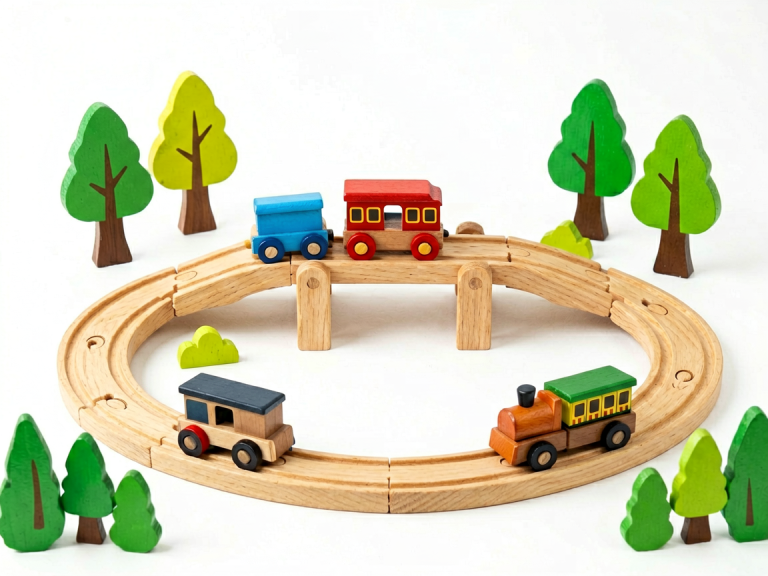
Another important distinction is between cooperative play, where children work toward a common goal, and competitive play, where they strive to win. While competitive play certainly has its place—it teaches resilience, strategic thinking, and how to lose gracefully—cooperative play may be even more crucial in the early years. Activities like building a block tower together, putting on a puppet show, or completing a group puzzle require children to synchronize their actions, communicate effectively, and share credit for success. These experiences foster a sense of belonging and collective achievement that is the bedrock of social cohesion.
Interestingly, cooperative play often requires a higher level of social sophistication than competitive play. In a competitive game, the objective is clear: win. In cooperative play, the objective is often ambiguous and must be negotiated. "What are we building?" "How tall should it be?" "Who gets to put the roof on?" These questions demand a constant, subtle dance of collaboration that hones interpersonal skills far beyond simple turn-taking.
The Modern Landscape: Challenges and Opportunities for Social Play
The Decline of Free Play
Unfortunately, social play for kids has been in a steady decline for decades. The reasons are manifold: increased academic pressure starting as early as preschool, the proliferation of structured extracurricular activities, parents' fears about safety (often exaggerated), and the pervasive lure of screens. A 2018 study by the American Academy of Pediatrics found that children today spend an average of only 4 to 7 minutes per day in unstructured outdoor play, compared to over an hour of screen time. This shift has real consequences. Pediatric psychiatrist Dr. Stuart Brown, founder of the National Institute for Play, argues that the lack of play is linked to rising rates of anxiety, depression, and attention disorders among children.
When children are constantly supervised and directed, they lose the opportunity to practice the essential skill of managing their own social interactions. A parent who steps in to resolve every conflict on the playground robs the child of the chance to learn negotiation and compromise. A schedule that leaves no time for "nothing" denies children the boredom that sparks creativity and the unscripted moments that build friendship.
The Digital Dimension: Screen-Based Social Play
The rise of digital technology has introduced a new and ambiguous form of social play. Games like Minecraft and Roblox allow children to build, explore, and interact with peers in virtual worlds. Can these experiences substitute for physical, face-to-face play? The answer is complicated. On one hand, online social play can teach collaboration, resource management, and even coding basics. For children who are socially anxious or geographically isolated, it can provide a lifeline to peer connection. On the other hand, digital play lacks the rich, multisensory feedback of physical interaction—the smell of grass, the warmth of a hand, the subtle body language that conveys more than words. It also often lacks the unstructured, child-led quality that makes social play so powerful, as many digital games have fixed rules and outcomes designed by adults.
The key is not to demonize screens but to find balance. Social play in the digital realm should supplement, not replace, real-world interaction. Parents can encourage children to use voice chat or video calls rather than just text, and to translate digital creations (like a Minecraft castle) into physical projects (like building it with blocks or drawing a map). The goal is to preserve the essence of social play—negotiation, creativity, empathy, and cooperation—regardless of the medium.
Nurturing Social Play: Practical Strategies for Parents and Educators
Redesigning Environments for Play
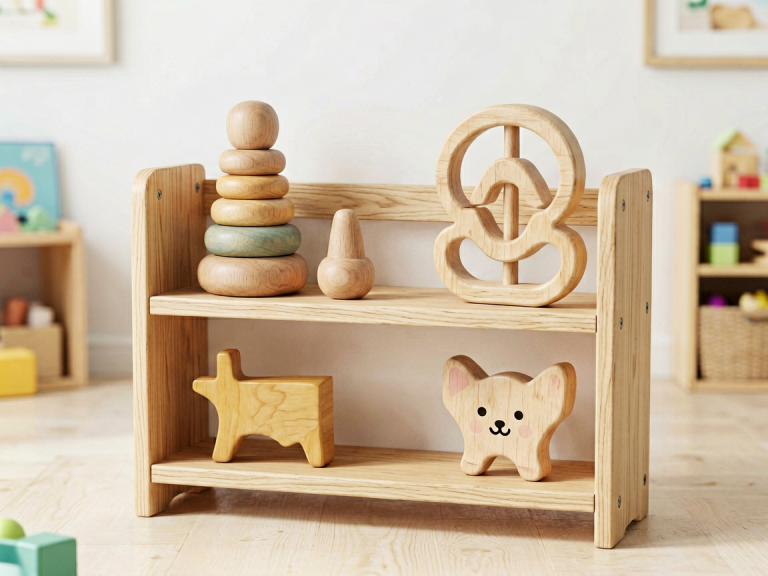
The most effective way to promote social play is to create environments that invite it. This means, first and foremost, providing time and space without adult direction. A backyard with loose parts—sticks, stones, boxes, old sheets—is far more conducive to rich social play than a playground with fixed equipment that dictates the activity. Schools can incorporate "choice time" into the daily schedule, where children are free to choose their own activities and play partners. Classrooms with open-ended materials like blocks, art supplies, and dress-up clothes foster the kind of collaborative, imaginative play that is essential for social growth.
Parents can also play a crucial role by modeling playfulness and by resisting the urge to overschedule. Saying "yes" to an afternoon of unstructured play with neighborhood friends is often more valuable than another organized sport or tutoring session. As developmental psychologist Dr. Peter Gray puts it, "Children need to be in charge of their own play in order to develop the sense of agency and responsibility that is crucial for mental health."
The Adult as Facilitator, Not Director
It is important for adults to understand that their role in social play is not to direct but to facilitate. This means setting up the conditions for play—providing materials, ensuring safety, allowing adequate time—and then stepping back. When conflicts arise, the adult's job is not to impose a solution but to ask questions that guide the children toward their own resolution: "What do you think we could do to make this work for everyone?" This approach builds problem-solving skills and self-confidence while preserving the child-led nature of play.
At the same time, adults can intentionally introduce social play opportunities for children who are shy or have special needs. Pairing a child who struggles with social cues with a more socially skilled peer, providing visual schedules for a game, or starting a simple cooperative activity like passing a ball can gently scaffold social skills. The goal is to make play accessible to all children, recognizing that the benefits are universal.
Conclusion: Reclaiming Play as a Necessity, Not a Luxury
Social play for kids is not a frivolous pastime; it is a biological, psychological, and social necessity. Through play, children learn to read emotions, negotiate differences, think creatively, and build the relationships that sustain them throughout life. In a world that increasingly values measurable outcomes and structured achievement, we must remember that the most important lessons cannot be tested on a worksheet. They are learned in the give-and-take of a game, the shared laughter over a pretend mishap, and the quiet triumph of reaching a compromise with a friend.
As parents, educators, and members of a community, we have a responsibility to protect and cultivate social play. This means pushing back against the forces that erode it—hyper-scheduling, safety anxiety, screen saturation—and actively creating conditions that allow children to play freely, together, and often. The payoff is not just happier, healthier children today; it is a generation of adults who are more empathetic, creative, collaborative, and resilient. And that is a legacy worth building, one game of tag at a time.