Fine Motor Activities for Preschoolers: Building Skills Through Play
Introduction: The Small Movements That Make a Big Difference
In the bustling world of early childhood development, few milestones are as quietly transformative as the mastery of fine motor skills. For preschoolers—typically children aged three to five—these small, precise movements of the hands, fingers, and wrists form the invisible scaffolding upon which later academic success, self-care independence, and creative expression are built. Fine motor activities for preschoolers are not merely exercises in dexterity; they are gateways to writing neatly, buttoning a coat, using scissors safely, and eventually typing on a keyboard. Yet, in an age of screen-based entertainment and hurried schedules, many children arrive at kindergarten without the hand strength and coordination they need. This article explores the science behind fine motor development, offers a rich repertoire of engaging activities, and provides practical guidance for parents, educators, and caregivers who wish to nurture these essential skills through joyful, purposeful play.
Why Fine Motor Skills Matter in the Preschool Years
Fine motor skills involve the coordination of small muscles in the hands and fingers, often in conjunction with the eyes. For preschoolers, the development of these skills supports a wide array of daily tasks. When a child learns to hold a crayon with a tripod grip, they are not just drawing a picture—they are building the neural pathways that will later enable them to write letters and numbers. When they manipulate small beads onto a string, they are training their brain to sequence, plan, and execute multi-step actions. Research consistently shows that children with strong fine motor abilities tend to demonstrate greater confidence in classroom settings, better self-regulation during tabletop tasks, and improved academic readiness, particularly in literacy and mathematics. Moreover, these skills are deeply intertwined with cognitive development. Activities that require precision, such as threading or cutting, demand focus, problem-solving, and spatial awareness. Thus, integrating fine motor activities into a preschooler’s daily routine is an investment in their holistic growth.
Foundational Principles for Effective Fine Motor Activities
Before diving into specific activities, it is crucial to understand a few guiding principles. First, activities should be developmentally appropriate. A three-year-old may struggle with lacing shoes but delight in placing large pegs into a board. Tailoring difficulty to the child’s current ability ensures success and prevents frustration. Second, repetition is key, but it need not be boring. Offering variations of the same skill—such as using different types of tongs to transfer objects of varying sizes—keeps the child engaged while reinforcing neural connections. Third, sensory integration enhances learning. Activities that combine tactile, visual, and proprioceptive input—like playing with playdough scented with vanilla or using tweezers to pick up fuzzy pom-poms—are more effective than those that are purely visual or auditory. Finally, never underestimate the power of play. When fine motor practice feels like a game, children are intrinsically motivated to persist, experiment, and improve.
Engaging Fine Motor Activities for Preschoolers
1. Playdough and Clay Creations
Playdough is a classic, versatile medium that strengthens the entire hand. Encourage children to roll, pinch, squeeze, flatten, and shape the dough. Provide tools such as plastic knives, rolling pins, cookie cutters, and garlic presses. For added challenge, ask them to create small balls (e.g., "make ten tiny peas") or to hide and retrieve small beads inside a lump of dough. The resistance of the dough builds intrinsic hand muscles, and the repetitive motions improve finger isolation and coordination. For an extra sensory twist, make homemade playdough with the child—measuring, pouring, and mixing are themselves fine motor activities.
2. Bead Threading and Lacing
Threading beads onto a string, pipe cleaner, or shoelace requires precise pincer grip, bilateral coordination, and visual tracking. Start with large wooden beads and thick string; as skills advance, introduce smaller beads and thinner laces. To keep it thematic, combine with counting or pattern-making: "String a red bead, then a blue bead, then a red bead." Lacing cards—cardboard shapes with holes punched around the edges—offer a similar challenge. Children can lace a shoelace through the holes, creating a border around a star, a butterfly, or a dinosaur. This activity directly prepares children for sewing, buttoning, and writing.
3. Scissor Skills: Snipping, Cutting, and Beyond
Using scissors is one of the most significant fine motor milestones for preschoolers. Begin with safety scissors that have a spring mechanism (they open automatically) and are designed for small hands. Offer strips of construction paper and encourage snipping along a thick line, then progress to cutting out simple shapes like circles and squares. For a fun twist, have children cut playdough "snakes" or fringe along the edge of a paper plate to make a lion’s mane. Cutting requires bilateral coordination (one hand holds the paper, the other manipulates the scissors), hand strength, and visual-motor integration. Always supervise closely and provide positive reinforcement for effort.
4. Pincer Grasp Games: Tweezers, Tongs, and Droppers
The pincer grasp—the ability to pick up small objects between the thumb and index finger—is foundational for writing and self-care. Set up a tray with small objects like pom-poms, buttons, or dried beans, and provide child-safe tweezers or tongs. Ask the child to transfer the objects from one container to another, sorting by color or size. Alternatively, use an eyedropper or a small syringe (without needle) to transfer colored water between ice cube trays. These activities strengthen the small muscles of the hand and refine the precision grip. For an added academic element, use the items for counting or letter matching.
5. Drawing, Coloring, and Stamping
Preschoolers should have daily access to crayons, markers, chalk, and pencils. Encourage them to draw freely, but also introduce structured activities like tracing dotted lines, connecting dots to make shapes, or completing simple mazes. Stamping with alphabet stamps or shape stamps requires careful placement and pressure control. Finger painting is another excellent option; the resistance of the paint and the need to use individual fingers fosters fine motor control. Remember that the goal is not a perfect drawing but the process of gripping, applying pressure, and coordinating movement.
6. Building with Small Manipulatives
LEGO Duplo, large wooden blocks, and magnetic tiles are great for building, but for fine motor challenge, introduce smaller pieces like regular LEGO bricks, interlocking cubes, or bristle blocks. Children must align and press pieces together, which demands finger strength and bilateral coordination. Additionally, constructing with toothpicks and marshmallows or using a pegboard with small pegs promotes hand-eye coordination and problem-solving. For a literacy connection, have children spell out their name with individual letter beads or magnetic letters.
7. Snack Time as a Fine Motor Lab
Everyday moments can become fine motor practice. Let children peel a banana, snap green beans, or husk corn. Spreading butter or jam on toast with a plastic knife strengthens the wrist and hand. Using a fork to spear pieces of fruit, or a spoon to scoop yogurt, encourages precise motor planning. For a structured activity, create a "snack necklace" using O-shaped cereal threaded onto a piece of string. Or ask children to sort snacks by shape or color using their fingers—this integrates fine motor with executive function.
8. Water Play and Pouring
Fill a shallow basin with water and provide cups, pitchers, and funnels. Children can practice pouring from one container to another, aiming for accuracy and controlling the flow. Add a few drops of food coloring for visual appeal. Squeezing a spray bottle to water plants or a sponge to transfer water from one bowl to another builds hand strength. For a more advanced version, use a turkey baster to move water between compartments—this requires a coordinated squeeze-and-release motion similar to using a dropper.
9. Clothespin and Peg Activities
Clothespins require significant finger strength to open and close. Have children clip clothespins around the rim of a paper plate to make a "sun" or attach them to a cardboard strip. For a matching game, write numbers or letters on clothespins and have the child clip them to corresponding spots on a board. Pegboards with small pegs are another excellent tool; children must press the pegs into holes, which refines the precision of the thumb and index finger.
10. Tearing, Crumbling, and Pasting
Provide old magazines, tissue paper, or scrap paper and encourage children to tear it into pieces. Tearing requires a controlled bilateral movement. Then have them crumple the pieces into small balls and glue them onto a template to create a mosaic picture—a bunny, a tree, or a rainbow. Using a glue stick or a small brush to apply paste involves wrist rotation and finger pressure. The combination of tearing, crumpling, and pasting is excellent for developing hand strength and coordination.
Integrating Fine Motor Activities into Daily Routines
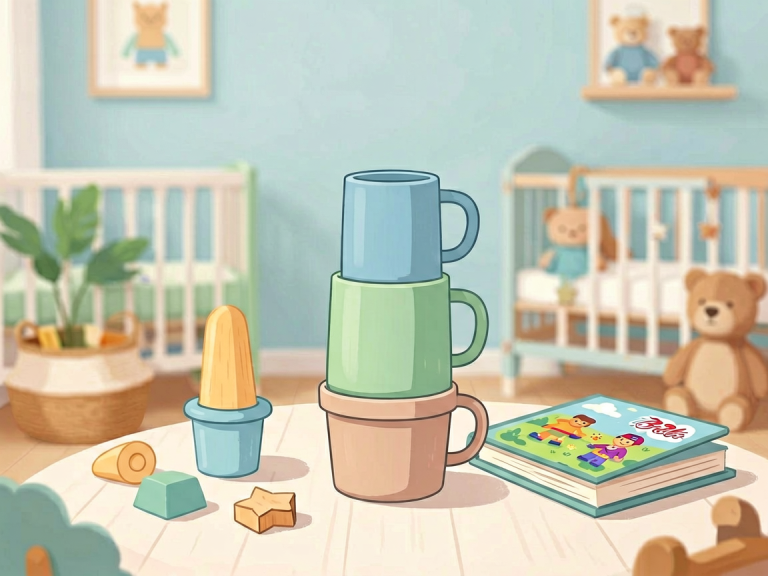
Fine motor development does not require elaborate setups or hours of dedicated time. The most effective approach is to weave small moments of practice into a preschooler’s day. For example, during morning dressing, encourage zipping, buttoning, and snapping (even if you then need to adjust). At mealtime, let children pour their own water from a small pitcher. During play, offer tools like tongs for picking up toys. In the car, have them practice opening and closing containers. Simple puzzles, nesting cups, and shape sorters are excellent for travel.
Additionally, consider the environment. A low table with accessible art supplies invites spontaneous drawing. A "fine motor station" with trays of beads, tweezers, and scissors can be rotated weekly. Limit screen time and prioritize hands-on interactions. Remember that messy play—sand, mud, slime, finger paint—is especially rich in sensory feedback that supports fine motor learning.
Adapting Activities for Diverse Abilities
Every preschooler develops at their own pace. For children who struggle with fine motor tasks, modifications can make a significant difference. Use adaptive tools such as grip-enhancing pencil aids, easy-grip scissors (with a spring mechanism or looped handles), or larger manipulatives. Break tasks into smaller steps and provide verbal prompts. Offer activities that use the whole hand first (e.g., squeezing a stress ball, kneading dough) before moving to more precise finger movements. Incorporate heavy work through activities like pushing a wheelbarrow, pulling a wagon, or carrying books, which builds overall body strength and indirectly supports fine motor control. Always celebrate effort rather than outcome, and maintain a patient, encouraging atmosphere.
The Role of Adults: Modeling and Encouragement
Adults play a crucial role in fine motor development. Model the correct grip when demonstrating a crayon or scissors, but avoid forcing a child to hold it "the right way" before they are ready. Offer choices: "Would you like to use the green marker or the purple one?" to foster autonomy. Ask open-ended questions during activities: "How did you get that bead through the hole?" "What might happen if you squeeze the playdough harder?" These prompts encourage reflection and problem-solving. Most importantly, join in the play. When a parent or teacher sits beside a child and threads beads together, the activity becomes a shared experience of connection and learning.
Conclusion: Small Steps Toward Big Achievements
Fine motor activities for preschoolers are far more than simple pastimes. They are the building blocks of independence, creativity, and academic readiness. Through the simple act of picking up a tiny bead, snipping a piece of paper, or rolling a coil of playdough, a child is strengthening not only their fingers but also their confidence, concentration, and capacity for complex thought. As caregivers and educators, our task is to provide a rich environment of opportunities—not drills, but playful invitations. By embedding fine motor practice into the rhythm of daily life, we help children develop the foundational skills they will carry with them into kindergarten and beyond. Every small squeeze, pinch, and grasp is a step toward a future where they can hold a pencil with ease, tie their shoes with pride, and create with joy. Let us give them the tools—and the time—to succeed.