The Ultimate Learning Toys Buying Guide: How to Choose Educational Playthings That Foster Growth
Introduction
In an era where children are bombarded with screens and passive entertainment, the humble learning toy has never been more important. Parents, educators, and caregivers alike find themselves navigating a dizzying marketplace filled with promises of “STEM,” “Montessori,” and “brain-boosting” playthings. But what truly makes a toy educational? How do you separate genuine developmental value from clever marketing hype? This comprehensive buying guide will equip you with the knowledge and criteria to select learning toys that genuinely support cognitive, social, emotional, and physical development. From understanding key developmental milestones to evaluating materials and safety standards, we will explore every angle so that your next purchase becomes an investment in your child’s future—not just another dusty box on the shelf.
Understanding the Value of Learning Toys
Before diving into the purchase process, it is essential to understand what makes a toy “educational.” At its core, a learning toy is designed to facilitate skill acquisition through play. Unlike passive toys that simply entertain (think of a singing plush that does everything for the child), a true learning toy requires active engagement. It challenges the child to think, problem-solve, create, or physically manipulate. Research in developmental psychology consistently shows that the most effective learning occurs when children are intrinsically motivated, hands-on, and allowed to explore at their own pace. A well-chosen learning toy can promote fine motor skills, spatial reasoning, language acquisition, mathematical thinking, social cooperation, and emotional regulation. However, not every brightly colored block labeled “educational” lives up to its claim. This guide will help you discern the authentic from the superficial.
Age-Appropriate Selections: Matching Toys to Developmental Stages
Infants and Toddlers (0–2 Years)
The first two years of life are characterized by rapid sensorimotor development. At this stage, learning toys should prioritize sensory stimulation, cause-and-effect relationships, and safe exploration. Look for high-contrast black-and-white patterns for newborns, soft fabric books with different textures, and teething toys that are easy to grasp. As babies become mobile, stacking cups, simple shape sorters, and push-pull toys encourage gross motor skills. Musical instruments like rattles and xylophones (with rounded edges) introduce auditory discrimination. Importantly, avoid small parts that pose choking hazards. All materials should be BPA-free, phthalate-free, and non-toxic.
Preschoolers (3–5 Years)
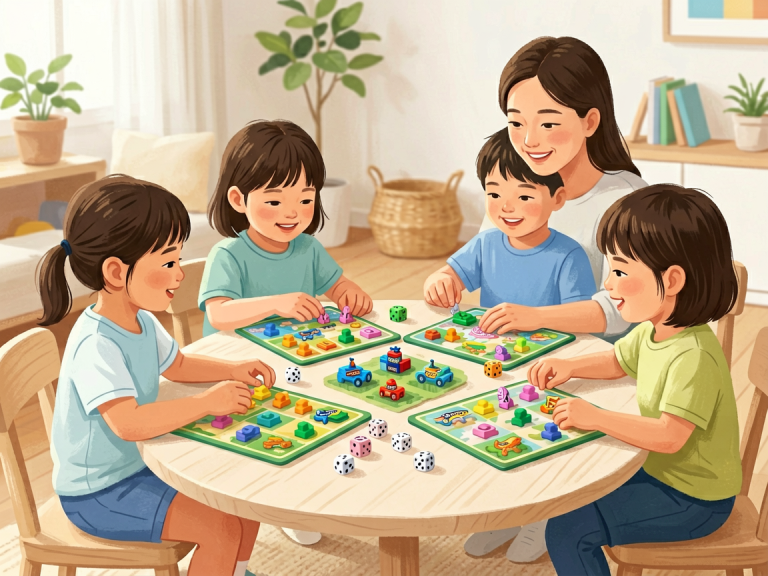
Preschoolers enter a stage of symbolic thinking, imaginative play, and early academic skills. Building blocks (such as wooden unit blocks or LEGO Duplo) support spatial awareness and creativity. Puzzles with 12–24 pieces boost problem-solving and hand-eye coordination. Pretend play sets—kitchens, tool benches, doctor kits—nurture social-emotional skills and language. Art supplies like washable crayons, finger paints, and play dough encourage self-expression and fine motor development. Simple board games with two to three rules teach turn-taking and emotional resilience. Avoid toys with complex instructions or those that over-emphasize rote memorization (e.g., electronic flashcards); the goal is open-ended exploration.
School-Age Children (6–12 Years)
As children enter formal education, learning toys can complement classroom curriculum while still feeling like play. Science kits (e.g., crystal growing, simple circuits, or microscopes) foster curiosity and the scientific method. Construction sets like magnetic tiles or advanced LEGO Technic challenge engineering thinking. Strategy board games (checkers, chess, or cooperative games like *Forbidden Island*) develop logical reasoning and planning. Coding toys such as programmable robots (Sphero, Botley) or unplugged coding puzzles introduce computational thinking without a screen. Math manipulatives (fraction tiles, counting bears) make abstract concepts tangible. At this age, pay attention to reading level and complexity—too easy leads to boredom, too hard leads to frustration.
Key Skill Areas to Consider When Buying
Cognitive and Problem-Solving Skills
Toys that require planning, sequencing, and trial-and-error are invaluable. Examples include mazes, logic puzzles, and construction kits with multiple design possibilities. Look for toys that offer open-ended play—meaning there is no single right answer. A set of wooden blocks can become a castle, a spaceship, or a bridge depending on the child’s imagination. Closed-ended toys (like those that flash a pre-programmed song when a button is pressed) often fail to sustain engagement over time.
Fine and Gross Motor Development
Fine motor toys strengthen the small muscles of the hands and fingers, which are crucial for writing, zipping, and tying shoes. Lacing beads, pegboards, and scribbling tools are excellent for toddlers. For older children, jigsaw puzzles with small pieces (but age-appropriate) and intricate building sets work well. Gross motor toys—balance beams, climbing structures, or active games like hopscotch mats—support overall physical health. Even outdoor ride-on toys and scooters contribute to coordination and spatial awareness.
Social and Emotional Learning
Educational toys are not only about academic skills. Cooperative board games (where players win or lose together) teach teamwork and empathy. Dolls and action figures can be used to role-play social scenarios, helping children process emotions and practice conflict resolution. Emotional flashcards or “feelings” toys (like a plush face with interchangeable expressions) aid in vocabulary building around emotions. When evaluating a toy, consider whether it encourages sharing, turn-taking, or collaborative problem-solving.
Language and Literacy
For young children, toys that incorporate letters, words, and storytelling are powerful. Alphabet puzzles, magnetic letters, and story sequencing cards are straightforward tools. For older children, trivia board games about history or science can expand vocabulary. However, be cautious with electronic toys that claim to teach reading—many are passive and fail to develop phonemic awareness. Instead, choose toys that invite the child to produce language (e.g., telling a story with puppets) rather than simply receive it.
Material and Safety Considerations
The physical composition of a toy is as important as its educational content. Non-toxic materials should be non-negotiable. Look for certifications like ASTM (American Society for Testing and Materials), EN71 (European safety standard), or the CE mark for global compliance. Avoid toys with strong chemical odors, loose paint that flakes off, or sharp edges. Wooden toys should be finished with water-based or beeswax sealants, not varnishes containing formaldehyde. For plastic toys, check for BPA-free, phthalate-free, and lead-free labels. Soft toys should be machine-washable and have securely stitched eyes and noses.
Durability matters because a learning toy that breaks in a week teaches frustration rather than skill. Read customer reviews specifically about wear and tear. Also consider the toy’s longevity—can it grow with the child? Many construction sets, magnetic tiles, and modular toys allow for increasing complexity, offering years of use. Finally, think about storage and clean-up. Toys with many small pieces can become overwhelming; systems with trays, bins, or built-in storage encourage organizational skills.
Balancing Fun and Education: The Golden Rule
The most effective learning toys are those that children want to play with, day after day. An educational toy that sits untouched in the corner is worthless, no matter how many learning outcomes it claims. To achieve this balance, prioritize toys that align with your child’s current interests. If your child loves dinosaurs, invest in a dino-themed excavation kit or a set of dinosaur figures that can be sorted by size or type. If they adore cooking, a recipe card game that adds numbers or fractions can make math deliciously engaging.
Avoid toys that feel like schoolwork. A toy that demands constant drilling or testing will quickly feel like a chore. Instead, look for integrated learning—where the skill is practiced naturally within play. For example, a grocery store playset that includes price tags and a cash register subtly reinforces addition and subtraction without a worksheet in sight.
Budget and Longevity: Making Smart Investments
Learning toys can range from a few dollars to several hundred, but price does not always correlate with quality. Start by evaluating the cost per use—a $30 puzzle that gets played with daily for two years is a better value than a $5 plastic toy that breaks after one afternoon. Consider buying used or trading with friends, especially for toys that have a short developmental window (like certain baby rattles). Online marketplaces and local “toy libraries” are excellent resources.
Another strategy is to choose toys that serve multiple purposes. A set of wooden blocks can be used for math (counting and sorting), art (painting as a canvas), physics (building and balancing), and social play (pretend cities). Similarly, a large roll of butcher paper and washable markers costs little but offers endless creative possibilities. Remember that the best learning toys often require the active involvement of a caregiver. The toy itself is a tool; the learning happens in the interaction, conversation, and scaffolding provided by adults and peers.
Where to Buy and What to Look For
Specialty educational toy stores (online or brick-and-mortar) often have knowledgeable staff who can recommend age-appropriate options. Brands like Melissa & Doug, Hape, Grimm’s, and ThinkFun have built reputations for quality educational design. However, don’t overlook small brands and independent artisans on platforms like Etsy, where handcrafted wooden toys sometimes surpass mass-market products in durability and creativity.
When shopping online, read multiple reviews. Look for details about size, material feel, and whether the toy truly engages children over time. Photos and videos from other parents can reveal how the toy looks after weeks of use. Also check for accessibility—are instructions multilingual? Are pieces easy for small hands to manipulate? Does the toy require batteries that are difficult to replace? These small factors can make a big difference in daily use.
Conclusion
Choosing learning toys is both an art and a science. It requires understanding your child’s unique developmental journey, recognizing quality materials and safety standards, and staying true to the principle that play should remain joyful. The best learning toys are not flashy or expensive—they are the ones that spark curiosity, invite exploration, and adapt to the child’s growing abilities. By following this guide, you can move beyond marketing noise and make informed choices that enrich your child’s early years. Remember that you are not just buying a toy; you are investing in a relationship with learning that will last a lifetime. So take your time, observe your child, and trust that a well-chosen toy, combined with your loving presence, can unlock doors to endless discovery.