The Power of Play: How Educational Learning Toys Shape Childrens Development
Introduction
In a world saturated with digital screens and passive entertainment, the value of hands-on, purposeful play has never been more critical for a child’s growth. Educational learning toys—carefully designed to stimulate curiosity, problem-solving, and creativity—serve as powerful tools that bridge the gap between fun and formal education. Unlike traditional toys that offer mere amusement, these toys engage children in active learning, helping them develop cognitive, social, emotional, and motor skills simultaneously. From foundational math concepts to language acquisition and spatial reasoning, educational toys transform play into a rich, developmental experience. This article explores the multifaceted benefits of such toys, categorizes popular types for different age groups, offers guidance on selecting the right ones, and emphasizes the essential role parents and educators play in maximizing their potential.
## The Cognitive Benefits of Educational Toys
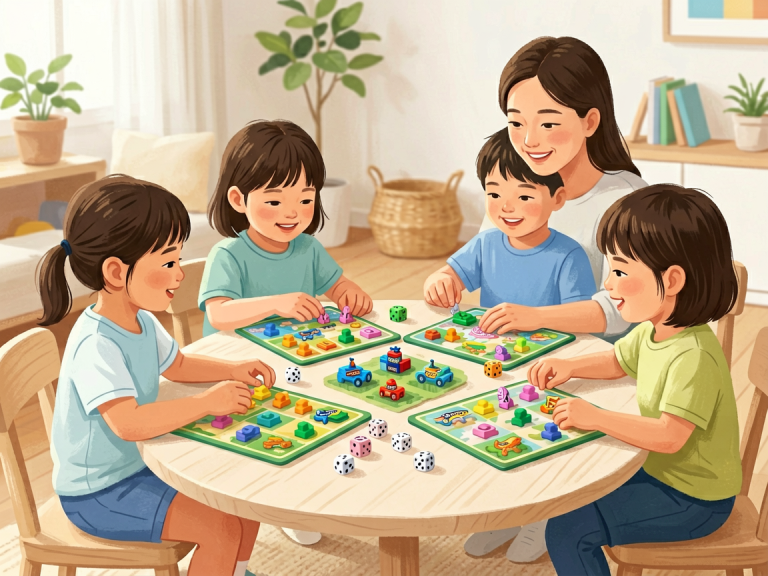
Educational toys are intentionally crafted to challenge a child’s thinking and boost brain development. Puzzles, for instance, require children to recognize patterns, manipulate shapes, and exercise patience—all of which strengthen problem-solving abilities and memory. Building blocks like LEGO or magnetic tiles encourage spatial reasoning and early engineering concepts, as children must visualize how pieces fit together to create stable structures. Similarly, board games that involve counting, matching, or simple strategy (e.g., *Candy Land* or *Chutes and Ladders*) lay the groundwork for numeracy, turn-taking, and logical thinking.
Research in child psychology consistently shows that play-based learning enhances executive functions, such as attention control, cognitive flexibility, and inhibitory control. For example, a child sorting colored beads into pattern sequences is not only refining fine motor skills but also training the brain to categorize and predict. Memory-matching games boost short-term recall, while science kits that involve simple experiments (like growing crystals or building a volcano) introduce the scientific method in a tangible, exciting way. Crucially, educational toys provide immediate feedback—a puzzle piece either fits or does not—which helps children self-correct and develop a growth mindset.
## Types of Educational Learning Toys for Different Ages
Choosing age-appropriate toys is paramount because a toy that is too advanced may frustrate a child, while one that is too simple may bore them. Here is a breakdown by developmental stage:
Infants and Toddlers (0–2 years)
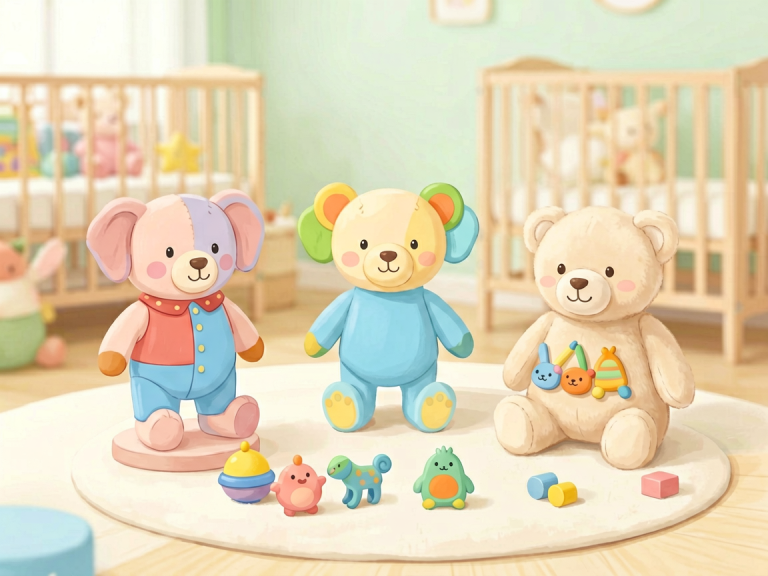
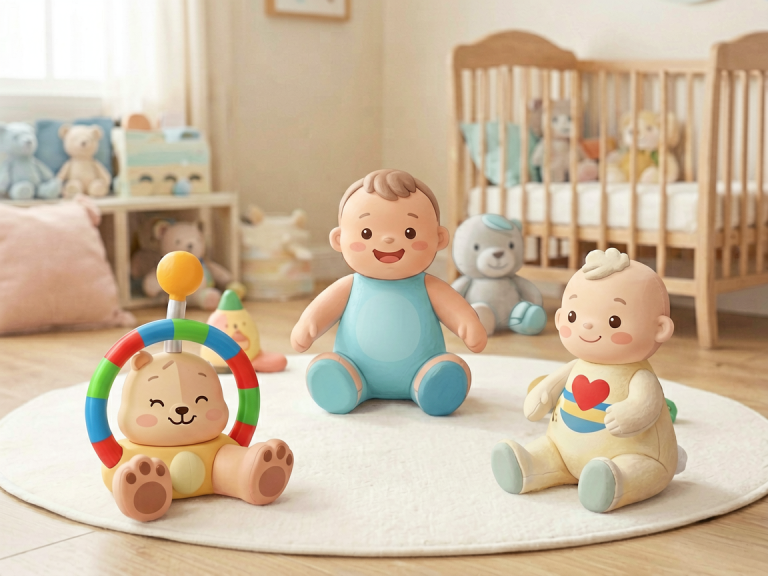
At this stage, sensory exploration is key. Soft blocks with different textures, rattles that produce sounds, and stacking rings help develop tactile awareness, hand-eye coordination, and cause-and-effect understanding. Musical toys, like xylophones or shakers, introduce rhythm and auditory discrimination. High-contrast black-and-white books or soft picture books build early visual tracking and language exposure.
Preschoolers (3–5 years)
This is a golden age for imaginative and structured play. Puzzles with 12–24 pieces, simple board games (e.g., *Hi Ho! Cherry-O*), and matching games foster counting and letter recognition. Play dough, scissors with safety blades, and bead-stringing kits develop fine motor skills essential for writing. Storytelling sets or puppet theaters encourage narrative thinking and vocabulary expansion. Science-themed toys like magnifying glasses and bug viewers spark curiosity about the natural world.
Early Elementary (6–8 years)
Children in this age group can handle more complex tasks. Math manipulatives like counting bears, fraction tiles, or base-ten blocks make abstract concepts concrete. Coding toys such as *Botley* or *Code-a-Pillar* introduce computational thinking without screens. Construction sets with gears, pulleys, or snap-together circuits (e.g., *Snap Circuits*) teach basic physics and electricity. Strategy board games like *Checkers* or *Blokus* enhance planning and foresight.
Preteens (9–12 years)
Older children benefit from advanced kits: chemistry sets, robotics kits (e.g., *LEGO Mindstorms*), and 3D puzzles that require reading complex instructions. Logic puzzles, cryptography games, and advanced strategy games (e.g., *Settlers of Catan*) encourage deductive reasoning and negotiation. Language-learning card games or trivia sets about geography and history reinforce academic knowledge in an engaging way.
## Developing Social and Emotional Skills Through Play
Educational toys are not solely about academic achievement; they also cultivate crucial social and emotional competencies. Cooperation games—where players must work together to achieve a common goal, like *The Floor is Lava* or *Hoot Owl Hoot!*—teach empathy, teamwork, and communication. Role-playing sets (such as a play kitchen, doctor’s kit, or cash register) allow children to explore different social roles, practice negotiation, and regulate emotions in a safe, imaginative context.
Even solitary play with educational toys can support emotional development. Completing a challenging puzzle or mastering a new skill builds self-esteem and perseverance. A child who struggles with a difficult block structure learns to manage frustration and try alternative strategies—an invaluable life lesson. Moreover, many educational toys include elements of chance, which help children understand that outcomes are not always within their control, fostering resilience and acceptance of failure.
## How to Choose the Best Educational Toys
With countless options on the market, selecting high-quality educational toys can feel overwhelming. Prioritize the following criteria:
- Open-endedness: Toys that can be used in multiple ways (e.g., wooden blocks, modeling clay) encourage creativity rather than rote following of instructions.
- Age and skill alignment: Check the manufacturer’s recommended age range, but also consider your child’s individual interests and capabilities.
- Safety and durability: Look for non-toxic materials, rounded edges, and robust construction that can survive enthusiastic play.
- Screen-free stimulation: Whenever possible, choose toys that promote active manipulation rather than passive screen time. However, some tech-based toys (like coding robots) can be beneficial if they require physical interaction.
- Connection to real-world skills: Aim for toys that teach transferable skills—counting, reading, problem-solving, or scientific thinking—that are relevant to school and daily life.
- Child’s genuine interest: A toy will only be educational if a child actually plays with it. Observe what fascinates your child—dinosaurs, music, vehicles, art—and select toys that align with those passions.
## The Role of Parents and Educators in Guided Play
Even the best educational toy cannot achieve its full potential without adult engagement. When a parent sits alongside a child and asks open-ended questions—“What happens if you put this piece here? How many more blocks do you need to finish the tower?”—they transform a toy into a learning scaffold. Guided play, where adults subtly steer the experience toward specific learning goals while allowing the child to lead, has been shown to be more effective than either pure free play or direct instruction.
Educators can integrate educational toys into classroom settings to reinforce lessons. For example, using counting bears during math time or having a “maker space” with building materials for science projects promotes hands-on learning that appeals to multiple learning styles. Teachers can also model how to use toys cooperatively, encouraging children to share ideas and collaborate.
It is equally important to rotate toys regularly to keep novelty alive. A child who has access to the same toys every day may lose interest; introducing a “new” toy from storage every few weeks rekindles curiosity and extends the toy’s educational lifespan. Finally, adults should emphasize process over product—praising effort, creativity, and problem-solving rather than just the final result.
Conclusion
Educational learning toys are far more than mere diversions; they are the building blocks of a child’s intellectual, social, and emotional future. By carefully selecting toys that match a child’s developmental stage and interests, and by actively participating in play, parents and educators can create a rich learning environment that fosters a lifelong love of discovery. In an era where childhood is increasingly scheduled and digitized, educational toys offer a return to the kind of meaningful, exploratory play that builds not only skills but also confidence and joy. When we invest in quality educational toys, we are not just purchasing objects—we are investing in the boundless potential of the next generation.