The Power of Screen-Free Learning for Toddlers: Building Foundations for a Lifetime of Discovery
In an age where digital devices are woven into nearly every aspect of daily life, it is easy to assume that a toddler staring at a glowing screen is "learning" – absorbing colors, sounds, and interactive feedback. Yet a growing body of research in early childhood development underscores a crucial truth: the most profound and lasting learning for toddlers happens away from screens. Screen-free learning for toddlers is not merely a nostalgic preference; it is a developmentally essential approach that nurtures the whole child – their senses, their emotions, their motor skills, and their capacity for genuine human connection. This article explores the compelling reasons behind screen-free learning, outlines key developmental areas it supports, offers a wealth of practical activities, and provides actionable tips for parents and caregivers who wish to create a rich, screen-free environment for their little ones.
Why Screen-Free Learning Matters More Than Ever
The first three years of life are a period of extraordinary brain growth. Synapses form at a rate of over one million per second, and the quality of a child’s experiences directly shapes the architecture of their developing brain. Screens, even those marketed as "educational," present a fundamental problem: they are passive or at best reactive, but they rarely engage the full sensory-motor, social, and emotional orchestration that real-world experiences provide.
A toddler learning from a screen watches a cartoon bird fly across a digital sky, but they do not feel the wind on their face, hear the rustle of real leaves, or stretch their own arms to imitate flight. They see a digital puzzle piece snap into place, but they do not grasp the physical weight, texture, or resistance of a real wooden puzzle. This missing tactile and proprioceptive feedback is not trivial – it is the very language through which a toddler’s brain learns cause and effect, spatial relationships, and body awareness.
Moreover, screen time, especially in the first two years, has been linked to delays in language development, reduced attention span, and difficulties with self-regulation. The American Academy of Pediatrics recommends avoiding digital media for children under 18 months (except video chatting) and limiting screen use to one hour per day of high-quality programming for children aged 2-5, with co-viewing and active discussion. These guidelines exist because screens, by their very nature, compete with the slower, messier, but infinitely richer learning that happens through hands-on exploration and human interaction.
Screen-free learning, on the other hand, respects the toddler’s natural pace. It allows for repetition, deep focus, and the kind of trial-and-error that builds neural pathways. It fosters creativity because there are no predetermined outcomes. And crucially, it builds the foundational skill of sustained attention – the ability to stay with an activity without constant external stimulation or reward. In a world of ever-shortening attention spans, this is a gift that keeps giving.
Key Developmental Areas Fostered by Screen-Free Learning
Language and Communication
A toddler’s vocabulary explodes between ages 1 and 3, and the most powerful engine for this growth is live, contingent conversation – the back-and-forth where a parent says "Oh, you found a red ball!" and the toddler babbles in response, and the parent expands on that babble. Screens cannot provide this contingent, responsive interaction. They cannot read the toddler’s gaze, adjust their intonation, or wait patiently for a word to form. Screen-free learning environments are rich with real talk: narrating daily routines, describing sensory experiences, singing songs with facial expressions, and reading physical books where a child can point, turn pages, and ask "What’s that?" again and again.
Gross and Fine Motor Development
When a toddler climbs a sofa cushion, pours water from a cup, or picks up a single Cheerio, they are refining motor skills that are the bedrock of later handwriting, sports, and self-care. Screens demand only tiny hand movements (tapping, swiping) and almost no large-muscle engagement. Screen-free learning includes climbing, balancing, stacking, threading, squeezing, digging, and scribbling – all of which strengthen muscles and build coordination. The simple act of carrying a heavy wooden block from one side of the room to another teaches balance, strength, and spatial planning.
Social-Emotional Learning
Emotional regulation, empathy, and social understanding develop best through live, embodied interactions. A toddler learns to read a caregiver’s facial expression, to wait for a turn in a game, to comfort a crying friend, and to manage the frustration of a tower that falls – all experiences that cannot be replicated on a screen. Screen-free learning offers countless opportunities for cooperative play, negotiation, and emotional coaching. When a child struggles to fit a puzzle piece, a parent can say, "I see you’re frustrated. Let’s take a breath and try turning it." That moment of co-regulation is priceless.
Cognitive and Creative Thinking
Open-ended play – playing with blocks, mud, scarves, or cardboard boxes – is the ultimate cognitive workout. Without a screen dictating a narrative, a toddler must create their own. A cardboard box becomes a spaceship, a cave, a car. This kind of symbolic play is directly linked to later abstract thinking, problem-solving, and literacy. Screens often present a closed system: you tap the right answer, you get a reward. But real-world play is infinitely open. It teaches flexibility, divergent thinking, and persistence – skills that no app can teach.
Engaging Screen-Free Activities for Toddlers
Sensory Play: The Foundation of Learning
Sensory bins filled with rice, beans, sand, or water are a toddler’s laboratory. Add scoops, funnels, small cups, and plastic animals, and you have hours of exploration. The toddler learns about volume, weight, texture, and temperature. They practice pouring without spilling (a challenge that builds motor control) and discover that dry rice sounds different from wet sand. Always supervise, and use safe, non-toxic materials.
Outdoor Exploration: The Ultimate Classroom
Take a "listening walk" where the goal is to hear birds, wind, and footsteps. Collect leaves and acorns, then sort them by color or size. Dig in dirt with a small shovel. Splash in puddles. Lie on the grass and watch clouds. Outdoor time provides vitamin D, fresh air, and an ever-changing sensory landscape that no screen can match. It also naturally encourages gross motor movement – running, jumping, balancing on curbs.
Art and Creative Expression
Finger painting, chunky crayons, and washable markers on large paper allow toddlers to express themselves without fear of mess. The process matters more than the product. Squeezing glue bottles, tearing paper, and stamping shapes all build fine motor skills. Play dough (homemade with flour, salt, and water) offers endless squeezing, rolling, and poking. Add cookie cutters, plastic knives, and small rolling pins for extra fun.
Music and Movement
Sing simple songs with hand motions ("Itsy Bitsy Spider," "Wheels on the Bus") and let your toddler join in. Shake a homemade shaker (a bottle filled with rice) and dance together. Play a drum made from an overturned pot. Music supports language rhythm, auditory discrimination, and emotional expression. It also builds coordination and body awareness when combined with dancing, stomping, or clapping.
Practical Life Activities
Toddlers love to imitate adults. Offer safe, supervised opportunities to "help" – wiping a table with a damp cloth, peeling a banana, watering a plant, sweeping with a small broom. These activities build confidence, fine motor skills, and a sense of contribution. They also teach sequencing and responsibility. The key is to accept imperfection and focus on the process, not the outcome.
Reading and Storytelling
Board books with bright, simple pictures are essential. Read the same book repeatedly – toddlers learn through repetition. Use different voices for characters, point to images, and ask simple questions ("Where is the dog?"). Beyond books, tell stories from your own childhood or make up tales about the toddler’s day. Storytelling builds listening comprehension, vocabulary, and imagination.
Building and Construction
Wooden blocks, Duplo, magnetic tiles, and cardboard boxes encourage spatial reasoning, problem-solving, and creativity. A toddler might stack two blocks and call it a house – that is a triumph of symbolic thinking. Build towers together and count how many blocks high they are. Knock them down with a soft ball and laugh together.
Practical Tips for Parents and Caregivers
Create a Screen-Free Environment
Designate certain areas or times as screen-free zones – for example, the dining table during meals and the bedroom at all times. Keep devices out of sight during playtime. Use a visual timer to clearly mark screen time boundaries (if any) so the toddler knows when it begins and ends.
Model Screen-Free Behavior
Children learn from watching. If you are constantly glancing at your phone, your toddler will crave that attention too. Set aside your own devices during dedicated play times. Show that you value real-world engagement by being fully present – making eye contact, listening, and participating in the activity together.
Embrace the Mess
Screen-free learning is often messy. Sand spills, paint smears, water puddles. Prepare for it with easy-to-clean surfaces, old clothes, and a relaxed attitude. Recognize that mess is a sign of deep engagement. Cleaning up together can become another learning experience.
Follow the Child’s Lead
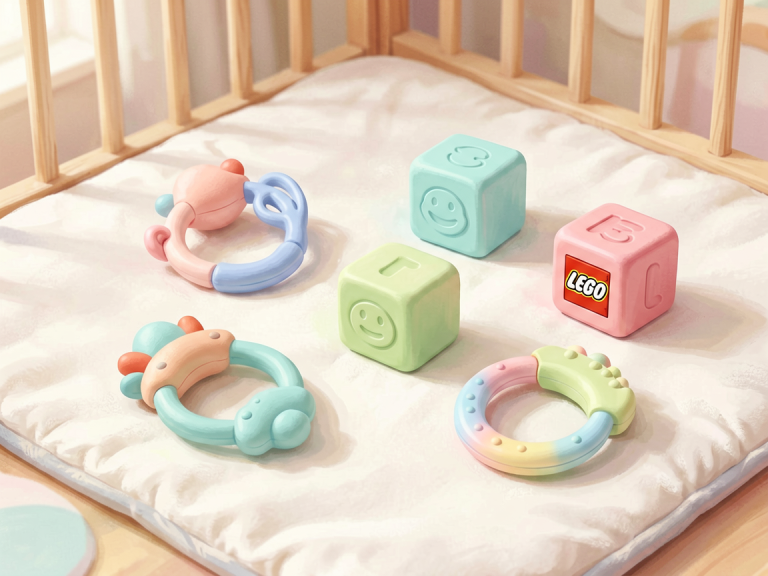
Observe what captures your toddler’s interest. Do they love spinning things? Provide tops or wheels. Do they try to put everything in their mouth? Offer safe, textured teethers and edible sensory play (like cooked spaghetti). Responding to their curiosity deepens their learning and strengthens your bond.
Prioritize Unstructured Time
Resist the urge to schedule every minute. Toddlers need long, uninterrupted periods of free play to enter a state of deep concentration – what psychologists call "flow." During these times, they experiment, make discoveries, and build perseverance. Your role is to be available but not directing.
Conclusion: The Lifelong Gift of Screen-Free Learning
Choosing screen-free learning for toddlers is not about rejecting technology entirely. It is about honoring the unique developmental needs of the early years. The skills built during this time – self-regulation, curiosity, creativity, empathy, and the ability to sustain focused attention – form the foundation for all future learning. A toddler who learns to find joy in stacking blocks, splashing in puddles, and sharing a picture book with a loving adult is a toddler whose brain is developing in the richest possible way.
As parents, we are often bombarded with messages that more is better – more stimulation, more apps, more "educational" content. But the truth is simpler and more beautiful: the best learning for a toddler is slow, hands-on, relational, and screen-free. It happens in the messy, noisy, unpredictable real world, where every moment is an invitation to explore, connect, and grow. By giving our toddlers that gift, we are not just raising children – we are raising thinkers, dreamers, and lifelong learners.