The Power of Hands: Why Screen-Free Learning Matters for Preschoolers
In an era where digital devices have become extensions of our hands, a quiet revolution is taking place in early childhood education. Parents and educators are increasingly questioning the wisdom of handing tablets and smartphones to toddlers, recognizing that the most profound learning experiences for young children happen in the physical, tactile, and social world—not on a glowing screen. Screen-free learning for preschoolers is not merely a nostalgic rejection of technology; it is a scientifically grounded approach that nurtures the whole child: cognitive, emotional, social, and physical development. This article explores the why and how of screen-free learning, offering practical strategies for parents and educators who wish to cultivate deep, meaningful learning in the early years.
The Hidden Costs of Early Screen Exposure
Cognitive Development Under the Digital Microscope
The human brain undergoes its most rapid development between birth and age five, forming neural connections at an astonishing rate of over one million per second. During this critical window, the brain learns best through multisensory experiences: touching textures, hearing voices, tasting foods, moving through space, and interacting with real people. Screens, by contrast, provide a simplified, two-dimensional, and often passive experience. Research consistently shows that excessive screen time in preschoolers is associated with delays in language development, reduced attention span, and weaker executive function skills. A 2019 study published in JAMA Pediatrics found that higher screen time at age one was linked to lower performance on developmental screening tests at ages two and four. The problem is not the content itself—many educational apps are well-designed—but the medium. A child watching a video about counting is not actively manipulating objects, practicing one-to-one correspondence, or experiencing the satisfaction of physically grouping blocks. The brain learns by doing, not by watching.
Social and Emotional Consequences
Preschoolers learn empathy, cooperation, and emotional regulation through face-to-face interactions. When a child builds a tower with a peer and it collapses, they must negotiate whose fault it is, comfort each other, and decide whether to rebuild. These micro-dramas of social life are irreplaceable. Screen time, even when shared, often replaces these rich interactions with solitary or parallel consumption. Moreover, the fast-paced, constantly changing stimuli of screen media can overstimulate young nervous systems, making it harder for children to self-regulate when the screen is turned off. The American Academy of Pediatrics recommends no more than one hour per day of high-quality programming for children aged two to five, and none for infants under 18 months. Yet many preschoolers far exceed this, and the consequences are visible in classroom settings: increased difficulty with transitions, lower frustration tolerance, and reduced imaginative play.
The Foundations of Screen-Free Learning
What Young Children Truly Need
Screen-free learning is not about deprivation; it is about abundance. It is rooted in the understanding that young children are active, curious, and sensory creatures who learn best through play, exploration, and relationship. The core principles are simple: provide open-ended materials, allow ample time for uninterrupted play, encourage physical movement, and prioritize human connection. When we remove the screen, we make room for the child to become the protagonist of their own learning journey. They are no longer passive recipients of information but active constructors of meaning.
The Neuroscience of Hands-On Play
When a preschooler dumps water from one cup to another, they are not just making a mess—they are learning about volume, gravity, cause and effect, and the scientific method. When they roll playdough into a snake, they strengthen fine motor skills, practice bilateral coordination, and develop creativity. Neuroscientists call this “embodied cognition”: the idea that cognitive processes are deeply rooted in the body’s interactions with the world. Hand-eye coordination, spatial reasoning, and problem-solving all emerge from physical exploration. Screen-based activities, even those claiming to develop these skills, bypass the tactile feedback loop that is essential for neural wiring. For example, a virtual puzzle on a tablet requires only a swipe, while a real puzzle requires grasping, turning, and fitting pieces—a vastly richer sensory and motor experience.
Practical Strategies for Screen-Free Learning
Creating a Rich Sensory Environment
The first step toward screen-free learning is to curate an environment that invites exploration. This does not mean expensive toys; cardboard boxes, scarves, wooden spoons, and natural objects like pinecones and stones are infinitely more valuable than electronic gadgets. A sensory bin filled with rice, beans, or sand, combined with scoops, funnels, and small containers, can occupy a preschooler for an hour while they pour, measure, and sort. Water play, whether at a kitchen sink or in a tub, teaches physics and math concepts. Cooking together provides lessons in measurement, sequencing, and chemistry, all while building vocabulary and bonding. The key is to rotate materials regularly to sustain curiosity and to allow children to use them in their own ways rather than prescribing specific outcomes.
Outdoor Exploration and Risky Play
Nature is the ultimate screen-free classroom. A walk in the park offers endless learning opportunities: collecting leaves of different shapes and colors, watching ants march in a line, feeling the texture of bark, jumping in puddles. Unstructured outdoor play—what some call “risky play”—is especially valuable. Climbing trees, balancing on logs, and running on uneven terrain develop proprioception, balance, and confidence. A child who falls and gets up learns resilience in a way no video can teach. Furthermore, time in nature reduces stress and improves attention, making children more ready for focused indoor activities. Even fifteen minutes of outdoor time before a structured learning session can significantly improve a child’s ability to sit and listen.
The Art of the Read-Aloud
Reading aloud is the single most powerful screen-free learning activity for preschoolers. It builds vocabulary, narrative comprehension, and phonological awareness—the foundational skills for future reading success. But the real magic happens in the interaction: the child points to a picture and asks a question, the adult responds with enthusiasm, and a conversation unfolds. This back-and-forth, known as “dialogic reading,” is far more effective than any electronic storybook. Choose books with rich illustrations, repetition, and rhythm. Let the child hold the book, turn the pages, and “read” along. Extend the story with related activities: after reading *The Very Hungry Caterpillar*, you can make a caterpillar out of egg cartons, count fruit, or act out the life cycle. Each extension deepens comprehension and makes learning tangible.
Music, Movement, and the Body
Preschoolers are naturally musical and kinesthetic. Clapping games, singing songs, dancing to different tempos, and playing simple instruments like shakers or drums develop rhythm, coordination, and auditory discrimination. These activities also support language development—think of the phonological awareness gained from nursery rhymes with their rhyming words and syllable beats. Fingerplays like “Itsy Bitsy Spider” combine fine motor skills with verbal memory. Circle time with movement games (Simon Says, freeze dance) teaches self-regulation and attention. All of these are screen-free, low-cost, and deeply engaging.
Process-Oriented Art and Building
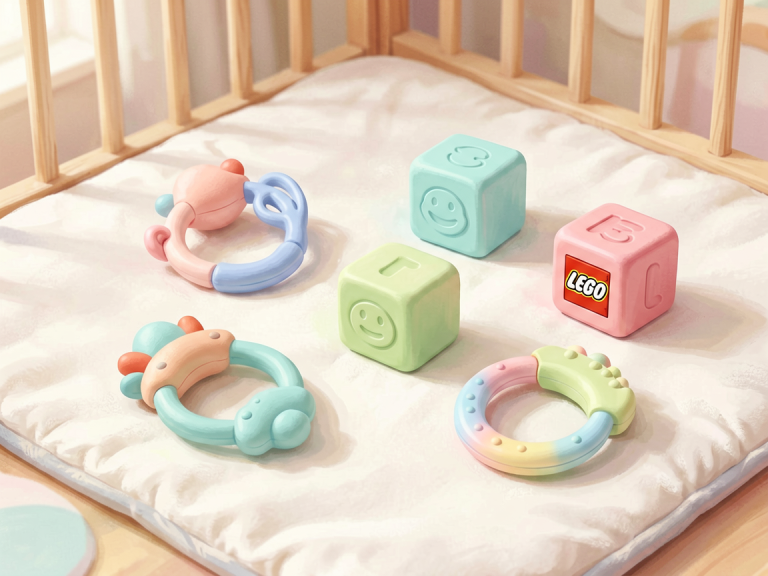
Art projects for preschoolers should emphasize process over product. Provide paint, clay, glue, scissors, and a variety of papers and found objects, then step back. Resist the urge to say “What is that?” or to show the child a model to copy. Instead, comment on the process: “I see you are mixing red and blue—look what happens!” or “You are pressing hard with that crayon.” This approach fosters creativity, problem-solving, and a growth mindset. Similarly, building with blocks, LEGOs, or Magna-Tiles teaches geometry, balance, and structural thinking. When children build and then knock down, they learn about cause and effect and the joy of starting over.
Overcoming Common Challenges
Managing Screen Withdrawal
For families transitioning from screen-dependent routines, the first few days can be challenging. Children may protest, whine, or act out. This is normal. Screens provide a reliable dopamine hit, and withdrawal can be uncomfortable. The solution is not to give in but to offer compelling alternatives. Have a basket of activities ready: a new puzzle, a bag of playdough, a set of finger puppets. Go outside immediately after turning off the screen. Use transitions like “Let’s put the screen away and go see what the ants are doing in the garden.” Consistency is key; within a week or two, most children adapt and even prefer the richer experiences.
The Role of Parental Modeling
Children learn more from what we do than what we say. If a parent is constantly on a phone, the message is that screens are more interesting than real life. To implement screen-free learning effectively, adults must also reduce their own screen use during time with children. This means putting phones in another room, turning off the television, and being fully present. It is hard, but it is transformative. When parents engage in activities alongside their children—building, drawing, cooking, singing—the learning deepens, and the relationship strengthens. The parent becomes a co-learner, not a supervisor.
Conclusion: Reclaiming Childhood, One Block at a Time
Screen-free learning for preschoolers is not about fear of technology but about a deliberate choice to honor the developmental needs of young children. The early years are fleeting, and the foundation built during this time—curiosity, resilience, social skills, creativity, and love of learning—cannot be downloaded from an app. It must be built through sticky fingers, muddy knees, and endless questions. By stepping away from screens and stepping into the world of hands-on play, we give our children the greatest gift: the opportunity to discover the world on their own terms, with all the mess, joy, and wonder that entails. Let us put down the tablets and pick up the blocks. The future belongs to those who learn to think with their hands.