The Ultimate Guide to the Best Preschool Learning Toys: Building Foundations Through Play
Introduction
The preschool years—roughly ages two to five—are a period of explosive brain development. During this window, children absorb language, social norms, problem‑solving strategies, and motor skills at an astonishing rate. As parents, caregivers, and educators, we naturally want to provide the tools that nurture this growth. But with shelves overflowing with colorful boxes and flashy gadgets, what truly qualifies as the *best* preschool learning toy? The answer lies not in price tags or brand names, but in a toy’s ability to engage a child’s curiosity, encourage active exploration, and support development across multiple domains—cognitive, physical, social, and emotional. This guide dives deep into the categories of toys that research shows are most effective for preschoolers, offers concrete examples, and explains why thoughtful play is the most powerful classroom there is.
Why Play-Based Learning Matters
Before we examine specific toys, it is essential to understand *why* play is the ideal vehicle for preschool education. Neuroscientists have found that when children are engaged in self‑directed, joyful play, their brains form stronger neural connections. Play reduces stress hormones like cortisol and releases dopamine, which enhances memory and motivation. Unlike passive screen‑time, active play requires decision‑making, trial‑and‑error, and physical manipulation. The best preschool learning toys do not “teach” in a traditional sense; they create situations where children teach themselves through discovery. For instance, a set of wooden blocks may seem simple, but when a child stacks them, she learns about gravity, balance, spatial relationships, and cause‑and‑effect—all while exercising fine motor control and patience. This foundational understanding is far more durable than rote memorization because it is built through personal experience.
Cognitive Development Toys
Cognitive development in preschoolers includes pre‑math skills, language acquisition, logic, and memory. The best toys in this category are open‑ended and allow for multiple levels of challenge. Puzzles are a classic example. A 12‑piece wooden puzzle with familiar animals helps a child recognize shapes and practice spatial reasoning. As they progress to 24‑ or 48‑piece floor puzzles, they learn to sort by color, pattern, and edge type—an early introduction to categorization and strategy. Matching games and memory cards are another powerhouse. When a child flips over two cards and tries to remember where the matching picture is hiding, they are strengthening working memory and concentration. Look for games with vibrant, realistic images (e.g., fruits, vehicles, or letters) to build vocabulary. Counting bears or miniature animal sets with sorting cups teach one‑to‑one correspondence, grouping by attribute (size, color), and even simple addition when combined with dice. These toys succeed because they transform abstract concepts like “more” and “less” into tangible, hands‑on experiences.
Fine Motor Skill Toys
Fine motor control—the ability to use small muscles in the hands and fingers—is crucial for future writing, buttoning, and using tools. The best preschool learning toys for fine motor development are ones that require precise movements and provide immediate sensory feedback. Lacing beads are a timeless choice: threading a string through a hole demands hand‑eye coordination, bilateral coordination, and patience. Choose beads with different shapes and textures to add tactile variety. Play‑dough and modeling clay are superb because pressing, rolling, pinching, and cutting strengthen the intrinsic hand muscles. Add simple tools like a plastic knife, rolling pin, and animal‑shaped cookie cutters to extend the activity. Peg boards where children push pegs into a foam or wooden base help develop pincer grip and pressure control. For a more advanced challenge, child‑safe tweezers or tongs used to transfer pom‑poms or small blocks from one container to another mimic the grip needed for writing. The key is to keep these activities playful—never force a child to practice gripping; instead, frame it as a game of “feed the hungry monster” or “pick up the treasure.”
Creative and Imaginative Play
Imagination is the engine of innovation, and preschool is the golden age of pretend play. Toys that support open‑ended storytelling and role‑playing lay the groundwork for social understanding, emotional regulation, and creativity. Dress‑up costumes (a firefighter jacket, a chef’s hat, a fairy wings) allow children to step into different identities and experiment with language and behavior. Play kitchens with pots, pans, and plastic fruits invite children to imitate adults, practice sequencing (first chop, then cook, then serve), and negotiate roles with peers. Building sets like large interlocking blocks (DUPLO‑style) or magnetic tiles are not just for construction—they become castles, spaceships, or animal shelters in a child’s narrative. The best of these sets include people figures, animals, and doors or wheels to spark stories. Art supplies—washable markers, finger paints, stickers, and safety scissors—are essential for creative expression. When a child draws a “dog” that looks more like a lump, they are not failing at art; they are learning to represent ideas symbolically—a precursor to writing. Let the process be messy and joyful, with no expectation of a finished product.
Social and Emotional Learning Toys
Preschool is also a critical time for learning to share, take turns, express feelings, and empathize with others. The best toys for social‑emotional growth are those that encourage cooperative play rather than parallel play. Board games adapted for young children (like “First Orchard” or “Hoot Owl Hoot!”) teach turn‑taking, following rules, and handling disappointment when you don’t win. Cooperative games, where everyone works together toward a common goal, are especially effective for reducing conflict. Puppets (hand puppets or finger puppets) are powerful tools for emotional exploration. A child can use a lion puppet to roar about being angry, or a rabbit puppet to whisper about being scared. This safe distance helps them process difficult feelings. Emotion flashcards with faces expressing joy, sadness, surprise, and anger—used in a game of “make that face” or “find the happy person”—build emotional vocabulary. Play figures with diverse family structures (different races, abilities, family constellations) normalize differences and teach inclusion. When children act out scenarios like “the baby is crying, what should we do?” they practice empathy and problem‑solving in a low‑stakes setting.
STEM Toys for Early Learners
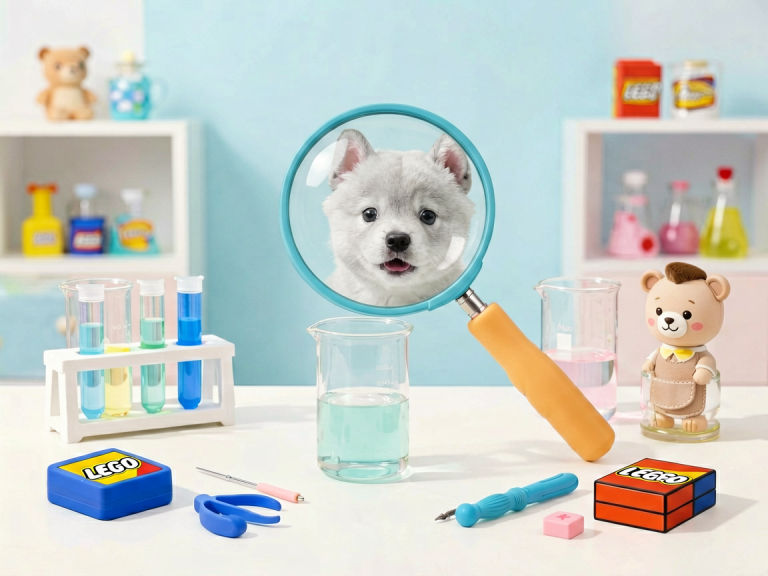
STEM (Science, Technology, Engineering, and Math) education is not just for older children. Preschoolers are natural scientists—they experiment, ask “why,” and love to see how things work. The best preschool learning toys in this category are simple, durable, and encourage exploration. Magnifying glasses and bug viewers allow children to examine leaves, pebbles, or insects up close, fostering observation and classification skills. Water play tables with cups, funnels, wheels, and floating toys teach concepts of volume, displacement, and flow. Even a tub of water in the backyard with a collection of plastic bottles and spoons provides hours of physics lessons. Simple magnets (sealed in plastic or wood for safety) let children discover magnetic attraction and repulsion. Coding toys designed for preschoolers, such as a programmable wooden robot that follows a sequence of colored tiles, introduce basic logic and sequencing without a screen. Balance scales with counters help children experiment with weight and equivalence. The goal is not to “teach” science facts but to cultivate a mindset of curiosity: “What happens if I pour more water? If I add one more bear on this side?”
Safety Considerations When Choosing Toys
Selecting the best preschool learning toys also means prioritizing safety. Children under three are prone to mouthing objects, so avoid any toy with small parts that could become choking hazards. Check for ASTM or CE safety certifications. Look for non‑toxic paints, phthalate‑free plastics, and lead‑free materials. Wooden toys should have smooth, splinter‑free surfaces. Avoid toys with long cords or strings that could pose strangulation risks. Batteries should be securely enclosed with a screw‑fastened compartment. For magnetic toys, ensure the magnets are too large to swallow and are encapsulated. Also consider noise levels—toys that emit loud, jarring sounds can damage hearing; choose ones with volume control or gentle sounds. Finally, always follow the manufacturer’s age recommendations, but also use your own judgment based on your child’s maturity and tendencies. A toy labeled for age three may be safe for an advanced two‑year‑old with close supervision.
How to Choose the Right Toy for Your Child’s Age
Even within the preschool range, developmental needs vary significantly. For two‑year‑olds, focus on toys that encourage sensory exploration and basic cause‑and‑effect: stacking rings, shape sorters, large peg puzzles, and push‑pull toys. Avoid anything too complex that may cause frustration. For three‑year‑olds, introduce more elaborate pretend play sets, simple board games with two‑step rules, and fine motor activities like lacing and beginner scissors. For four‑ and five‑year‑olds, challenge them with multi‑step puzzles, construction sets with many pieces, alphabet and number games, and cooperative board games. At every age, rotate toys to maintain interest—put away half the toys for a few weeks, then swap. This “novelty effect” keeps children engaged without overwhelming them with choices. Also, observe your child: do they prefer solo play or group activities? Active movement or quiet tabletop tasks? Tailor your selection to their temperament while gently nudging them to try new types of play.
Conclusion
The best preschool learning toys are not necessarily the most expensive or the most technologically advanced. They are the ones that invite a child to wonder, to try, to fail, and to try again. A cardboard box becomes a spaceship; a pile of leaves becomes a science experiment; a set of blocks becomes a city. The toys that truly matter are those that respect the child’s innate drive to learn through hands‑on exploration. By choosing toys that support cognitive, motor, creative, social, and STEM development—and by remembering that your presence as a play partner is the most valuable “toy” of all—you give your preschooler the gift of a joyful, rich foundation for lifelong learning. So step back, let them lead, and watch with delight as they build their world one block, one bead, one story at a time.