The Power of Purposeful Play: An Educational Play Guide for Parents
In the modern rush to equip children with academic skills, many parents overlook the most natural and powerful learning tool available: play. Yet research in child development, neuroscience, and education consistently demonstrates that play is not a break from learning—it is learning itself. When children build block towers, pretend to be shopkeepers, or dig in the sand, they are actively constructing knowledge, testing hypotheses, and developing critical cognitive and social-emotional capacities. This guide is designed to help parents transform everyday play into rich educational experiences, without sacrificing joy or spontaneity.
Understanding the Science of Play-Based Learning
To become an effective educational play guide, parents must first understand *why* play works. Neuroscientific studies show that during play, the brain releases dopamine, a neurotransmitter associated with motivation, reward, and memory consolidation. This neurochemical environment makes children more receptive to new information and more persistent in problem-solving. Additionally, play activates the prefrontal cortex, which governs executive functions such as planning, impulse control, and cognitive flexibility.
Play also fosters a state of “flow”—a term coined by psychologist Mihaly Csikszentmihalyi to describe complete immersion in an activity. In flow, children experience the optimal balance between challenge and skill, leading to deep concentration and intrinsic motivation. Unlike rote learning, which can feel forced, play-based learning feels natural and self-directed. As a parent, your role is not to dictate play but to curate an environment that invites exploration and gently scaffolds new skills.
The Four Pillars of Educational Play
Effective educational play rests on four interconnected pillars. When parents intentionally integrate these elements, play becomes a vehicle for holistic development.
1. Cognitive Development Through Open-Ended Materials
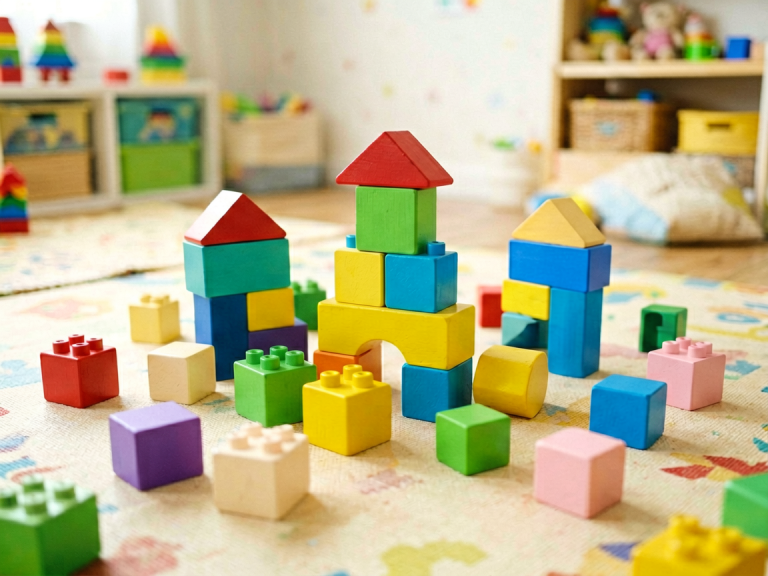
Open-ended play materials—blocks, clay, water, sand, loose parts like buttons or wooden rings—have no single correct use. A cardboard box can become a spaceship, a castle, or a time machine. This ambiguity forces children to think flexibly, generate possibilities, and solve problems creatively. For example, when your child tries to build a bridge that spans two chairs, they engage in engineering reasoning: they estimate length, test weight distribution, and revise their design after failure.
How to guide: Resist the urge to show the “right” way. Instead, ask Socratic questions: “What happens if you place the block here instead of there?” “How could you make the tower more stable?” “What do you think would happen if we added more weight?” This language encourages metacognition—thinking about thinking—which is a cornerstone of academic success.
2. Language and Literacy Through Narrative Play
Pretend play is a rich context for language development. When children role-play as doctors, parents, or superheroes, they must negotiate roles, articulate scenarios, and use vocabulary specific to the context. This narrative construction strengthens oral language skills, story comprehension, and eventually reading readiness. A child pretending to write a prescription is exploring symbolic representation, the same cognitive leap required for understanding that letters represent sounds.
How to guide: Join the play as a co-player, not a director. If your child is running a pretend restaurant, ask to see the “menu” and order in complete sentences. Introduce new vocabulary naturally: “I’d like the *sautéed* mushrooms, please. Are they *organic*?” After the play, ask your child to “retell” what happened in the story of their play session. This simple act of narration strengthens sequencing and memory.
3. Social-Emotional Learning Through Cooperative Play
Play with peers or siblings teaches negotiation, empathy, and emotional regulation. When two children disagree over who gets to be the “mommy” in a family game, they must navigate conflict, compromise, and perspective-taking. These skills are crucial for classroom cooperation and lifelong relationships. Moreover, play provides a safe space to rehearse challenging emotions. A child who builds a “hospital” for a sick teddy bear is processing feelings of vulnerability and care.
How to guide: When conflicts arise during play, avoid stepping in immediately. Give children a chance to resolve their own disputes. If they struggle, you can offer a structured script: “It sounds like you both want the blue car. How could we solve this so everyone feels okay?” Model empathy by labeling feelings: “You seem frustrated that the tower fell. It’s okay to be upset. Do you want to try again together?” This emotional coaching is embedded in the play experience.
4. STEM Foundations Through Exploratory Play
Science, technology, engineering, and mathematics (STEM) concepts are naturally embedded in play. Pouring water into containers of different sizes teaches volume and conservation. Building ramps for toy cars introduces gravity, friction, and slope. Sorting buttons by color and size is early data organization. Even simple cause-and-effect experiments—what happens when you drop a rock vs. a feather?—build scientific thinking.
How to guide: Designate a “tinkering space” in your home where materials are accessible and mess is acceptable. Provide simple tools like measuring cups, ramps, magnifying glasses, and balance scales. Ask predictive questions: “What do you think will happen if we roll the big ball and the small ball down this ramp at the same time?” After the experiment, help your child document the result with drawings or simple charts. This mirrors the scientific method in an age-appropriate way.
Age-Appropriate Play Strategies
Different developmental stages require different parental approaches. Tailoring your guidance ensures that play remains challenging but not frustrating.
For Infants and Toddlers (0–3 Years)
At this stage, sensory exploration is paramount. Provide safe objects with varied textures, sounds, and temperatures. Play peek-a-boo to teach object permanence. Narrate your baby’s actions: “You’re shaking the rattle! It makes a loud noise.” Your role is to be a responsive observer—follow your child’s gaze, mirror their sounds, and offer simple choices (“Do you want the red block or the blue block?”). This builds a foundation for language and trust.
For Preschoolers (3–5 Years)
The preschool years are the golden age of imaginative play. Children develop elaborate fantasy worlds, often with rules and roles. Support this by providing dress-up clothes, props, and blank paper for “maps” or “tickets.” Ask open-ended questions that extend the narrative: “What happens next in our story?” “Why is the dragon hiding in the cave?” Use play to teach early math by counting toys or sorting them by shape during cleanup. Introduce simple board games (like Candy Land) to teach turn-taking and counting.
For School-Age Children (6–12 Years)
Older children benefit from more complex games and projects. Strategic board games (chess, Settlers of Catan), construction sets (LEGO Technic, K’NEX), and logic puzzles challenge reasoning and planning. Encourage children to design their own games, create rules, and test them—this is systems thinking. Parental guidance shifts to facilitation: help your child find resources (books, online tutorials) for their projects, but let them struggle with the design process. “Failure” in a game or building project is an opportunity to revise hypotheses.
Turning Everyday Moments into Playful Learning
Educational play does not require expensive toys or long scheduled sessions. The most powerful learning often happens during mundane moments.
During cooking: Let your child measure ingredients, count eggs, and stir batter. This teaches fractions, sequencing, and chemistry. Ask, “What do you think will happen if we add more flour?” Let them lick the spoon (an instant reward for patience).
During grocery shopping: Turn it into a scavenger hunt. “Can you find three red fruits? How many apples are in this bag? Which cereal box is taller?” This builds observation skills and number sense.
During walks: Collect leaves, rocks, and sticks. Sort them by size or color. Talk about where they came from. Play “I spy” with shapes: “I spy something square—it’s a mailbox!” This boosts vocabulary and environmental awareness.
During bath time: Provide cups, funnels, and bath toys. Let children pour and measure. Discuss sinking and floating. This is physics in the tub.
Avoiding Common Pitfalls
While the educational play approach is powerful, well-intentioned parents sometimes fall into traps that undermine play’s benefits.
Pitfall 1: Over-structuring play. If you constantly ask “What did you learn?” or correct every action, play becomes a test. Children sense this pressure and may lose intrinsic motivation. Instead, trust the process. Learning happens silently; you may not see its fruits until much later.
Pitfall 2: Providing too many choices. An overwhelming array of toys can reduce depth of play. A child who has 100 toys may flit from one to another without engaging deeply. Limit the number of available toys and rotate them regularly. Fewer choices foster creativity and sustained focus.
Pitfall 3: Comparing to other children. Every child develops at their own pace. A five-year-old who prefers building towers to drawing is not “behind.” Resist the urge to compare your child to siblings or friends. Focus on their unique interests and strengths.
Pitfall 4: Neglecting your own playfulness. Children learn most from modeling. If you sit on your phone while they play, they absorb that play is for children only. Sit on the floor with them. Be silly. Build a wobbly tower and laugh when it falls. Your joy is contagious, and it communicates that learning through play is a lifelong gift.
Creating a Play-Friendly Home Environment
Finally, consider your physical and emotional home setup. A play-friendly home does not need to be a Pinterest-perfect playroom. It simply needs:
- Accessible materials: Place toys and art supplies on low shelves so children can choose independently.
- Safe mess tolerance: Accept that play is messy. A designated “mess zone” (like a plastic tablecloth on the floor) can contain chaos.
- Unstructured time: Children need large blocks of unscheduled time to sink into deep play. Over-scheduled children rarely experience flow.
- Your presence: You do not need to play *with* your child all the time. Sometimes, just being nearby—reading a book while they play—provides the security they need to explore. Your quiet attention communicates that their play matters.
Conclusion: The Gift of Guided Play
Educational play is not a new curriculum or a set of worksheets disguised as games. It is a philosophy that respects children as active meaning-makers. By becoming an educational play guide, you step into a role that is both humble and powerful: you prepare the soil, plant the seeds, and trust the child’s innate drive to grow. You do not need to teach everything—you only need to observe, ask a few good questions, and share in the wonder.
The tower will fall. The game will end. The costume will be put away. But the neural connections, the confidence, the love of discovery—these endure. So today, when your child asks you to play, say yes. Get on the floor. Let them lead. And watch the miracle of learning unfold in the most natural way possible.