Educational Play Tips for Parents: Transforming Everyday Moments into Lifelong Learning
Introduction: The Power of Play
Play is not merely a break from learning—it is learning itself. For centuries, educators and child development experts have recognized that children absorb knowledge most naturally when they are engaged, curious, and having fun. Yet in today’s fast-paced, screen-saturated world, many parents struggle to distinguish between mindless entertainment and genuinely educational play. The good news is that you do not need expensive toys, specialized degrees, or elaborate lesson plans. With a few thoughtful strategies, every ordinary moment—from bath time to grocery shopping—can become a rich opportunity for cognitive, social, and emotional growth.
This article offers practical, research-backed tips for parents who want to harness the educational potential of play without turning their home into a classroom. The goal is not to pressure your child into early academic achievement, but to nurture a love of discovery, problem-solving, and creativity that will serve them for a lifetime.
Why Educational Play Matters More Than Formal Drills
Before diving into specific tips, it is essential to understand the science behind play-based learning. When children play, their brains release dopamine, a neurotransmitter associated with motivation and pleasure. This chemical response strengthens neural connections and makes information more memorable. In contrast, forced rote learning often triggers stress hormones like cortisol, which can actually inhibit cognitive function.
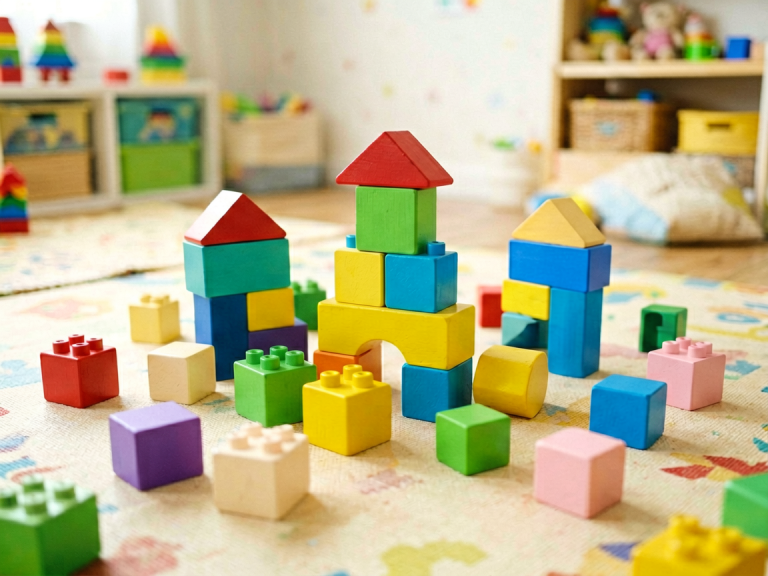
Moreover, play develops executive function skills—working memory, cognitive flexibility, and self-control—that are better predictors of future success than early literacy or numeracy. A child building a block tower is not just stacking blocks; she is learning about gravity, balance, spatial reasoning, and persistence when the tower falls. A child pretending to be a shopkeeper is practicing negotiation, counting, and social scripts. These are foundational skills that worksheets cannot replicate.
Therefore, the most effective educational play tips for parents focus not on what children *do*, but on *how* they engage with the world. Your role is to be a facilitator, not a director—to provide the raw materials for discovery and then step back.
Tip 1: Follow the Child’s Lead—The Gold Standard of Educational Play
One of the most common mistakes parents make is trying to impose a learning agenda on playtime. You might think, “Let’s practice letters with this puzzle,” while your child is fascinated by the way the puzzle pieces feel. The result? Frustration for both of you. Instead, practice what early childhood educators call “child-led play.”
Observe what your child gravitates toward. Does she spend twenty minutes pouring water from one cup to another? That is not waste—it is a physics experiment in volume, flow, and cause-and-effect. Does he line up toy cars in precise patterns? That is an early math skill: seriation and classification. Your job is to notice and gently extend that interest. For example, if your child is fascinated by pouring water, provide different-sized containers, a funnel, and a sponge. Ask open-ended questions: “I wonder which cup holds more water?” or “What happens if you pour slowly versus quickly?”
By following the child’s lead, you honor their innate curiosity and ensure that play remains intrinsically motivated. This approach is more effective than any pre-planned activity because the child’s brain is primed to learn when he or she is already engaged.
Tip 2: Embed Learning in Everyday Routines
You do not need a dedicated “learning time” because life itself is a curriculum. Educational play tips for parents are most powerful when they are seamlessly integrated into daily rituals. Consider these examples:
- Mealtime math: Ask your preschooler to set the table and count how many plates, forks, and cups are needed. For older children, have them double a recipe or calculate how much time remains until dinner is ready.
- Bath time science: Fill the tub with different objects—a sponge, a cork, a plastic boat. Discuss why some float and others sink. Introduce vocabulary like “buoyancy” and “density” in a natural, playful tone.
- Grocery store literacy: Let your child help read the shopping list, identify letters on product labels, or compare prices. Turn it into a scavenger hunt: “Can you find a box that has a red circle on it?”
- Laundry sorting: Sorting socks by color or size is a classification exercise. Folding towels involves geometry and pattern recognition.
- Walking and talking: On a nature walk, play “I spy” with shapes, colors, or textures. Ask your child to describe what they see, hear, and smell—building vocabulary and observational skills.
The key is to resist the urge to turn these moments into quizzes. Instead, make them conversational and collaborative. Say, “I wonder how many steps it is from our door to the mailbox. Should we count together?” rather than “How many steps do you think it is?”
Tip 3: Use Open-Ended Toys and Materials
The toy industry bombards parents with gadgets that promise to teach ABCs, 123s, or foreign languages. Most of these are closed-ended: they have one correct way to play, and once the novelty fades, they are forgotten. Far more valuable are open-ended materials that can be used in countless ways.
Think of blocks, LEGOs, play dough, sand, water, cardboard boxes, fabric scraps, and art supplies. These items encourage divergent thinking—the ability to generate multiple solutions to a problem. A cardboard box can become a spaceship, a castle, a car, or a time machine, depending on the child’s imagination. When children manipulate these materials, they are also developing fine motor skills, hand-eye coordination, and spatial awareness.
As a parent, you can rotate toys to keep interest high. Every few weeks, stash away half the toys and bring out the other half. The “new” items will spark fresh creativity. Additionally, resist the urge to show your child the “right” way to use a toy. Let them discover on their own. If they build a lopsided tower, don’t correct it—ask, “What do you think will happen if we add one more block on top?” This builds confidence and a growth mindset.
Tip 4: Embrace Messy Play—It’s Brain-Building
Messy play often makes parents cringe because of the cleanup involved, but it is one of the most developmentally beneficial activities you can offer. Sensory play—with mud, water, sand, paint, slime, or shaving cream—stimulates the brain’s sensory receptors and helps children make sense of the world. It also supports emotional regulation; kneading play dough or squishing a stress ball can be calming for a dysregulated child.
Educational play tips for parents should include permission to get messy. Set boundaries to make it manageable: do messy play in the bathtub, on a vinyl tablecloth, or outdoors. Dress your child in old clothes and keep a towel handy. Then, let go. Pouring, measuring, mixing, and smearing are all forms of early scientific inquiry. When your child mixes blue and yellow paint and sees green, that is a chemistry lesson they will never forget.
Moreover, messy play often leads to rich language development. Talk about the textures: “This slime is gooey and stretchy. The sand is grainy and dry. How does the water feel when you add soap?” These conversations build descriptive vocabulary and abstract thinking.
Tip 5: Pretend Play: The Ultimate Learning Laboratory
Imaginative or pretend play is sometimes dismissed as mere fantasy, but it is actually a sophisticated cognitive activity. When children pretend, they are practicing perspective-taking, narrative construction, problem-solving, and self-regulation. For example, a child pretending to be a doctor must remember the script of a doctor visit, negotiate with a “patient,” and manage emotions if the “patient” is scared.
Parents can encourage pretend play by providing simple props: dress-up clothes, toy kitchen utensils, empty food containers, a cash register, a doctor’s kit, or a play tent. But even without props, you can join in. Say, “I’m a customer at your restaurant. What’s on the menu today?” Then follow your child’s lead. If they say, “We only serve pizza,” accept it and ask questions: “What toppings do you have? How much does a slice cost? Can I pay with a credit card?”
This kind of play builds executive function and social skills. It also gives you insight into your child’s inner world. You might discover they are processing a recent experience, like a visit to the dentist or a fight with a sibling. Use these moments gently; avoid turning them into lectures. Instead, mirror their emotions: “It looks like the teddy bear is sad. What do you think would help him feel better?”
Tip 6: Incorporate Music, Rhythm, and Movement
Kinesthetic and auditory learning are often overlooked in traditional education, but they are powerful channels for young children. Singing songs, clapping rhythms, dancing, and moving to music all enhance brain development. Nursery rhymes, for instance, teach phonological awareness—the ability to hear and manipulate sounds in words—which is a key predictor of reading success.
Educational play tips for parents can be as simple as turning on music during cleanup time and making it a game: “Let’s see if we can pick up all the toys before the song ends!” Or create a homemade instrument from a rice-filled container and let your child march around the house. Dancing helps with gross motor skills and body awareness. Even classic games like Simon Says or freeze dance build listening skills and impulse control.
For older children, try clapping out the syllables in words or singing math facts to a familiar tune. The combination of rhythm and repetition makes the information stick far better than flashcard drills.
Tip 7: The Power of Questions Over Answers
Perhaps the single most important shift a parent can make is to replace directives with questions. Instead of saying, “That’s a triangle,” say, “What shape do you see?” Instead of “The blue ball goes in the blue cup,” ask, “I wonder which cup this ball might fit in?” Open-ended questions prompt critical thinking and encourage children to articulate their reasoning.
When your child asks you a question, resist the urge to provide an immediate answer. Instead, ask it back: “That’s a great question! What do you think?” Or say, “Let’s find out together.” This models curiosity and shows that learning is a process, not a destination. If you don’t know the answer, that is fine—pull out a book or search online together. Your child will learn that it is okay not to know, and that the joy of learning lies in the search.
Equally important is listening to your child’s answers without judgment. If they say the sky is green because it’s sad, don’t correct them factually. Instead, explore their thinking: “What makes you think the sky is sad?” This nurtures creative thinking and emotional intelligence.
Tip 8: Create a “Yes” Space and Allow for Boredom
Educational play requires freedom. Too many rules and restrictions can stifle creativity. Consider designating a small area in your home where your child can play without constant “no’s.” Keep it safe, but allow them to make a mess, rearrange things, and take risks. This might be a corner with a low shelf of toys, a small table for art projects, or a space by the window for observation.
Equally important is allowing for boredom. When children complain, “I’m bored,” many parents rush to provide a screen or a structured activity. But boredom is actually a creative catalyst. It forces children to invent their own entertainment, which is the essence of educational play. Instead of solving the problem for them, say, “I wonder what you could do with that empty box and some crayons.” Then wait. Sometimes the most brilliant play emerges from the space of nothingness.
Conclusion: Your Attitude Matters Most
Ultimately, the best educational play tips for parents boil down to one principle: be present, be curious, and be playful yourself. Children learn more from your attitude than from any activity you set up. When you show genuine interest in a ladybug crawling on the sidewalk, when you laugh at a silly joke, when you wonder aloud about how the rain is made, you are teaching your child that the world is full of fascinating questions waiting to be explored.
You do not need to be a perfect parent or a trained educator. You just need to trust the process. The blocks will fall, the paint will spill, and sometimes the best-laid plans will be ignored in favor of a game of chase. That is not failure—it is childhood. And in those spontaneous, joyful moments, the most profound learning happens.
So put away the flashcards. Close the workbooks. Go outside and turn over a rock. Build a fort from blankets. Draw a map of your backyard. Let your child see you learning alongside them. In the end, the greatest gift you can give is not knowledge, but the love of knowing. And that love begins with play.