The Hidden Pitfalls of Educational Play: 7 Critical Mistakes to Avoid for Meaningful Learning
Introduction: When Play Stops Being Playful
Educational play is often hailed as the holy grail of childhood development—a perfect fusion of joy and learning, where children absorb knowledge as naturally as they breathe. Yet as any seasoned educator or parent knows, the line between productive play and counterproductive activity is razor-thin. Well-intentioned adults frequently fall into traps that turn playful learning into a chore, a test, or a source of frustration. The irony is that the very features we add to “optimize” learning through play often squeeze the life out of it. This article explores seven pervasive mistakes in educational play—mistakes that can undermine curiosity, stifle creativity, and even breed resistance to learning. By identifying these errors and understanding their psychological roots, we can restore play to its rightful place: as a joyful, autonomous, and deeply effective engine of intellectual growth.
—
1. The Overscripting Trap: When Structure Kills Spontaneity
One of the most common mistakes in educational play is over-planning. Adults create elaborate “learning stations,” detailed lesson plans disguised as games, and rigid sequences of activities that must be completed in a certain order. The assumption is that more structure equals more learning. In reality, research in developmental psychology shows that highly structured play reduces children’s intrinsic motivation. When every move is dictated, the element of discovery evaporates.
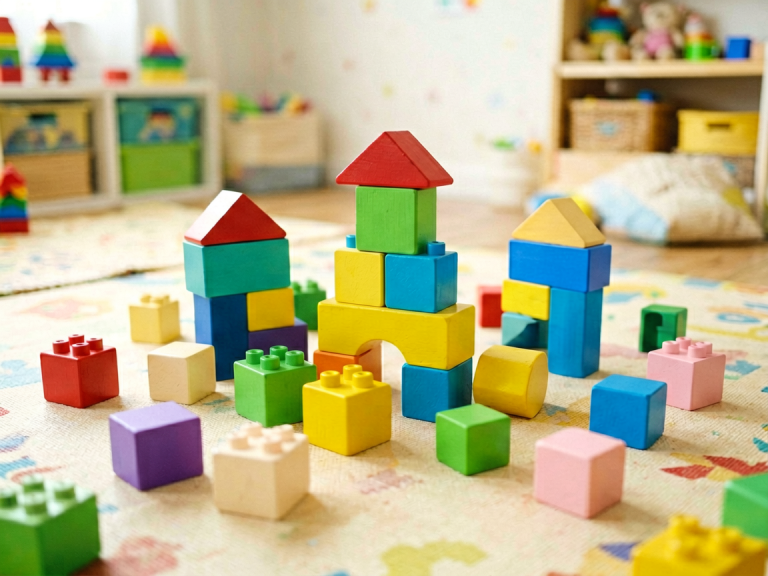
Consider a simple example: a child playing with building blocks. If you say, “Let’s build a bridge that is exactly 30 centimeters long and can hold three toy cars,” you have transformed play into a task. The child may comply, but the exploratory joy of stacking, toppling, and experimenting is gone. Educational play should offer a loose framework—materials, a problem, or a prompt—but leave ample room for the child’s own choices. The mistake is not in having goals, but in suffocating the process with micro-management. To avoid this, allow for “free play” segments even within educational games. Let children deviate, fail, and restart on their own terms.
—
2. The Assessment Obsession: Mistaking Performance for Understanding
A second critical error is the constant, often covert, assessment of children during play. Parents and teachers whisper questions like, “What color is that? How many blocks are there? Can you count them for me?” While this seems harmless, it turns play into a quiz. The child quickly learns that the primary goal is not to enjoy the activity but to please the adult with correct answers. Over time, this creates anxiety and a performance-oriented mindset that undermines deep learning.
Educational play should be a safe space for exploration, not evaluation. The mistake here is confusing observable outcomes with genuine understanding. A child who happily counts blocks in a game may simply be mimicking, while one who plays silently might be processing deeply. The best educational play allows children to demonstrate understanding in their own time and their own way. Avoid interrupting play with tests. Instead, observe, take notes, and introduce new challenges only when the child shows readiness—not when you feel the need to quantify progress.
—
3. The “One-Size-Fits-All” Fallacy: Ignoring Developmental Readiness
Many educational toys and games come with age labels, but these are rough guidelines at best. A far more insidious mistake is assuming that all children of the same age will benefit from the same type of educational play. In reality, cognitive, emotional, and social readiness varies enormously. Pushing a child into a game that requires abstract reasoning before they have mastered concrete operations leads to frustration and disengagement. Conversely, offering a game that is far too simple can cause boredom and missed opportunities for growth.
The mistake is not just about difficulty—it’s about the *type* of play. Some children thrive on competitive games; others shut down. Some need sensory-rich activities; others prefer logical puzzles. To avoid this error, adopt a flexible, responsive approach. Use play as a diagnostic tool: watch how the child interacts, which aspects they avoid, and where they linger. Then adjust the play environment accordingly. The goal is not to force the child into the “right” game, but to find the game that fits the child.
—
4. The Screen Seduction: Digital Play Without Physical Engagement
In an era of education apps and interactive screens, a common mistake is to equate digital play with educational play. While well-designed apps can teach phonics, math, or problem-solving, they often lack three-dimensional, kinesthetic, and social elements that are crucial for young learners. Excessive screen-based educational play can lead to passive consumption, reduced attention span, and underdeveloped fine motor skills.
The error lies in treating digital tools as a full replacement for hands-on play. A child who spells words by tapping letters on a tablet may not develop the same neural pathways as one who forms letters with clay or arranges magnetic letters on a fridge. Moreover, screen-based play often isolates children, stripping away the social negotiation that occurs in group play. To avoid this mistake, use digital educational games as supplements, not staples. Ensure that at least 70% of educational play involves tangible materials, movement, and human interaction. Balance is key.
—
5. The Praise Overload: When Rewards Undermine Intrinsic Motivation
Praise seems like a harmless, even beneficial, part of educational play. “Good job! You’re so smart! You solved it!” These statements feel natural. Yet research by Carol Dweck and others has shown that excessive, generic praise—especially praise that attributes success to fixed traits like intelligence—can actually harm motivation. Children become addicted to external validation. They may avoid challenges that could threaten their “smart” label, or they may lose interest when praise stops.
The mistake is not in praising, but in *how* and *when* praise is delivered. During educational play, the focus should be on effort, strategy, and process. Instead of saying, “You’re so good at this,” say, “I saw you try a different approach when the first one didn’t work—that shows great thinking.” Better yet, sometimes offer no praise at all. Let the play itself be the reward. When a child builds a tower that stays up, the intrinsic satisfaction of that achievement is far more powerful than a parent’s applause. Avoid turning educational play into a performance for approval.
—
6. The Intervention Instinct: Rescuing Too Soon from Struggle
Adults love to help. When a child struggles with a puzzle, a word, or a strategy during educational play, the instinct is to swoop in with solutions. This is a profound mistake. The most valuable learning happens precisely during moments of productive struggle. When we rescue children too quickly, we rob them of the opportunity to develop persistence, problem-solving skills, and resilience.
The error is not in providing support, but in providing it prematurely or excessively. Educational play should include a zone of “just manageable difficulty”—challenging enough to cause cognitive conflict but not so hard as to cause despair. The adult’s role is to be a scaffolding, not a crane. Ask open-ended questions: “What do you think might happen if you try…?” Or simply wait. Often, children will solve problems on their own if given enough time and space. Resist the urge to correct or guide unless frustration is clearly overwhelming and unproductive. Learning to struggle productively is one of the most important lessons educational play can teach.
—
7. The Isolation Error: Neglecting the Social Dimension
Finally, a subtle but widespread mistake is treating educational play as a solitary activity. Many educational games are designed for individual use, and parents often encourage solo play to develop independence. However, especially for children under ten, social interaction is a critical component of learning. Through cooperative play, children negotiate meanings, develop language, practice perspective-taking, and learn to regulate emotions. Purely individual educational play misses these rich developmental opportunities.
Even puzzle-solving benefits from peer interaction: one child may see a pattern another misses, and explaining one’s reasoning reinforces understanding. The mistake is to assume that educational play must be quiet and self-directed to be effective. Instead, intentionally design play experiences that require collaboration—even simple pair-work with a sibling or friend. Board games, building challenges, and role-playing scenarios are excellent. If the child is playing alone, periodically join in as a partner, not a director. The goal is to weave social learning into the fabric of educational play, not to isolate it.
—
Conclusion: The Art of Letting Go
Avoiding these seven mistakes does not mean abandoning structure, goals, or adult involvement. It means rethinking our role in educational play. We are not instructors, evaluators, or entertainers. We are architects of environments, observers of curiosity, and respectful co-players. The most profound learning through play happens when children feel ownership, autonomy, and joy. When we over-structure, over-praise, over-assess, over-intervene, or over-screen, we erode those feelings.
The antidote is humility and patience. Trust that children are natural learners. Provide rich materials, ask thoughtful questions, but then step back. Let them make mistakes, get bored, try weird solutions, and discover their own paths. The mistakes we make as adults are often born from our own anxiety—the fear that children are not learning enough, fast enough. But authentic educational play is not measured by speed or correct answers. It is measured by the spark in a child’s eyes, the persistence in their hands, and the questions they ask when the game is over. Avoid these pitfalls, and you will not only teach better—you will also rediscover the simple, profound truth that play is not a break from learning; it *is* learning, in its most natural and powerful form.