The Art of Less: A Parent’s Guide to Choosing Fewer Toys for a Richer Childhood
Introduction: Why Less Really Is More
In a world saturated with flashing lights, endless advertisements, and the constant pressure to keep up with the latest “must-have” toy, many parents find themselves drowning in plastic, batteries, and unopened boxes. The average American child owns over 200 toys but plays with only 12 of them on a regular basis. This startling statistic reveals a painful truth: abundance does not equal engagement. In fact, an overabundance of toys can overwhelm a child’s senses, shorten attention spans, and even diminish creativity.
The growing movement toward intentional parenting has given rise to a powerful concept: choosing fewer toys. This is not about deprivation or minimalism for its own sake. It is about curating a collection of toys that truly serve a child’s developmental needs, spark deep imaginative play, and foster long-term satisfaction. This guide will walk you through the why, the how, and the practical steps to transform your home from a cluttered playroom into a calm, focused space where your child can thrive.
The Case for Fewer Toys: What the Research Says
Cognitive Benefits of a Simplified Play Environment
Studies in developmental psychology consistently show that children faced with fewer choices engage in longer, more complex play sessions. A well-known experiment from the University of Toledo placed toddlers in rooms with either four toys or sixteen toys. Those with only four toys played with each one longer, demonstrated more creativity, and showed higher levels of problem-solving behavior. When children are overwhelmed by options, their brains enter a state of decision fatigue, causing them to flit from one item to the next without ever sinking into deep play.
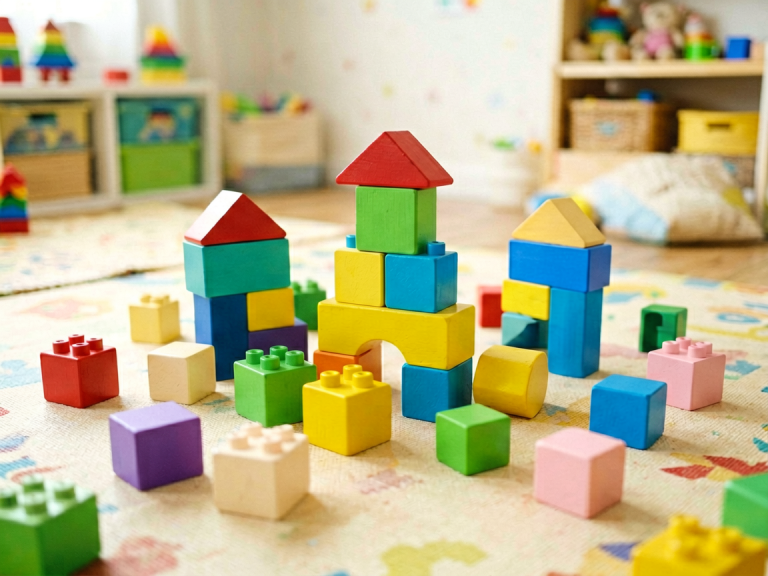
Fewer toys also encourage what educators call “divergent thinking.” With a limited set of resources, a child must repurpose, combine, and invent new uses for objects. A simple set of wooden blocks can become a castle, a spaceship, or a bridge. A cardboard box and a handful of pebbles can fuel an afternoon of adventure. When the toy collection is sparse, the imagination must fill the gaps—and that is precisely where cognitive growth happens.
Emotional and Social Advantages
Beyond cognition, fewer toys directly support emotional regulation. Children learn to care for their belongings when they have fewer of them. They develop patience, gratitude, and a sense of responsibility. Moreover, a clutter-free environment reduces sensory overload, which is especially beneficial for children with ADHD, autism, or high sensitivity. Calmer surroundings lead to calmer children—and calmer parents.
Socially, when children have fewer possessions, they are more likely to engage in cooperative play with siblings or friends. Instead of guarding their twenty action figures, they must negotiate sharing a few treasured items. These interactions build empathy, communication skills, and conflict resolution abilities that no expensive electronic toy can teach.
How to Choose Quality Over Quantity: Guiding Principles
The “Open-Ended” Rule
The single most important principle in selecting toys is to prioritize open-ended items. An open-ended toy is one that can be used in multiple ways, without a prescribed outcome. Examples include building blocks, magnetic tiles, art supplies, play silks, dolls, clay, and simple vehicles. These toys adapt to the child’s developmental stage and interests. A set of wooden nesting bowls might be used for stacking at age one, for pretend cooking at age three, and for math sorting at age five.
Avoid toys that “do” things for the child—toys that talk, sing, light up, or move on their own. These passive toys often entertain but rarely engage. They place the child in the role of spectator rather than creator. If a toy has a single function and a short novelty span, it belongs in the donation pile.
The 80/20 Principle: What Your Child Actually Plays With
Observe your child for one week. Note which toys they gravitate toward naturally. In most cases, 20% of the toys account for 80% of the playtime. That core 20% is your starting point. The remaining 80% are either ignored, used once a month, or simply taking up space. Keep the gold, and let go of the dross.
When selecting new toys, ask yourself: *Will this toy still be interesting a year from now?* If the answer is no, it probably doesn’t deserve shelf space. Also consider durability: cheap plastic toys break quickly, creating frustration and more waste. Investing in well-made wooden, metal, or fabric toys may cost more upfront, but they last for years and can be passed down to younger siblings or other families.
Age-Appropriate Minimalism
For infants and toddlers, fewer toys is almost always better. At this stage, sensory exploration is paramount: a few rattles, a set of stacking cups, a soft doll, and perhaps a musical instrument are enough. For preschoolers, include dress-up clothes, building materials, and art supplies. For school-age children, board games, construction sets, and books should dominate. The key is to rotate toys rather than accumulate them. A toy rotation system—where you keep only a dozen or so toys out at a time, swapping them every two to four weeks—keeps the environment fresh without adding clutter.
Practical Steps for Decluttering and Curation
Step 1: The Big Purge
Begin by gathering every toy in the house. Sort into three piles: keep, donate, and discard. Be ruthless. Broken toys, missing pieces, and items your child has outgrown should go immediately. Then apply the “one in, one out” rule: for every new toy that enters the home, an old one must leave. This prevents future accumulation.
Step 2: Create Zones, Not Stashes
Designate specific areas for different types of play. A reading corner with a small bookshelf, a building zone with blocks and magnetic tiles, an art table with paper and crayons, and a quiet corner with a dollhouse or stuffed animals. Avoid large toy boxes where items get lost and forgotten. Instead, use low, open shelving that allows your child to see every toy at a glance. When a child can see their choices easily, they are more likely to make intentional selections.
Step 3: Involve Your Child
Children as young as three can participate in the curation process. Explain that you are making space for better play. Ask them to choose their five favorite toys. Then let them help decide which of the remaining toys can be given to children who have fewer. This teaches generosity and ownership. For older children, set a limit: “You can keep ten toys in your room. Which ten matter most?” This empowers them to make value judgments and reduces the emotional attachment to quantity.
Step 4: Resist the Marketing Machine
The toy industry spends billions convincing parents that more toys equal happier children. Recognize that commercials, influencer unboxing videos, and peer pressure are powerful forces. Before buying anything, wait 48 hours. Most impulses fade. If your child has been asking for a particular toy for weeks and can articulate why they want it, consider it. If the desire vanishes after two days, it was never a real need.
Maintaining the Minimalist Toy Collection Over Time
Seasonal Audits and Holiday Strategies
Twice a year—perhaps before birthdays and the winter holidays—conduct a toy audit. Remove anything that has been ignored for months. This makes room for new items that arrive as gifts. Communicate with relatives about your approach. Many well-meaning grandparents love to shower children with gifts, but you can gently steer them: “We are focusing on experiences this year. Could you contribute to a zoo membership or buy a book instead?” Alternatively, suggest a “gift of time”—a shared afternoon baking or visiting the park.
The Role of Experiences Over Things
Research consistently shows that experiences bring more lasting happiness than material possessions. A trip to the museum, a nature hike, a cooking lesson, or a library story time creates memories that no plastic toy can replicate. Redirect your family’s resources toward outings, classes, and adventures. When your child looks back on childhood, they will remember the camping trip, not the pile of dolls.
Dealing with Pushback
Be prepared for mixed reactions. Your child may initially resist a reduction in toys. Validate their feelings: “I know it’s hard to let go of this fire truck. But remember, when we have fewer toys, we take better care of them, and we find new ways to play.” Older children may worry about missing out. Address this by focusing on quality: “You used to have thirty stuffed animals, but you only ever cuddle this bear. Now he has a special spot on your bed, and he feels more loved.”
Your spouse or partner may also need convincing. Share the research and frame it positively: this is not about denying your child joy, but about giving them deeper joy. Less clutter also means less cleaning, fewer arguments over messes, and more family time.
Conclusion: The Gift of Space and Attention
Choosing fewer toys is ultimately a gift—not a sacrifice. It gives your child the space to think, to dream, to build, and to rest. It frees you from the endless cycle of buying, organizing, and discarding. It allows your family to focus on what truly matters: connection, creativity, and contentment.
The next time you are tempted to buy another toy, pause. Ask yourself: *Will this add value, or will it add noise?* Trust that a child’s imagination is infinitely richer than any store-bought product. All they truly need is a few open-ended tools, a safe space, and your presence. In a world that screams “more,” the bravest and most loving choice a parent can make is to whisper “enough.”
When you choose fewer toys, you are not limiting your child—you are liberating them. And in that liberation, you will find a quieter, more joyful home.