Building Tomorrow’s Innovators: The Transformative Power of STEM Toys for Kids
Introduction: Beyond Play – The New Frontier of Learning
In an era defined by rapid technological advancement, the way children play has evolved far beyond simple dolls and building blocks. Today, a growing number of parents, educators, and child development experts are turning to STEM toys—playthings designed to engage children in science, technology, engineering, and mathematics. These toys are not mere distractions; they are carefully crafted tools that nurture curiosity, problem-solving skills, and resilience. While traditional play remains invaluable, STEM toys offer a unique bridge between amusement and education, preparing children for a world that increasingly demands analytical thinking and digital fluency. This article explores the diverse landscape of STEM toys, their proven cognitive and developmental benefits, practical guidance for selecting age-appropriate options, and the long-term impact they can have on a child’s academic and professional trajectory. By understanding the power of purposeful play, we can help the next generation become not just consumers of technology, but creators and innovators.
The Core Philosophy: Why STEM Toys Matter
<B>Building Foundational Skills Through Hands-On Exploration</B>
STEM toys differ from conventional toys because they are intentionally designed to teach specific concepts through active engagement. When a child assembles a circuit kit, programs a simple robot, or builds a bridge from magnetic tiles, they are not merely following instructions—they are experimenting, failing, iterating, and succeeding. This process mirrors the scientific method: hypothesis, test, observation, and conclusion. According to a 2023 study published in the *Journal of Educational Psychology*, children who regularly interact with STEM-oriented play materials demonstrate significantly higher spatial reasoning abilities and logical thinking scores compared to peers who rely solely on passive entertainment. Moreover, these toys often require patience and perseverance, teaching children that failure is not an endpoint but a stepping stone. For example, a child whose LEGO robot refuses to move because of a misaligned gear learns to troubleshoot systematically—a skill far more valuable than the toy itself.
<B>Cultivating 21st-Century Competencies</B>
In addition to academic skills, STEM toys foster competencies that are increasingly prized in the modern workforce: collaboration, creativity, and computational thinking. Many kits are designed for group play, encouraging children to communicate ideas, delegate tasks, and resolve conflicts. A robotics kit that requires two children to code together, for instance, naturally promotes teamwork. Meanwhile, open-ended building sets like magnetic blocks or modular electronics encourage divergent thinking—there is no single “correct” creation. This freedom to experiment cultivates the kind of innovative mindset that drives breakthroughs in science and engineering. As early as preschool, children who engage with such toys show a greater willingness to ask “what if” questions, a hallmark of scientific inquiry.
A Tour Through the Types of STEM Toys
<B>Engineering and Construction Kits: The Architects of Tomorrow</B>
Engineering toys remain the most popular and accessible category. From classic wooden block sets to advanced mechanical construction systems like K’NEX or Meccano, these toys teach structural integrity, balance, and the principles of force and motion. For older children, robotics kits such as LEGO Mindstorms or VEX Robotics provide programmable motors and sensors, allowing kids to build machines that respond to light, sound, or touch. These kits often come with coding platforms that use block-based languages (like Scratch) before transitioning to text-based Python, making them an ideal gateway to computer science. A 2022 survey by the Toy Industry Association found that 68% of parents who purchased engineering kits noticed an improvement in their child’s ability to follow multi-step instructions and visualize three-dimensional objects.
<B>Coding and Computer Science Toys: The Language of the Future</B>
Coding toys have exploded in popularity over the past decade. For ages 3–6, screen-free options like the “Code-a-Pillar” or “Botley the Robot” introduce sequencing and logic through physical actions—the child arranges segments to direct the toy’s movement. For older children, microcontrollers such as the BBC micro:bit or Arduino starter kits allow them to create interactive electronics, from simple LED displays to weather stations. These toys demystify technology by showing children that computers are not magic boxes but tools they can command. Research from MIT’s Lifelong Kindergarten group indicates that early exposure to coding through playful tools significantly reduces the gender gap in computer science interest, as girls are equally drawn to story-driven coding activities when presented in a non-stereotypical way.
<B>Science and Chemistry Labs: The Wonder of Discovery</B>
Science kits transform a child’s bedroom or kitchen table into a laboratory. Crystal-growing sets, volcano eruption kits, and microscopes designed for young hands are perennial favorites. More advanced options include chemistry sets with safe, non-toxic reagents that explore acids, bases, and pH. These toys do more than teach facts—they spark wonder. A child watching a chemical reaction change color or observing the intricate structure of a leaf under a microscope is learning that the world is full of patterns waiting to be understood. Importantly, many modern science kits emphasize inquiry-based learning, prompting children to form predictions before conducting experiments, thereby reinforcing the scientific method.
<B>Mathematics and Logic Games: Making Numbers Fun</B>
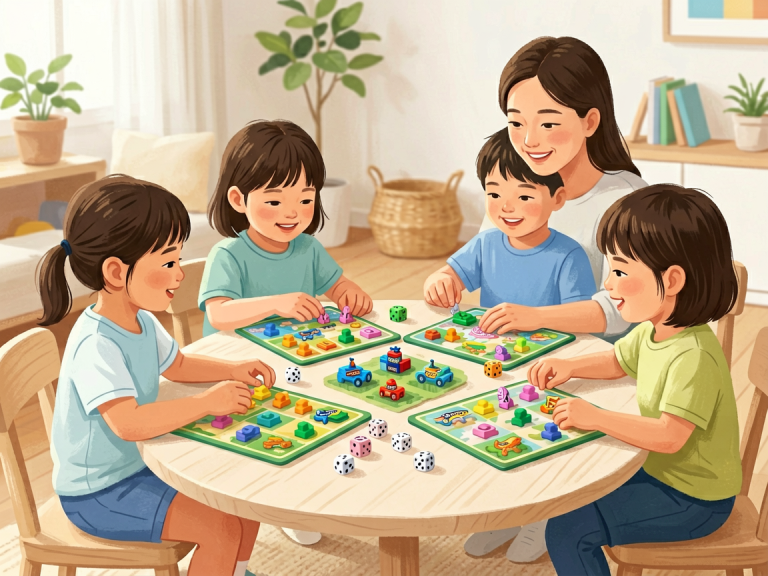
Math toys have evolved beyond simple flashcards. Board games like “Math Dice” or “Prime Climb” embed arithmetic and probability into gameplay, while physical manipulatives such as Base Ten blocks or Geoboards help children grasp abstract concepts like place value and geometry. Puzzle-based toys like Rubik’s Cubes or Logic Grids challenge spatial and deductive reasoning. For toddlers, stacking rings and shape sorters are the earliest forms of pattern recognition. The key is that these toys present math as a puzzle to be solved rather than a chore to be endured, building positive attitudes that persist into later schooling.
How to Choose the Right STEM Toy: A Practical Guide for Parents
<B>Age Appropriateness and Developmental Readiness</B>
Selecting a STEM toy that matches a child’s cognitive and motor skills is crucial. For toddlers (ages 1–3), focus on cause-and-effect toys like simple pull-back cars or stacking cups that introduce basic physics. Preschoolers (ages 3–5) thrive with magnetic tiles, simple coding robots with large buttons, and magnifying glasses for outdoor exploration. Early elementary children (ages 5–8) can handle more complex building sets, introductory circuitry kits (like Snap Circuits), and board games that require counting and strategy. For pre-teens and teenagers (ages 9+), programmable robots, chemistry sets with detailed manuals, and advanced logic puzzles provide sufficient challenge. Always check the manufacturer’s age recommendation, but also observe your child’s individual frustration tolerance—a toy that is too difficult can discourage interest, while one that is too easy may bore.
<B>Open-Ended vs. Structured Play: Striking a Balance</B>
Some STEM toys are highly structured, with step-by-step instructions leading to a specific outcome (e.g., building a pre-designed robot). Others are open-ended, allowing children to create anything they imagine (e.g., a set of magnetic rods and balls). Both have value. Structured toys teach following directions and systematic thinking, which are important for learning procedures. Open-ended toys foster creativity and independent problem-solving. The best approach is to offer a mix, and to encourage children to modify or extend structured projects once they have mastered the basic design. For example, after building the suggested car model with a motor kit, a child might be challenged to redesign it to climb a slope.
<B>Gender Neutrality and Inclusivity</B>
Historically, STEM toys have been marketed disproportionately to boys, but this is changing. When selecting toys, look for products that avoid pink-aisle stereotypes and instead feature neutral colors, diverse role models in packaging, and themes that appeal across genders. Studies show that girls are just as interested in engineering and coding when the context is presented as creative or collaborative rather than competitive. Choosing toys that emphasize teamwork (e.g., multi-player coding games) or real-world applications (e.g., building a model bridge that solves a community problem) can attract a wider range of children and help break down early gender biases in STEM fields.
<B>Digital vs. Physical: The Screen Time Debate</B>
While many STEM toys incorporate apps or digital interfaces, experts recommend prioritizing tangible, hands-on experiences, especially for younger children. Physical toys engage fine motor skills, spatial awareness, and multi-sensory learning in ways that screens cannot replicate. For coding in particular, screen-free options are excellent for early learners. For older children, hybrid toys that combine a physical build with an app-based programming interface (like LEGO Boost) offer a balanced approach. As a general rule, the American Academy of Pediatrics suggests that playtime for children under six should be primarily screen-free, while older children can benefit from limited, purposeful digital interaction.
The Long-Term Impact: From Play to Profession
<B>Fostering a Growth Mindset</B>
One of the most profound benefits of STEM toys is their ability to instill a growth mindset—the belief that intelligence and abilities can be developed through effort. Because building and coding often involve repeated trial and error, children learn that struggle is a natural part of learning. A child who watches a robot fall apart and then rebuilds it stronger is internalizing the lesson that persistence pays off. This resilience translates directly into academic settings, where students with a growth mindset are more likely to embrace challenging math problems or science projects rather than shy away from them.
<B>Bridging the Gap to Formal Education</B>
STEM toys can serve as a powerful equalizer in education. Children from families with limited resources may lack access to high-quality science programs or after-school clubs, but a well-chosen toy can provide foundational knowledge at home. Many schools now incorporate popular STEM toys into their curricula—for example, using LEGO Education kits to teach engineering concepts in third-grade classrooms or using micro:bits to introduce coding in middle school. When children arrive at school already familiar with these tools, they feel more confident and engaged. Furthermore, informal play with STEM toys has been shown to reduce the anxiety that some children, particularly girls and minorities, feel toward math and science before they even encounter formal instruction.
<B>Preparing for Careers That Don’t Yet Exist</B>
The World Economic Forum predicts that 65% of children entering primary school today will work in jobs that do not yet exist. Many of these roles will require a hybrid of technological literacy, critical thinking, and adaptability. STEM toys, by their very nature, encourage children to become comfortable with ambiguity and to view technology not as a black box but as a tool they can control and reshape. A child who grows up programming a robot learns that they can instruct machines—a foundational concept for countless future careers. Moreover, the collaborative and interdisciplinary nature of many STEM toys mirrors the teamwork required in modern workplaces, where engineers, designers, and data scientists must communicate across fields.
Conclusion: The Playground as a Laboratory
STEM toys are far more than a passing trend in the toy industry. They represent a fundamental shift in how we think about childhood development—moving from passive consumption to active creation. By blending entertainment with education, these toys transform the living room into a laboratory, the backyard into an engineering lab, and the dinner table into a math studio. They empower children to ask questions, test hypotheses, and celebrate both successes and failures. For parents, the challenge lies not in buying the most expensive or complex kit, but in selecting toys that align with their child’s interests and developmental stage, and then stepping back to let the child lead. When a child says, “Look what I built!”—whether it’s a wobbly tower of magnetic blocks or a line of code that makes an LED blink—they are not just playing. They are learning to think like a scientist, an engineer, and an artist. They are becoming the innovators our future needs.