The Ultimate Learning Through Play Checklist: A Guide to Transformative Education
Introduction
In the rapidly evolving landscape of education, the age-old adage "play is the work of childhood" has never been more relevant. Yet, for many educators and parents, the concept of "learning through play" remains nebulous—a pleasant idea lacking concrete structure. We hear that children learn best when they are engaged, curious, and joyful, but how do we systematically ensure that play is genuinely educational rather than merely recreational? The answer lies in a carefully designed learning through play checklist. This is not a rigid, bureaucratic tool meant to stifle creativity; rather, it is a flexible framework that helps adults (and older children) intentionally weave learning outcomes into playful experiences. This article will unpack the philosophy behind learning through play, demonstrate why a checklist can be a powerful ally in this process, and provide a comprehensive, actionable checklist that can be adapted for any age group, setting, or subject. By the end, you will have a robust guide that transforms unstructured play into a rich, developmental journey, while still preserving the magic and spontaneity that make play so vital.
What Is Learning Through Play? A Foundational Understanding
Before we dive into the checklist, we must clarify what learning through play truly means. Learning through play is not the same as "playing games to pass the time" or "reward-based play" where learning is an afterthought. It is a pedagogical approach in which play is the primary vehicle for cognitive, social, emotional, and physical development. According to the National Association for the Education of Young Children (NAEYC) and the LEGO Foundation, learning through play is characterized by five key elements: it is meaningful (connected to the child's experiences and interests), joyful (intrinsically motivating), actively engaging (requiring mental or physical effort), iterative (allowing for trial, error, and refinement), and socially interactive (involving cooperation, negotiation, or communication). When these elements converge, children don't just absorb facts—they develop problem-solving skills, resilience, creativity, and a love for lifelong learning.
A common misconception is that learning through play is only for preschool or kindergarten. In reality, it is applicable across all ages. A teenager designing a strategy board game to understand historical events is learning through play. An adult in a corporate workshop using a simulation to practice negotiation skills is also learning through play. The core principle is the same: the learner is an active participant in a self-directed, exploratory process where the outcome is not predetermined, and the journey itself teaches valuable lessons.
Why a Checklist? The Surprising Utility of Structure in Free Play
At first glance, the idea of a "checklist" seems antithetical to play. Play, by its nature, is open-ended, spontaneous, and free. However, a well-designed checklist does not constrain play; it frames it. Think of it as the scaffolding that helps a building rise without limiting its architectural uniqueness. Without a checklist, well-meaning adults often default to either unstructured chaos (where play becomes aimless and fails to challenge the child) or overly directive instruction (which kills the joy of discovery). A learning through play checklist bridges this gap by providing a set of criteria that can be used to design, observe, and assess play experiences in a way that maximizes learning potential.
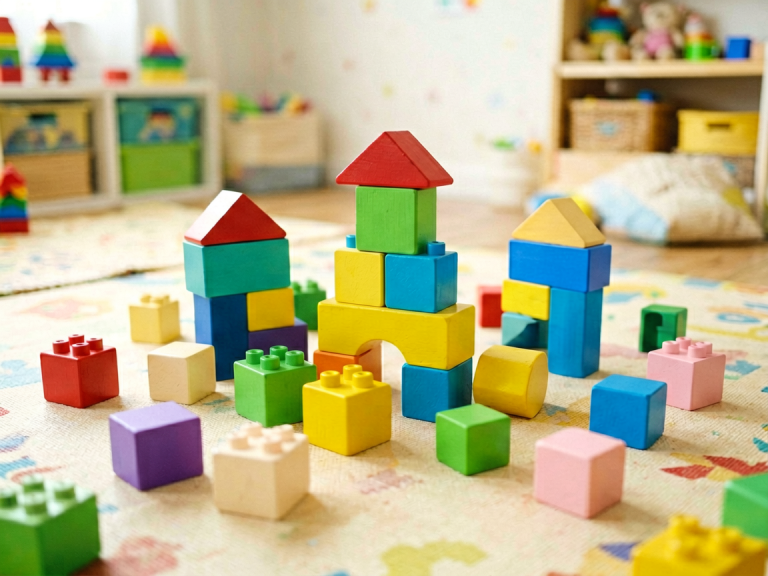
For example, a teacher setting up a "science corner" with blocks, water, and ramps can use a checklist to ensure that the activity includes elements of inquiry (asking "what if?"), hypothesis testing, and documentation (drawing or writing observations). A parent organizing a family board game night can use a checklist to ensure the game encourages strategic thinking, turn-taking, and emotional regulation (coping with losing). Moreover, the checklist can serve as a reflective tool for the child. Older children can learn to self-evaluate: "Did I explore different solutions? Did I collaborate with others? Did I try again after failing?" This metacognitive awareness is a powerful byproduct of using a checklist.
Key Components of a Learning Through Play Checklist
A robust learning through play checklist should be holistic, covering multiple domains of development. Below are the essential categories and specific items that should appear on any effective checklist. Each item is phrased as a question or a statement that can be checked off or assessed on a scale (e.g., "yes/no" or a Likert scale).
1. The Play Environment: Setting the Stage for Discovery
- Safety and accessibility: Is the play area physically safe (no sharp edges, tripping hazards) and emotionally safe (no fear of judgment or punishment for mistakes)?
- Open-ended materials: Are there resources that can be used in multiple ways (blocks, loose parts, art supplies, natural objects) rather than toys with a single purpose?
- Variety of sensory stimuli: Does the environment engage multiple senses (visual, auditory, tactile, olfactory, and even gustatory when appropriate)?
- Opportunities for choice: Can the child freely select what to play with, how to play, and for how long? (At least 80% of the play session should be child-directed.)
- Low-interruption design: Is the setup such that an adult can observe without constantly intervening, allowing the child to self-regulate and problem-solve?
2. The Play Process: Observing How Play Unfolds
- Active engagement: Is the child fully absorbed in the activity, showing signs of "flow" (e.g., losing track of time, ignoring distractions)?
- Problem-solving and critical thinking: Does the child encounter a challenge (e.g., a block tower keeps falling, a puzzle piece doesn't fit) and attempt to solve it through trial and error, reasoning, or asking questions?
- Creativity and imagination: Is the child using materials in novel ways, inventing narratives, or creating original artifacts (e.g., a spaceship out of cardboard boxes, a new rule for a game)?
- Iteration and improvement: Does the child modify their approach after a failure or success? Are they willing to refine their work (e.g., rebuilding a taller tower after it collapses)?
- Self-regulation: Can the child manage frustration, delay gratification, and persist in the face of difficulty? (Note: some crying or complaining is normal, but a breakdown that prevents continuation signals a need for adult support.)
3. Social and Emotional Learning Through Play
- Cooperation and negotiation: In group play, are children sharing resources, taking turns, and discussing roles? Do they resolve conflicts peacefully without adult intervention?
- Empathy and perspective-taking: Does the child show awareness of others' feelings? For instance, during pretend play, do they consider how their character might affect others?
- Leadership and followership: Do children naturally rotate between leading and following, rather than one child dominating?
- Expression of emotions: Does the play allow children to safely express a range of emotions (joy, anger, disappointment) through role-play or creative outlets?
- Risk-taking in a safe context: Does the child attempt something slightly beyond their current comfort zone (e.g., climbing a taller structure, speaking in front of peers during a dramatic play)?
4. Cognitive and Academic Skills Embedded in Play
- Language and literacy: Is the child using descriptive vocabulary, telling stories, writing or drawing to communicate ideas, or reading instructions (if age-appropriate)?
- Numeracy and logic: Does the play involve counting, measuring, comparing sizes, recognizing patterns, or understanding cause and effect? (E.g., a child building a ramp may notice that a steeper angle makes the car go faster.)
- Scientific inquiry: Is the child asking "why" or "what happens if" questions? Are they making predictions and testing them? (E.g., "Will this object float or sink?")
- Executive function skills: Does the activity require working memory (remembering rules), cognitive flexibility (switching strategies), and inhibitory control (not cheating, waiting for a turn)?
- Cross-curricular connections: Does the play naturally blend subjects? (E.g., building a medieval castle involves history, engineering, art, and storytelling.)
5. Adult Role: Facilitation Without Overriding
- Observation first: Did the adult spend at least 10 minutes silently observing before intervening? (Interventions should be minimal and purposeful.)
- Scaffolding questions: When the adult did intervene, did they ask open-ended questions (e.g., "What made you think of that?") rather than giving direct answers?
- Modeling playful attitude: Did the adult demonstrate curiosity, enthusiasm, and a willingness to be silly? (Children learn attitudes from watching adults.)
- Flexible time limits: Was the play allowed to continue as long as the child remained engaged, rather than being abruptly cut off by a schedule?
- Celebrating process, not product: Did the adult praise effort, creativity, perseverance, and collaboration rather than the final outcome (e.g., "I love how you tried three different ways to fix that" vs. "Your painting is beautiful")?
How to Create Your Own Learning Through Play Checklist
While the above components provide a comprehensive foundation, the most effective checklist is one that is tailored to your specific context. Here is a step-by-step guide to creating your own:
- Identify the learning goals. Are you focusing on social skills, executive function, STEM concepts, or literacy? Write down 3–5 primary goals for the play experience.
- Select the play format. Will it be free play (child-led), guided play (adult introduces a challenge but children direct the solution), or games with rules? Different formats emphasize different checklist items.
- Adapt the checklist for the child's age and development. A checklist for a two-year-old might emphasize sensory exploration and language exposure; for a ten-year-old, it would emphasize strategic thinking and complex social dynamics.
- Keep it short and user-friendly. A checklist with 10–15 items is ideal. Any more becomes overwhelming and impractical for real-time use.
- Involve the child. For children aged 6 and above, co-create a simplified version of the checklist. Ask them: "What do you think helps you learn when you play?" This builds ownership and metacognition.
- Test and revise. Use the checklist in a play session. Afterwards, reflect on which items were useful and which were unclear. Modify accordingly.
Implementing the Checklist in Various Settings
The checklist is versatile. In a classroom, a teacher might have individual checklists for each child in a portfolio, noting how a child progresses over weeks. During a "maker hour" or "choice time," the teacher can quickly scan the checklist items to ensure each center is rich in learning potential. In a homeschool environment, a parent can use the checklist to design a morning of play that covers math (building with LEGO following a pattern), literacy (writing a play script), and social skills (acting out the play with siblings). In an early intervention or special education context, the checklist can be a powerful observational tool to identify specific areas where a child needs support—for example, a child who struggles with self-regulation during play can be given targeted strategies.
One critical note: The checklist should never be used as a formal assessment to grade or shame a child. It is a reflective tool for adults and older children. The goal is not to tick every box in every play session; sometimes, pure, unstructured silliness is exactly what a child needs. The checklist is most valuable when used periodically—once a week or once a day—to ensure that play is balanced and that no crucial developmental area is being overlooked.
Conclusion: The Joy of Intentional Play
A learning through play checklist is not an enemy of spontaneity; it is a guardian of depth. When we take the time to design, observe, and reflect on play using a structured framework, we honor the profound complexity of what seems like simple fun. We ensure that a child stacking blocks is not just stacking blocks—they are learning physics, balance, persistence, and maybe even geometry. We ensure that a group of children playing "restaurant" is not just pretending—they are practicing literacy (writing menus), numeracy (making change), social cooperation (taking orders), and emotional intelligence (handling a "customer complaint").
Creating and using such a checklist requires effort, but the payoff is immense: children who are not merely entertained but deeply engaged, not just busy but truly learning. The checklist empowers us to become intentional facilitators of play, turning every playground, living room, or classroom into a vibrant laboratory for life. So take this guide, adapt it, and give yourself permission to be both organized and spontaneous. Let play flourish within a thoughtful structure, and watch as the magic of learning unfolds naturally, joyfully, and endlessly.